How to Grow Crown of Thorns (Euphorbia milii)? Detailed Guide to Cultivation Methods and Precautions
Crown of Thorns (Euphorbia milii) is native to Madagascar and is currently one of the most popular houseplants. Crown of Thorns blooms all year round, with the most abundant blooms during winter in the Northern Hemisphere. So how do you grow Crown of Thorns, and what are the cultivation methods and precautions? Let's take a look together today!
I. Cultivation Methods for Crown of Thorns
Pot and soil: The foliage of Crown of Thorns grows upright, so it is best to choose a relatively deep cylindrical pot, which will make it look compact and attractive. For the soil used in cultivation, you can use two parts garden soil, two parts river sand, and one part compost, mixed with a small amount of horsetail bone meal and other materials as a base fertilizer.
Temperature: The most suitable temperature for Crown of Thorns growth is 15°C to 32°C. It is relatively sensitive to high temperatures and muggy weather. If the summer temperature reaches above 33°C, it will enter a dormant state. In winter, temperature management for Crown of Thorns also needs to be strengthened, because when the temperature drops below 4°C, it will enter dormancy, and when the temperature approaches 0°C, it will freeze to death.
Light: Crown of Thorns is suitable for care in partial shade, or provide it with 50% shade under sunlight, which benefits leaf growth and makes the color more attractive. In spring and autumn, direct sunlight can be given since temperatures are not very high. In winter, place it in a bright indoor spot, while in summer, light needs to be controlled.
Fertilizer and water: Crown of Thorns has particularly strong drought tolerance and is very suited to growing in arid environments. Of course, Crown of Thorns still needs watering, but its root system is sensitive to waterlogging. If water accumulates in the pot, or if you water and fertilize it too frequently, it can easily cause root rot.
II. Precautions for Growing Crown of Thorns
To grow Crown of Thorns well, we first need to understand its living environment. If using the cutting method for propagation, you must choose nutrient soil or river sand, because Crown of Thorns itself has relatively high requirements for its growing soil, and choosing better soil can improve the plant's survival rate. Secondly, during the initial stage of growing cuttings, excess leaves need to be trimmed from Crown of Thorns to minimize transpiration. In fact, the most difficult part of plant cultivation is those first few weeks. Once Crown of Thorns has a good survival status after a few weeks, then our cultivation is more than half successful.
After the initial cultivation has succeeded and the plant has survived, it enters the detailed maintenance period. What to pay attention to in detailed maintenance is pest prevention for Crown of Thorns, the aging and replacement of leaves, and timely adjustment of the growing environment. Because it is grown indoors, its ornamental effect is even more demanding than outdoors. If you want to ensure Crown of Thorns has good growth, don't forget to move the plant to a sunny spot so it can also breathe fresh air!
If I told you that plants can hear music, would you believe it? Research shows that plants can indeed be affected by sounds in their environment! And Crown of Thorns is no exception. When growing Crown of Thorns, friends should note that its most suitable growing temperature is 15°C to 32°C. It is a fairly heat-tolerant plant, but if the temperature rises above 33°C, Crown of Thorns will also enter a brief dormant state. If the weather remains muggy, then the problem becomes serious, so when growing Crown of Thorns, we should also pay attention to ventilation and a slightly shaded environment for the plant.
III. Uses of Crown of Thorns
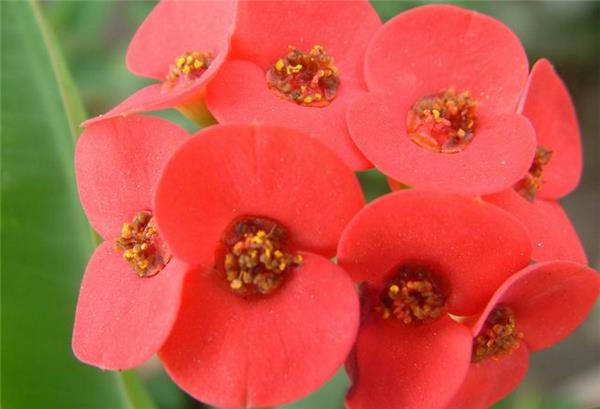
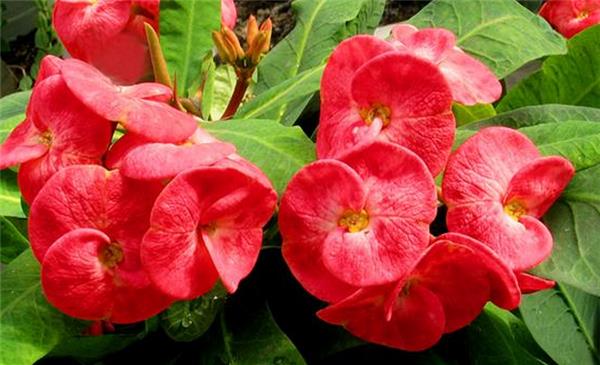
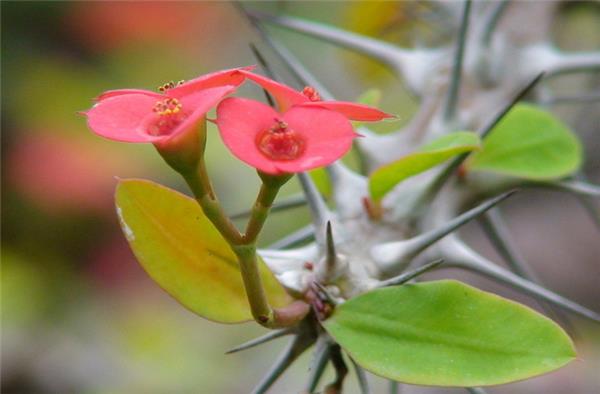
Crown of Thorns has gray-green thorny stems, with bright red and rose-red small flowers blooming at the tips of the branches. It has a long flowering period, vivid flower colors, elegant form, and is easy to cultivate, making it a beloved flower. When in full bloom, the Crown of Thorns flowers look like little rubies from afar, and also like tiny stars; up close, they look like a little child's smiling face. When the flowers on all the branches open, with several dots of red among the green leaves, it is even more beautiful and lovely.
Crown of Thorns is a vine-like thorny plant in the Euphorbiaceae family. A common feature of Euphorbia plants is that after the tree body is injured, white milky sap is secreted from the wound, which is toxic. The white milky sap secreted from wounds of Crown of Thorns-type plants has an irritant effect on human skin and mucous membranes, and accidental ingestion can cause nausea, dizziness, and so on. It is a powerful weapon that plants evolved to protect themselves and prevent damage from pests and diseases. For household cultivation, as long as you do not casually break off flowers for children to play with, it will not cause harm. People can use the soaked filtrate of Euphorbia plant stems and leaves to control aphids, red spiders, and other flower pests. Because its sap is toxic, it is best not to keep it as a potted plant indoors; as an outdoor ornamental flower, it is also a very good choice.
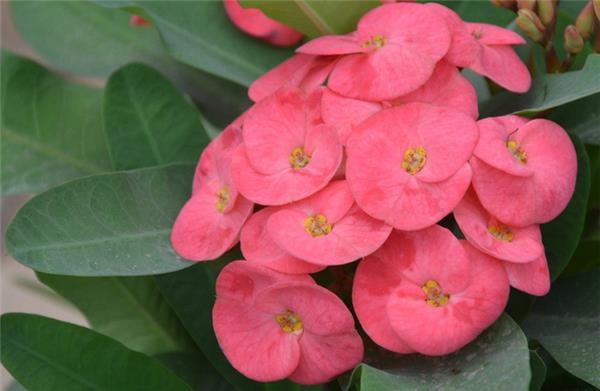
Crown of Thorns has a relatively long flowering period and bright, lovely flower colors. Judging from the cultivation methods summarized above, it is a very easy plant to grow, and it is perfect for placing on home windowsills, balconies, and similar spots.
Crown of Thorns has a relatively long flowering period and bright, lovely flower colors. Judging from the cultivation methods summarized above, it is a very easy plant to grow, and it is perfect for placing on home windowsills, balconies, and similar spots.