How to Grow Masson Pine
Growing Masson pine is actually a fairly easy task. Generally, as long as you understand its habits and pay a little attention to its care, you can keep it alive. It is nowhere near as delicate as tulips.
I. Habits of Masson Pine
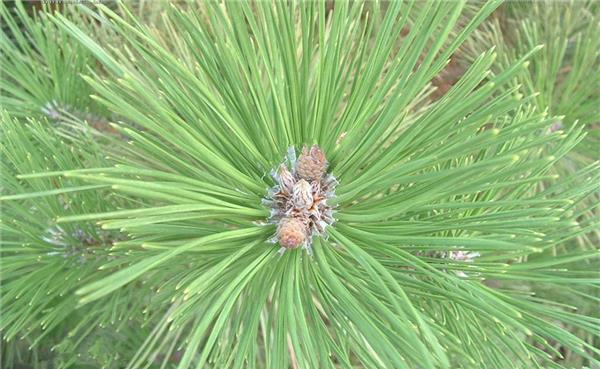
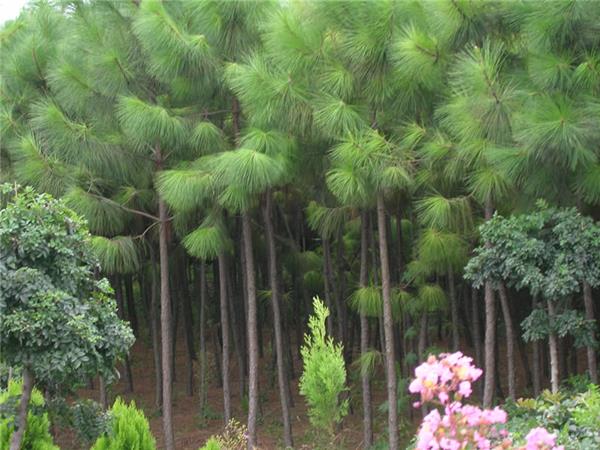
Masson pine is tall and majestic, with an ancient and peculiar posture. It has strong adaptability, strong wind resistance, and tolerance to smoke and dust. Its wood has a fine grain, is firm in texture, and can withstand water. It is suitable for planting in mountain streams, valleys, rock edges, poolside, and roadside arrangements, as well as for mountain afforestation. It is also suitable for solitary planting in front of courtyards, beside pavilions, and among rockeries.
Masson pine is a sun-loving tree species that does not tolerate shade and prefers light and warmth. It is suitable for growing in areas with an average annual temperature of 13-22°C, annual precipitation of 800-1800mm, and an absolute minimum temperature not below -10°C. Its root system is well developed, with an obvious taproot and root fungi. It has no strict requirements for soil and prefers slightly acidic soil, but it fears waterlogging and does not tolerate saline-alkali conditions. It can grow in gravelly soil, sandy soil, clay, eroded thin soil on ridges and sunny slopes, as well as in the crevices of steep rocky mountains.
II. Cultivation and Propagation of Masson Pine
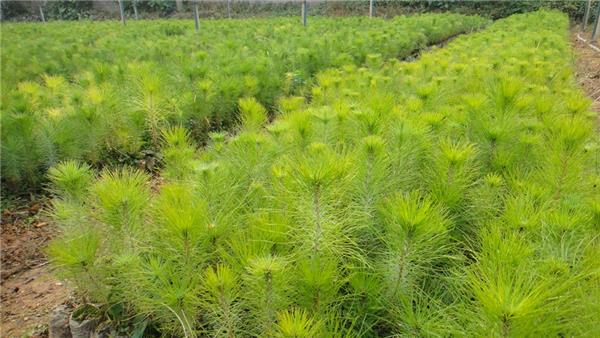
Select fertile, well-drained, moist, and loose sandy loam or loam as the nursery site. After applying sufficient base fertilizer, prepare the land and build seedbeds. Fine cultivation is required, breaking up clods of soil and leveling the seedbed surface. The sowing season is from early February to early March. Before sowing, soak the seeds in 30°C warm water for 12-24 hours. For drilling seedling cultivation, the row spacing is 10 cm, and a layer of fine soil should be spread in the sowing furrow. Use 5 kg of seeds per mu. After sowing, cover the seeds with a thin layer of soil. Burnt mud ash can be used to cover the seeds, preferably so that some seeds are still visible, and then cover with grass. About 20-30 days after sowing, the seedlings emerge. After most of the seedlings have emerged, remove the covering grass. Within 40 days after the seedlings emerge, special attention should be paid to keeping the seedbed moist. From May to July, apply chemical fertilizer 1-2 times per month, with 2-5 kg of ammonium sulfate per mu each time. When Masson pine seedlings are too dense, thinning and transplanting can be carried out, usually in 2 rounds. The first transplanting is in mid-to-late May, and the second transplanting is in early-to-mid July. On cloudy days after rain or during rainy weather, keeping a little original soil attached not only allows all seedlings to survive, but also promotes good seedling growth.
III. Daily Care and Management of Masson Pine
1. Soil: For root-cutting seedling cultivation of Masson pine, choose acidic loam or sandy loam in an open, sunny area with gentle slopes, close to a water source, loose in texture, and with no or very few stones or gravel.
2. Sowing time: To ensure that the pine seedlings meet the requirements when root cutting is carried out, the sowing time should be appropriately advanced, preferably from late February to early March, and no later than the end of March.
3. Water and fertilizer management: First, during the seedling emergence stage, pay attention to film management to prevent "scorching" the seedlings. Spray Bordeaux mixture at 1:1:120 once every 10-15 days, for 2-3 consecutive times, to prevent damping-off disease. Apply light topdressing 3-5 times. After mid-June, apply urea in water 1-2 times, with a concentration of 0.3-0.5%, to promote seedling growth. For those subjected to root cutting in early to mid-September, do not apply nitrogen fertilizer anymore; only apply phosphate fertilizer in water. The amount of water and fertilizer applied should be sufficient to soak through the seedbed soil.
4. Pests and diseases: The Masson pine caterpillar belongs to the family Lasiocampidae in the order Lepidoptera and is a common pest harming pine tree species such as Masson pine, slash pine, and loblolly pine.
IV. Questions and Answers on Growing Masson Pine
1. Does Masson pine need root cutting?
Answer: Yes. To ensure the effect of root-cutting seedling cultivation, the seedling height at the time of root cutting needs to reach 12 cm, and the taproot length must be more than 15 cm. Therefore, for those where the investigated seedling root and stem growth before the summer drought has already reached the requirement, root cutting can be carried out before mid-July. Otherwise, root cutting should wait until after the summer drought ends and the autumn rains arrive, from late August to early September. In mountainous areas above 800 m elevation with no summer drought or where the impact of summer drought is not significant, the timing of root cutting depends entirely on seedling growth, but it must not be later than mid-September. Otherwise, the seedling growth period after root cutting will be too short, and the root-cutting effect will be poor.
2. Does Masson pine have pests and diseases?
Answer: Yes. The Masson pine caterpillar belongs to the family Lasiocampidae in the order Lepidoptera and is a common pest harming pine tree species such as Masson pine, slash pine, and loblolly pine. At this time, pesticides are needed to kill the insects.
3. Can Masson pine be made into a bonsai?
Answer: Yes. Before potting, prune the tree stump first, removing excess branches and leaves to reduce water evaporation. After planting, place it in a sunny, well-ventilated area for care. In summer, shade it appropriately to avoid direct strong light, and sprinkle water to lower the temperature. Do not allow water to accumulate in the pot, to prevent root rot. After the Masson pine survives, it needs one to two years of care. Only after it grows luxuriantly can it be shaped; otherwise, the stump is prone to dying.
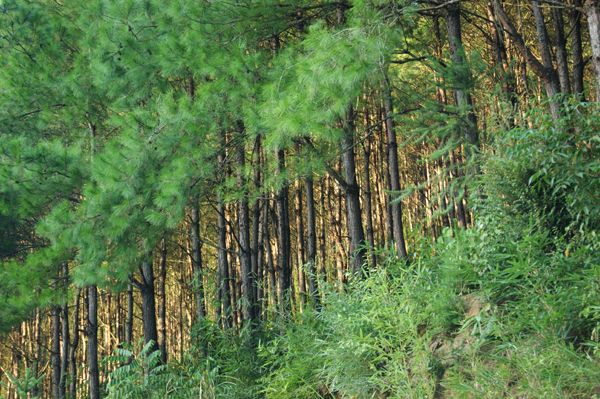
Alright, the above is the introduction to Masson pine. After learning these little tips, I believe everyone has gained some understanding of how to grow Masson pine.