How to grow a jade plant? Keep these ten care tips in mind
The jade plant is relatively easy to grow, because it has fairly strong vitality and is not demanding about soil, water and so on, so it can be counted as a "lazy person's plant."
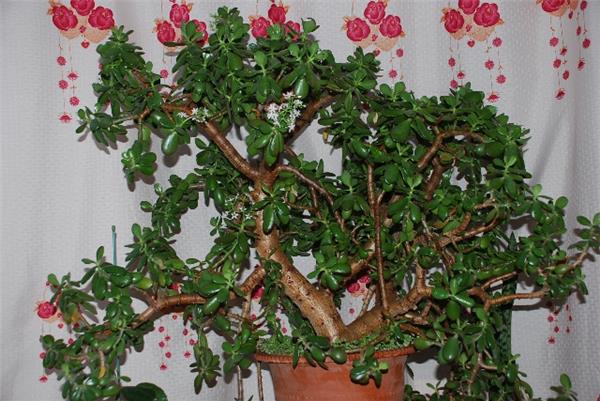
1. Soil: The jade plant is not demanding about soil. It is best to use a mix of 2/3 leaf mold and 1/3 garden soil with a small amount of river sand added as the growing medium, and a little hoof and horn meal or other slow-release fertilizer can be placed at the bottom of the pot as a base fertilizer. To help with drainage, some crushed stone or broken tiles should also be placed at the bottom of the pot.
2. Watering: The jade plant is very drought-tolerant and can grow even under dry conditions, but its roots fear waterlogging. If water accumulates in the pot, or if it is watered too frequently, root rot is easily caused, so managing moisture well is the key to growing it.
3. Sunlight: In summer, keep it in a semi-shaded spot, or give it 50% shade, and the leaf color will be even more beautiful. In spring and autumn, since the temperature is not very high, it should be given direct sunlight to help it photosynthesize and accumulate nutrients. In winter, keep it indoors in a place with bright light. If it is usually kept indoors, place it near a southeast-facing door or window so it can receive light, and after every one month or one and a half months, move it outdoors for two months, otherwise the leaves will grow thin and yellow, and the new branches or leaf stalks will be slender with elongated internodes, in a state of spindly overgrowth.
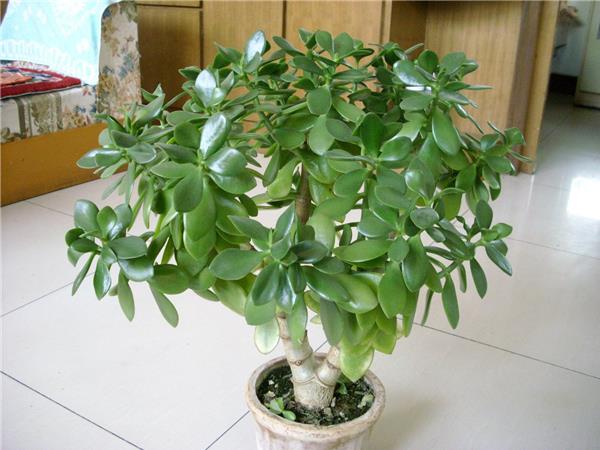
4. Temperature: The optimum growing temperature for the jade plant is 15°C to 32°C. It fears high temperatures and stuffiness, and enters dormancy in the intense summer heat when the temperature is above 33°C. It is averse to cold and frost, and the overwintering temperature needs to be kept above 10°C. It also enters dormancy in winter when the temperature drops below 7°C, and if the ambient temperature approaches 4°C, it will die from cold damage.
5. Fertilizing: The jade plant grows fairly quickly, so it should not be fertilized too much; otherwise the branches and leaves grow excessively, which instead affects the plant's shape and reduces its ornamental value. During the growing season, it is enough to apply dilute fertilizer water just 2-3 times, and no fertilizer should be applied in winter.
6. Pests and diseases: The main problems to prevent and control are anthracnose and leaf spot disease. In the early stages, spray with a 1000-fold dilution of 70% thiophanate-methyl wettable powder. When indoor ventilation is poor, the stems and leaves are easily harmed by scale insects; when this occurs, spray with a 1000-fold dilution of 40% omethoate emulsifiable concentrate to kill them. When watered too much, root rot is easily triggered, and the leaves will also turn yellow and even develop gray mold spots and rot, so attention should be paid to ventilation and drainage, and if necessary, carbendazim wettable powder can be sprayed for control. In addition, mealybugs may also harm the leaves, forming white waxy powder; diseased and pest-infested leaves should be removed promptly to prevent spread.
7. Pruning: When the jade plant grows too tall, prune it or pinch out the growing tips to lower the plant's shape, and the cut top branches can be used for cuttings to propagate.
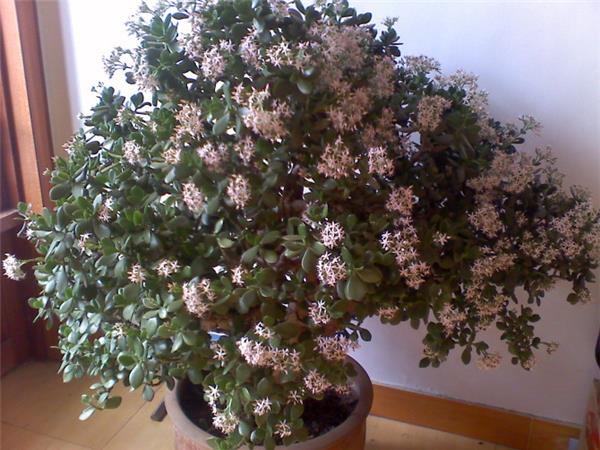
8. Propagation: The jade plant is commonly propagated by cuttings. Cutting propagation can be done in all four seasons, but spring and autumn are preferable, as rooting is fast and the survival rate is high. Generally, select a leafy side branch from a jade plant with good growth vigor and many side branches; the cutting should be 8-12 cm long, placed in a cool, ventilated spot to dry for 1-2 days so the cut surface dries slightly, and then inserted into a sand bed for propagation. Alternatively, a leaf can be picked from the main stem, and after the cut surface dries slightly, inserted into the sand bed, maintaining 20-25°C and suitable humidity; it will root in about half a month.
9. Overwintering: After winter begins, move the jade plant indoors where 7°C to 10°C can be maintained for warmth. On warmer days, at midday you can move the jade plant to the balcony to bask in the sun, and still move it back indoors at night. In winter, the potting soil should be kept on the dry side, and a fine mist should be sprayed on the leaves at the right times to supplement moisture. Under normal circumstances, there is no need to water the potting soil directly. It can also be moved into a warm shed for warmth. If conditions allow, the pot can be moved into a warm shed; if not, a plastic film cover can also be used, but attention must be paid to the humidity inside the cover, and when excessive moisture is found, the cover should be removed in time to ventilate and prevent the leaves from rotting.
10. Toxicity: The sap of the jade plant is toxic, so do not let young children accidentally ingest the sap, otherwise it will cause skin redness, swelling, pain and blistering, and if it accidentally gets into the eyes it can cause blindness. Of course, as long as you do not wound the jade plant so that it bleeds sap, or even if it does bleed sap you avoid contact with it, then you will be perfectly fine.
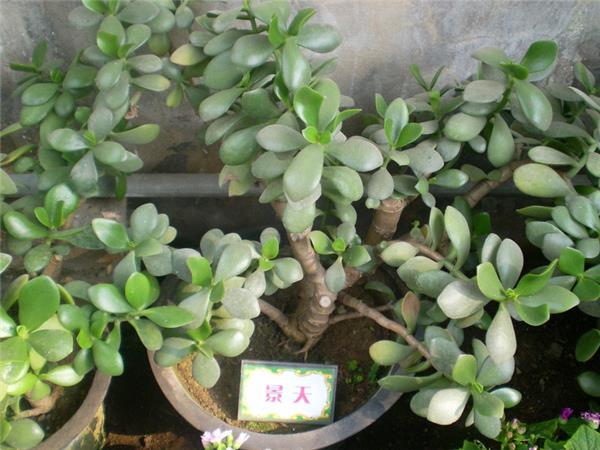
The ten points introduced above are the matters that need attention in the process of growing a jade plant. Here, friends are especially reminded to take protective measures during plant care, to avoid children accidentally ingesting its sap and being harmed.