How to grow Haworthia obtusa? Detailed guide to care methods and precautions
The Haworthia obtusa has a plump and cute plant shape, yet its stems and leaves feel as delicate as if they could be broken by a breath, full and juicy, making it endearing.
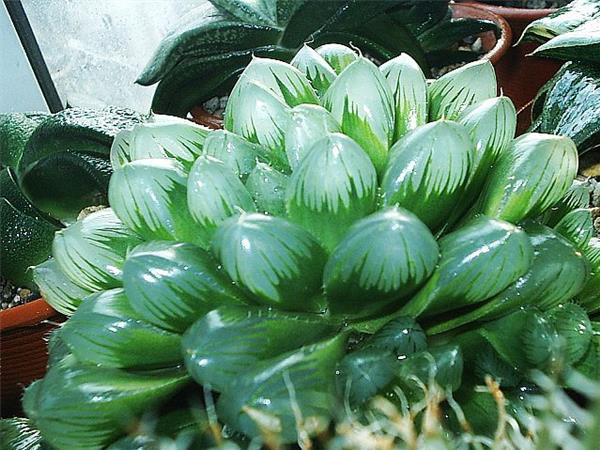
Introduction to Haworthia obtusa
Basic introduction: Haworthia obtusa (Haworthia obtusa var. pilifera) is a "soft-leaf" variety among plants of the genus Haworthia in the family Liliaceae. This group has many varieties, and the more common ones include Haworthia cooperi, Haworthia 'Yuzhang', Haworthia cooperi var. truncata, large Haworthia obtusa, Haworthia pubescens, spiny Haworthia obtusa, and so on. The Haworthia obtusa plant is small and exquisite, rich in variety, and its leaf color is crystal clear and full of variation, like a living handicraft, very lovely. It is one of the more popular small succulent plant varieties in recent years.
Morphological characteristics: A perennial succulent herbaceous plant. The plant is initially solitary and later gradually forms clusters. The fleshy leaves are arranged in a compact rosette, with thick and plump leaves, emerald green in color, and the upper half is transparent or semi-transparent, called the "window," with dark linear vein patterns. Under conditions of relatively sufficient sunlight, the veins are brown, and there are tiny "whiskers" at the leaf tips. The inflorescence is a loose raceme, with small white flowers.
Growth habits: Haworthia obtusa is native to South Africa and prefers a cool, semi-shaded environment. Its main growing seasons are spring and autumn, and it is an "intermediate type" variety among succulent plants. It is drought-tolerant but not cold-tolerant, and it dislikes high temperatures, humidity, and exposure to scorching sun. It is afraid of shade and also afraid of water accumulation in the soil.
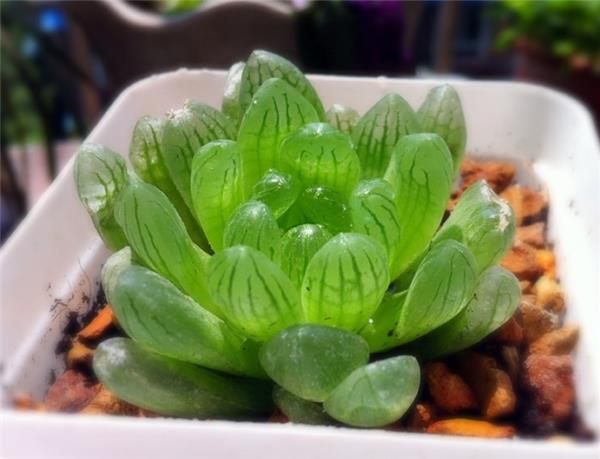
Precautions for growing Haworthia obtusa
Soil: The soil should be loose and fertile, with good drainage and aeration, containing calcareous matter, and with relatively coarse particles. It is commonly planted in a mixed soil of 2 parts leaf mold and 3 parts coarse sand or vermiculite, mixed with a small amount of calcareous materials such as bone meal. For high-end varieties such as Haworthia obtusa 'Shou Nishiki' and Haworthia pubescens, artificial synthetic materials such as akadama soil, orchid stone, kiryu sand, and Satsuma soil can also be used for planting, but an appropriate amount of grass peat or peat soil should be added to increase the organic matter content of the soil.
Light: During the growing season, sufficient light should be provided. If it is too shady, the plant shape will become loose and not compact, the leaves will be thin and elongated, and the transparency of the "window" will be poor. If the light is too strong, the leaves will grow poorly and turn light reddish-brown, and sometimes strong direct sunlight will burn the leaves, leaving ugly scars. Plants grown in semi-shade have thick, plump leaves and high transparency.
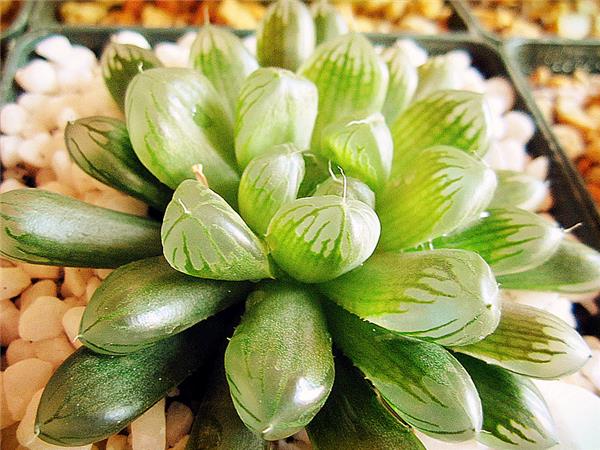
Water: During the growing season, watering should follow the principle of "do not water until dry, and water thoroughly when watering," avoiding water accumulation, and even more so avoiding rain, especially long-term rain, all to prevent root rot. However, it should not be kept dry for a long time either, otherwise although the plant will not die, the leaves will shrivel, the leaf color will be dull, and it will lack vitality. Haworthia obtusa likes an environment with a certain amount of air humidity. When the air is dry, water can often be sprayed on the plant and the surrounding environment to increase air humidity. During the growing season, a transparent colorless beverage bottle with the upper half cut off can also be used to cover the plant for care, allowing it to grow in a small environment with moist air.
Repotting: Because the root system of Haworthia obtusa secretes acidic substances, causing soil acidification, making the roots age and become hollow, it can be repotted once each year in spring or autumn. During the growing season, if the plant is found to have stunted growth and shriveled leaves, it is very likely that the root system is damaged, and the plant should be repotted promptly to tidy up the root system. When repotting, cut off the aged and hollow roots, shorten overly long roots, retain the thick white new roots, and then plant with fresh potting soil. Newly planted plants can be sprayed frequently, but should be watered sparingly, so that the plant can resume growth as quickly as possible.
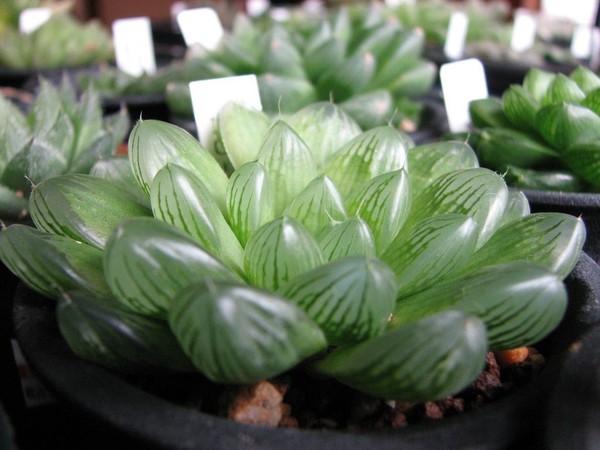
Haworthia obtusa is a small potted ornamental plant relatively suitable for growing in bedrooms, studies, and offices. It is especially suitable for placing next to a computer, as it can both relieve tension and protect eyesight, having multiple benefits.