How Do You Propagate and Prune a Rubber Plant? The Complete Guide to Methods Is Here
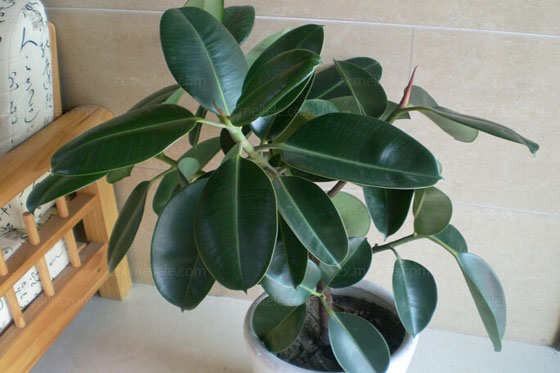
The rubber plant, also called the Indian rubber tree, rubber tree, or Brazilian rubber tree, is a large tree in the Euphorbiaceae family, genus Ficus, and an evergreen foliage plant. The rubber plant has a distinct trunk, few branches, and aerial roots, with relatively large, thick leathery, glossy leaves that range from round to oblong. The rubber plant has high ornamental value and is very effective for decorating and beautifying a home, and people often grow it in pots and place it in the living room or study. However, growing a rubber plant often comes with one problem: it very easily forms an upright shape, so it often needs pruning. Below, let's look at how to grow and prune a rubber plant.
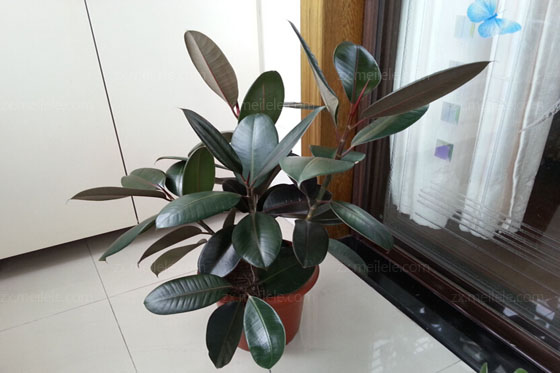
How to Grow a Rubber Plant
Cuttage Method
Growing a rubber plant from cuttings is very simple, easy to do, and the rubber plant also roots very easily. Generally, growing a rubber plant from cuttings is done in late spring and early summer, and it is best to choose one-year-old, semi-lignified middle branches. When taking cuttings, seal the cut end of the cutting with clay or plant ash; the standard for the cutting length is to keep 3 buds. Rubber plant cuttings should be inserted into a cutting bed with plain sand or vermiculite as the medium, with the cutting bed temperature controlled at around 18 to 25 degrees. Just water frequently and provide shade and ventilation.
Air Layering Method
This method is more suitable for ordinary home growing, and the rubber plant's survival rate is also relatively high. Choose a rubber plant branch that is 2 years old, appropriately sized, well developed, and firm in texture, make a light girdling cut at the desired spot, and apply an appropriate amount of naphthalene acetic acid solution, then wrap the girdled area with wet soil or a moss mixture or vermiculite that has absorbed enough water, and bind the outside with plastic film. Note that when wrapping, tie the lower end tightly and leave an opening at the upper end. This method is generally suitable for June each year.
Rubber Plant Pruning Methods
Pinching
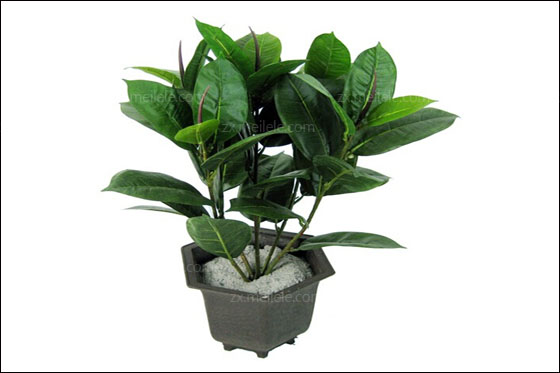
The pinching pruning method refers to removing the terminal bud of a branch or cutting off the top of a branch to encourage side branches to sprout. The rubber plant has strong apical dominance, and the 2-3 side buds near the top of the branch sprout very easily; after the side branches grow out, the tree shape becomes cup-shaped or Y-shaped. When pinching, it is best to keep the height close to the diameter of the flower pot.
Heading Back
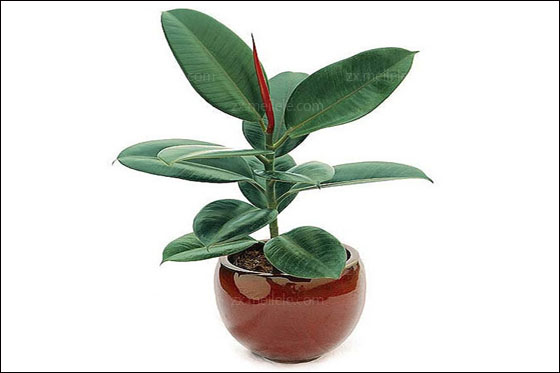
Although this method is not used much, the pruning effect is actually quite good. Simply cut off one-third or one-half of the upper part of the entire main branch of the rubber plant directly, and this will encourage the main trunk of the rubber plant to sprout side branches. Although the rubber plant will look unattractive at first after pruning, it is extremely beneficial for the rubber plant's later growth.
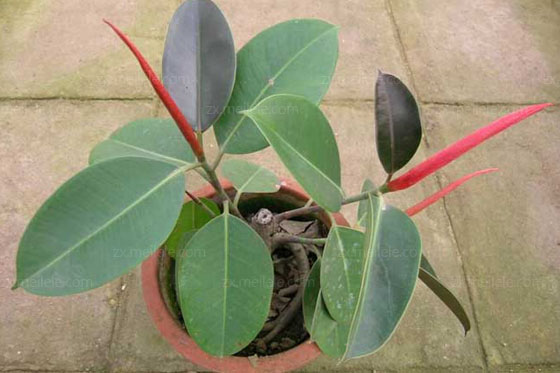
Notching
Notching is a method of making cuts on the bare areas of the rubber plant's main branch. This method can encourage the buds below the cut area of the rubber plant to sprout and form side branches, and it can also change the rubber plant's growth direction. Note that when notching, the wound only needs to cut from the epidermis to the xylem; the wound length should be one-half of the stem circumference, and the distance between wounds should be about 0.2 cm.
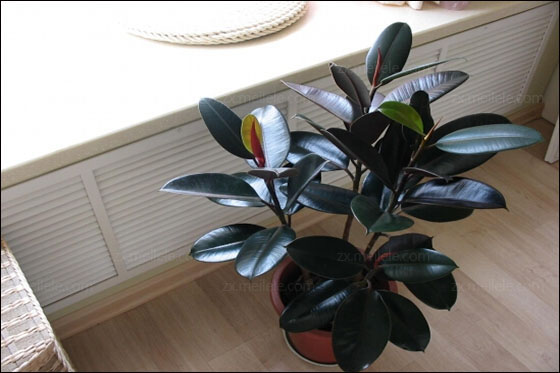
Conclusion: The rubber plant has very strong vitality. Whether it is initial planting or later pruning, people do not need to worry about it all the time. It is indeed a very easy-to-grow foliage plant. The above is an introduction to rubber plant growing and pruning methods, and we hope it is helpful to everyone.
[You May Be Interested In]
☑ Crassulaceae Plants ☑ Introduction to Gouache Painting ☑ Southern Magnolia Pictures ☑ Snow Lotus Pictures ☑ Crab Claw Orchid Pictures
☑ Serissa Pictures ☑ Black-and-White Decorative Painting ☑ Kalanchoe Cuttings ☑ Hydrangea Pictures ☑ Money Tree Pictures
People do not need to worry about it all the time. It is indeed a very easy-to-grow foliage plant. The above is an introduction to rubber plant growing and pruning methods, and we hope it is helpful to everyone.[You May Be Interested In]
☑ Crassulaceae Plants ☑ Introduction to Gouache Painting ☑ Southern Magnolia Pictures ☑ Snow Lotus Pictures ☑ Crab Claw Orchid Pictures
☑ Serissa Pictures ☑ Black-and-White Decorative Painting ☑ Kalanchoe Cuttings ☑ Hydrangea Pictures ☑ Money Tree Pictures