What do succulent plants mean? With pictures for appreciation
Succulent plants are also called succulents or fleshy plants, and in horticulture they are sometimes called succulent flowers, but the name succulent plants is the most commonly used. Succulent plants refer to a class of plants in which a certain part of the vegetative organ, such as the stem, leaves or roots (a few species have two parts), has well-developed parenchyma tissue used to store water, making them appear thick and juicy in appearance. Most of them grow in arid regions or regions that have a dry period during part of the year, and for a long time each year their roots cannot absorb water, so they rely only on the water stored in their bodies to sustain life. Sometimes people like to call this type of plant desert plants or psammophytes, which is not quite accurate. Many succulent plants do indeed grow in desert regions, but not all of them grow in deserts, and many plants that are not succulent plants also grow in deserts.
Aeonium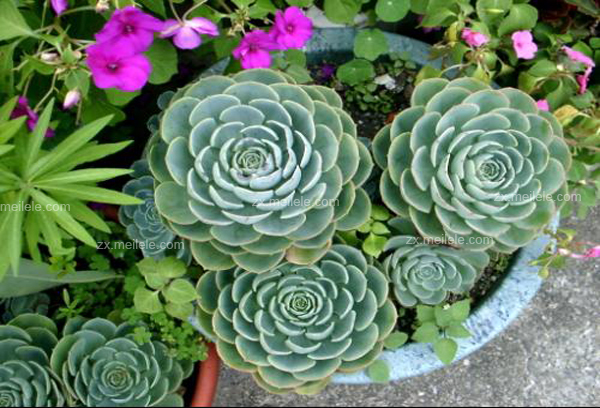
Perennial stemless herb. The rhizome is thick and strong, with many long filamentous aerial roots. The leaves are blue-gray, nearly round or obovate, with a rounded, nearly truncate apex, red, and no petiole. The inflorescence is a raceme-like single-branched cyme, the flower stem is 20-30 cm tall, with 8-12 flowers, pink or red on the outside and yellow on the inside, and the flowering period is June-August. It looks similar to Sempervivum.
Jade plant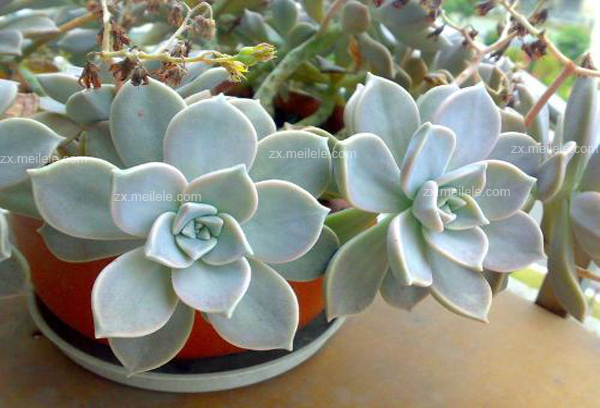
The jade plant has thick branches and leaves, is emerald green in all four seasons, has peculiar leaf shapes and a stately plant form, is easy to cultivate and simple to manage. It is suitable for potting and can be placed on a balcony or used as a decoration on indoor tables, appearing very delicate and elegant. Its crown is tall and upright and beautiful, its stems and leaves are emerald green, and it bears white flowers at the top, very elegant and unique. If matched with a pot stand and gravel to make a small bonsai, the jade plant is suitable for potting, and can also be grown into the posture of an old tree stump, making it even more attractive when decorating a tea table or desk. However, its leaf sap is toxic and can cause blindness. The latest research reports that medicine made from jade plant extract can effectively treat diabetes.
Kalanchoe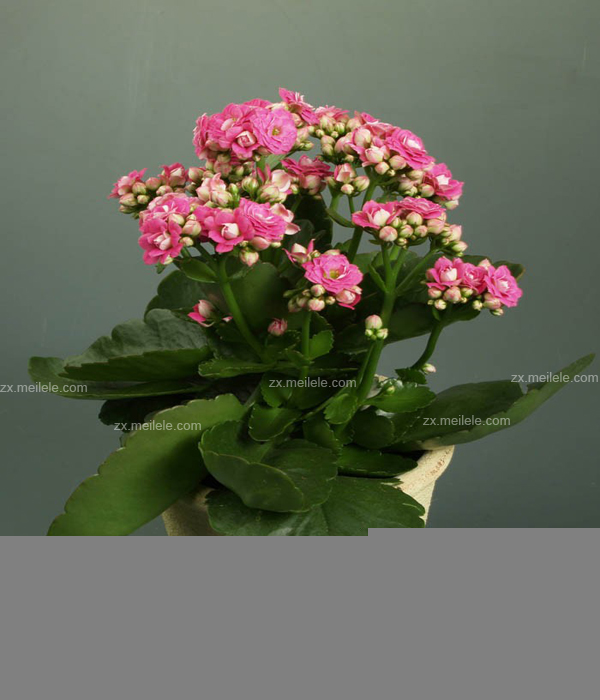
Kalanchoe is a succulent plant, forming a low clump from thick, glossy leaves, and is emerald green all year round. In spring, summer and autumn it is planted in the open ground as an edging material, and from December to April of the following year it produces bright, eye-catching flowers. Each flowering branch can bear as many as dozens of flowers, and the flowering period lasts more than 4 months, which is where the name kalanchoe comes from. It is an ideal potted flower for giving to relatives and elders during New Year's Day and the Spring Festival.
Euphorbia nerifolia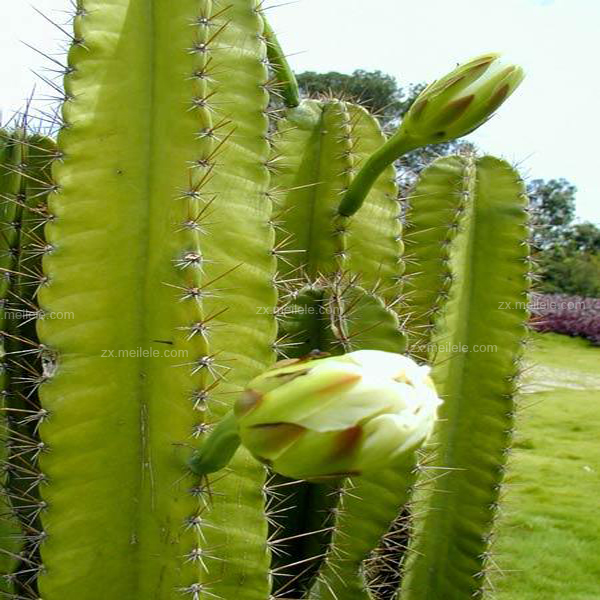
An evergreen succulent plant, with a thick stem, five ridges, and formed nipple-shaped hard spines. It is native to the Malay Archipelago, is not a desert plant, and is often cultivated in the tropics as a hedge. Cacti and succulent plants refer to the succulent flowers and cactus plants that are currently widely cultivated and very popular at home and abroad. Most of them have beautiful and varied spines, hairs, flowers and fruits, and they are an important part of the large plant family. In recent years, thanks to the careful cultivation of horticulturists in various countries, new varieties of succulent flowers have emerged one after another, especially the colorful and peculiar variegated and cristate varieties, which are even more prominent and attractive. They have high interest value, ornamental value and decorative value, and are a "hot spot" in home flower growing.
Other related links >>
| How to care for the happiness tree | Peace lily | The effects of pothos | How to grow gardenia | Potted flower pictures | Orange jasmine bonsai |
| How to grow Christmas cactus | Plectranthus amboinicus | How to grow rhododendron | Lily of the valley flower language | The effects of lavender | Plum blossom poems