A Detailed Guide to the Cultivation Methods and Precautions for Nandina
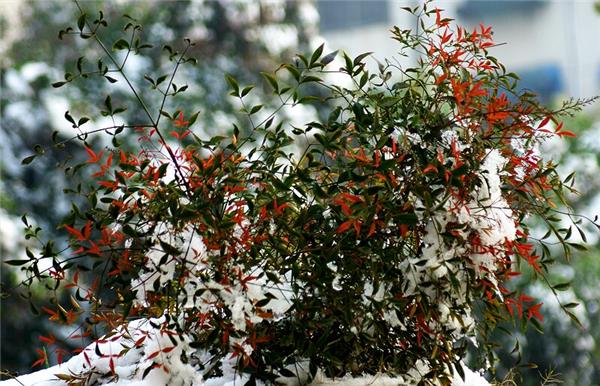
Nandina (Nandina domestica) was originally a wild-growing plant, and its reproductive capacity and growth capacity are both relatively strong. It can be propagated in a variety of ways and is easy to keep alive.
I. Propagation Methods for Nandina
It can be propagated by sowing, cuttings, division and grafting.
Propagation by sowing: After the fruit ripens in autumn, it can be sown immediately after harvest, or stratified in sand and stored until sowing in the following spring. If stored dry. Before sowing, use warm water at 40°C to promote germination, sow in drills, and cover with straw curtains. The seedlings grow slowly; in the same year the seedling height is about 5 cm, and after 3 to 4 years the seedling height is about 50 cm before it can bloom and set fruit.
Propagation by cuttings: It is best done in early March or during the rainy season from June to August. Select the top of a robust 1- to 2-year-old branch, 15-20 cm long, insert it into a mixed sand and soil seedbed, keep it moist, and maintain it under shade for 40-50 days, after which it will root.
Propagation by division: Mostly done in spring or autumn in conjunction with repotting or transplanting.
In addition, grafting is often used when propagating fine varieties, with seedlings used as rootstock.
II. Care Precautions for Nandina
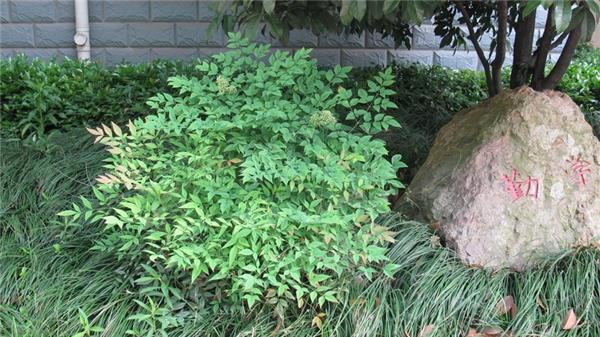
Soil: The cultivation soil for nandina requires fertile, well-drained sandy loam, and slightly acidic soil is suitable. It can be prepared in a ratio of 5 parts sandy soil, 4 parts leaf mold, and 1 part manure soil.
Watering: Nandina should be watered by the principle of watering when dry and letting it dry between waterings. In dry seasons, water frequently to keep the soil moist; in summer, water once a day and spray the leaf surface 2-3 times to keep the leaves moist and prevent the leaf tips from scorching, which would harm the appearance. When flowering, special attention should be paid to watering so that the potting soil does not dry out, and water should be sprinkled on the ground to raise air humidity, so as to help increase the pollination rate. In winter the plant is in a semi-dormant state, so do not let the potting soil become too wet.
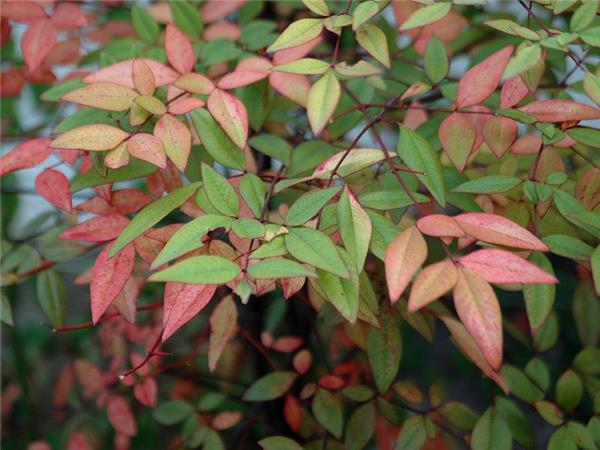
Sunlight: Nandina is best kept in a semi-shaded, cool, moist place. Under strong light, the stems become thick and short and turn dark red, young leaves are "burned", and mature leaves turn red; in a very shaded place, the stems become thin and the leaves long, and the plant clump becomes loose, which damages its ornamental value and is also unfavorable for fruiting.
Temperature: The suitable growing temperature for nandina is about 20°C, and the suitable temperature for flowering and fruiting is 24-25°C. The temperature requirements in winter are very strict; when the ambient temperature is below 8°C, growth stops, so in winter it should be moved into a greenhouse.
Fertilizing: During the growing period, thin fertilizer should be applied to young seedlings about once every half month (organic fertilizer rich in phosphorus is suitable). Adult plants should be given dry fertilizer three times a year, in May, August and October respectively; the third application should be made when they are moved indoors for overwintering. Fertilizers such as fully fermented cake fertilizer and sesame paste residue can be used. As for the amount, the first and second applications should generally be small, and the third can be increased.
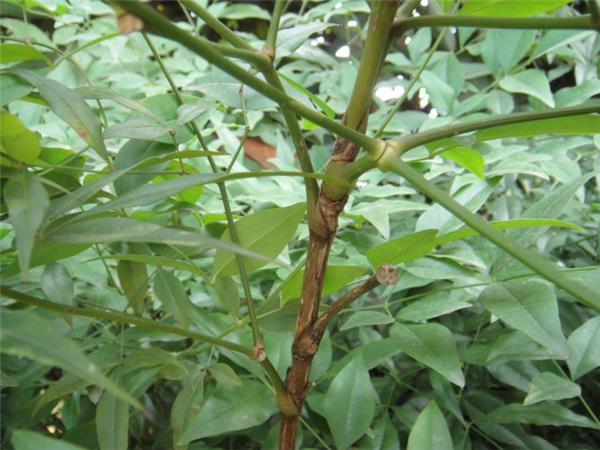
Pruning: The tree form of nandina is mainly a natural clumping form. After fruit viewing and before the buds sprout at the end of March the following year, select 7-11 robust branches as the main trunk branches according to the size of the crown, and cut off the remaining dead branches, crossing branches, thin and weak branches, diseased and pest-damaged branches, twin branches, overly dense branches and basal sprouts in the clump, so as to maintain ventilation and light penetration. After the fruit drops, cut off the dried inflorescences. Overgrowth of the main trunk branches of nandina easily causes lodging, so renewal pruning should be carried out to promote branch growth. When renewing, prune at a branching point; when there is no branch, keep an outward-facing bud below the cut to promote branch growth.
Pests and diseases: Nandina is prone to red spot disease and anthracnose, and the main pest is the measuring worm (inchworm). Before red spot disease occurs in spring, spray 70% thiophanate-methyl wettable powder at 800-1000 times dilution, or 70% mancozeb at 500 times dilution, once every 10-15 days, for 2-3 consecutive sprays. For anthracnose, during the onset period spray 50% thiophanate wettable powder at 400-500 times dilution, once every 10-15 days, for 3 consecutive sprays for control. When measuring worms occur severely, you can dig for pupae manually in early spring or late autumn, or use black light traps during the adult emergence period, or spray cypermethrin or 90% trichlorfon at 300 times dilution before the larvae reach the 4th instar.
Because nandina itself is toxic, accidental ingestion can cause symptoms such as general excitement, unstable pulse and muscle spasms, so care must be taken during cultivation.