What Flower Is the Tiger Orchid? A Detailed Guide to Tiger Orchid Cultivation Precautions
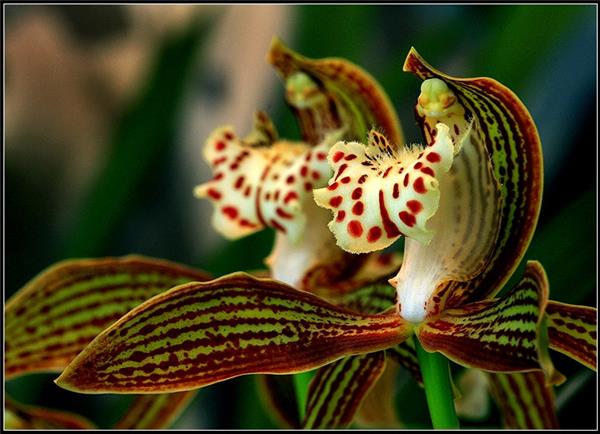
The tiger orchid (Cymbidium hookerianum) generally blooms between February and March each year. Both its flower shape and flower color are among the more unusual types found in orchids, so the ornamental effect it brings also differs from that of other orchids.
I. Morphological Characteristics of the Tiger Orchid
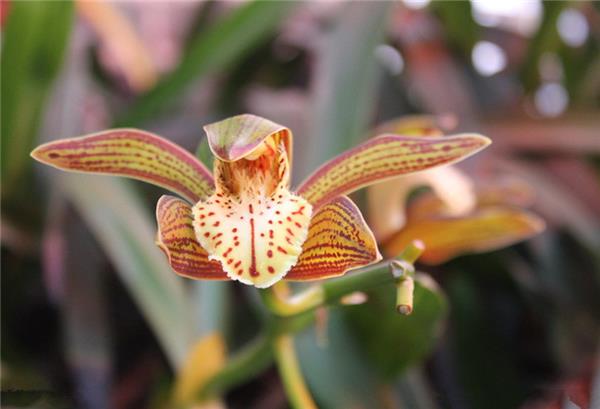
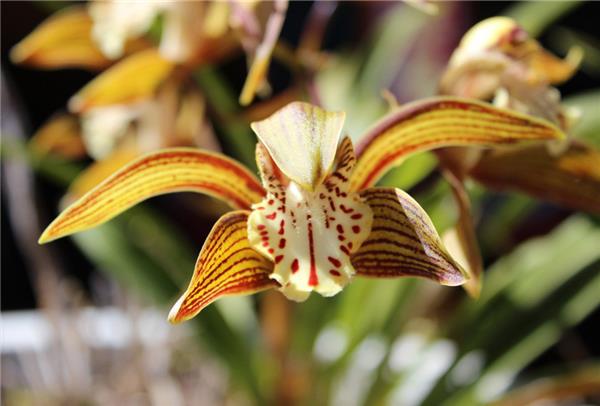
The tiger orchid is an epiphytic plant. Its pseudobulbs are thick and stout, long-oval, and slightly flattened. It has 7-8 leaves growing in a clump, broad and band-shaped, thinly leathery, up to 90 cm long, usually 2-3 cm wide, with acuminate tips and bases that fold together and clasp each other, with entire margins. The scape is nearly upright, often shorter than the leaves, and bears 6-12 or more loosely arranged flowers; the floral bracts are about 5 mm long; the pedicel plus ovary is about 4 cm long; the flowers are pale yellow-green and have a slight osmanthus fragrance; the dorsal sepal is nearly oblong, 4.5-6 cm long and 1.2-1.8 cm wide, yellow-green, with a purple-brown flush on the back at the base; the lateral sepals are obliquely oblong and slightly narrower; the petals are narrower than the sepals, 5-12 mm wide, pale yellow-green, with small purplish-red spots at the base; the lip has a slightly short claw and is 3-lobed, the lateral lobes upright with purplish-red stripes, the mid-lobe slightly recurved with a wavy margin, the upper surface of the lip disc covered with short pubescence, and the 2 keels parallel and hairy; the column is very long, 3-4.2 cm. The flowering period is February-March.
II. Tiger Orchid Cultivation Precautions
1. Planting: Potted tiger orchids should be planted as soon as possible after division. A medium-sized flowerpot can be used as the container. During the operation, first fill in a small amount of potting soil, then place the new plant in and hold it upright, fill with soil, and press lightly. Water once first, then place it in a shaded spot. Note that the placement location should avoid direct drafts from cross-ventilation, and generally no topdressing should be applied within 4-6 weeks. It is best to shade it for several days before allowing the plant to receive normal light.
2. Soil: A mixed substrate made from leaf mold, coarse sand, and garden soil can be used, with their proportions by volume being 2:0.5:0.50 in order.
3. Humidity: Because its roots are often exposed to the air, the tiger orchid likes relatively high air humidity. In North China, the autumn, winter, and spring seasons are dry, so it is necessary to frequently spray water on the ground around the plant, on the benches, and on the plant itself to increase air humidity. After the tiger orchid blooms, it has a short period of dormancy, during which watering should be reduced. During the vigorous growth period in spring and summer, it must not be dry, otherwise growth and flowering will be greatly affected.
4. Water and Fertilizer: Paying attention to fertilization during the growing season is an important measure for cultivating tiger orchids well. Fermented cake fertilizer, chicken manure, etc. can be mixed with 1/3 fresh soil, then water added to make ball-shaped objects about 2 cm in diameter, and dried in the sun for later use. In the storage season, apply them at the edge of the tiger orchid's pot surface; through watering, the fertilizer can be slowly released for the orchid's growth. It can be applied 2 times each year, with several granules each time. During the peak growing season, if the fertilizer still seems insufficient, fermented liquid fertilizer can also be applied as a topdressing, once every other day.
5. Light: The tiger orchid likes a lightly shaded environment and should preferably receive no less than 4 hours of scattered sunlight each day, but during the high-temperature stage in summer and autumn it should be shaded; during the low-temperature period in winter and spring, it should instead receive sufficient sunlight.
6. Temperature: It likes warmth and is not cold-tolerant. It grows better within a temperature range of 18-26°C, and the overwintering temperature should not be lower than 5, preferably kept above 12°C.
7. Pests and Diseases: Tiger orchids can be harmed by viral diseases, anthracnose, etc., and can be attacked by harmful animals such as scale insects. If these occur, measures should be taken promptly to deal with them.
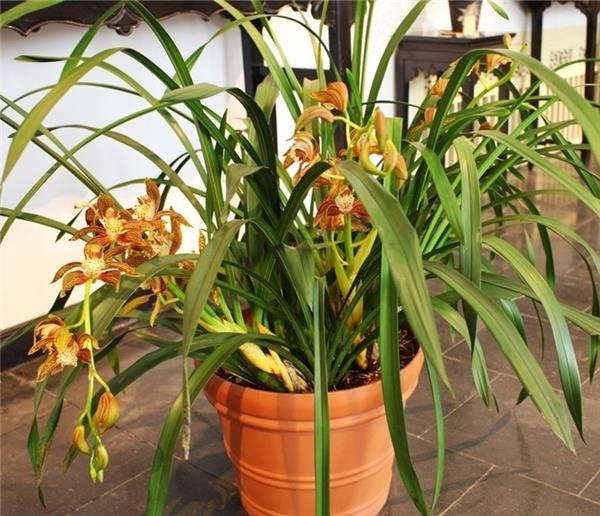
That is all for the introduction to the tiger orchid. After reading the above introduction, have you also developed a liking for this distinctive orchid? If you also want to grow a pot of tiger orchid, you can choose to place it in places such as the living room or study, where it can enhance the beauty of these spaces.