What to Do About Yellow Leaves on Gardenia? Cause Analysis and Solutions
Many gardenia growers run into the problem of yellowing gardenia leaves, but it is hard to tackle the problem in a targeted way. This illustrated guide to yellowing gardenia leaves, compiled by a fellow grower, is not 100% accurate but offers good reference value.
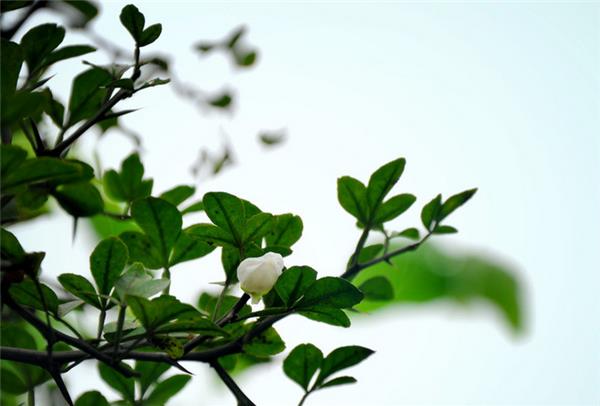
I. What to Do About Yellow Leaves on Gardenia
1. The factor of improper watering.
If gardenias are overwatered during cultivation, the young leaves will turn dull and lusterless while the old leaves are unaffected, but the leaves will take on a yellow-green color and new leaves will not grow. The solution is: take the plant out of its pot and place it in a ventilated, shady spot until the root ball dries out, then put it back in the pot. When water is lacking, the leaf tips or edges wither and dry out, the old leaves turn yellow from the bottom upward and drop off, while new leaves grow relatively normally; at this point you should water thoroughly and generously.
2. The factor of improper light.
Too-strong light causes yellow patches on the sunlit side of the leaves, which recover when the plant is placed in a shady spot. If a gardenia is kept in a shaded environment for a long time, its leaves will turn yellow or drop because they cannot get enough sunlight; it is best to supplement the light right away.
3. The factor of improper fertilizing.
When growing gardenias, pay attention to fertilizing: too much fertilizer or too high a concentration can easily cause the plant to turn yellow. The tips of new leaves will turn brown; generally the leaf surface is thick and lusterless, and uneven and not spread out, while the old leaves scorch yellow and drop off. At this point you should water more to reduce the fertilizer concentration in the soil. Insufficient fertilizer can also cause the plant to turn yellow, but the symptoms differ depending on which nutrient the plant lacks.
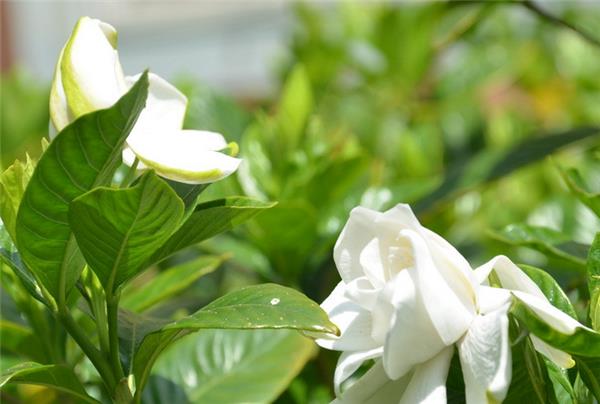
II. How to Care for Gardenia
1. Get propagation right. As we know, gardenia propagation is divided into two types: sexual propagation and asexual propagation.
Sexual propagation: generally select plump, dark-red ripe fruits, dry them in the sun with the husk on or air-dry them to use as seed. Before sowing, use scissors to cut open the seed husk, dig out the seeds, rub them apart in hot water, remove the floating seeds or impurities, and then scoop out the sunken, plump seeds.
Asexual propagation: the cutting method -- it can be divided into spring cuttings and autumn cuttings. For the cuttings, choose healthy 2-3 year old branches, cut 10-12 cm, remove the lower leaves, keep the top two leaves and cut each in half, first dip them in vitamin B12 injection, then insert them diagonally into the cutting bed with only one node left above the surface. Take care to shade them and maintain a certain humidity, and when the rooted seedlings begin to grow, transplant them or pot them up individually.
2. There are also special points to note in the routine care of gardenias.
Give it an acidic environment. If the soil, water and fertilizer contain alkali, the plant cannot absorb iron, which affects the formation of chlorophyll, causing the branches to wither, the leaves to scorch, and even death. Use fertile, loose, well-drained acidic soil; for example, mixing thoroughly composted pine sawdust into the soil also works very well.
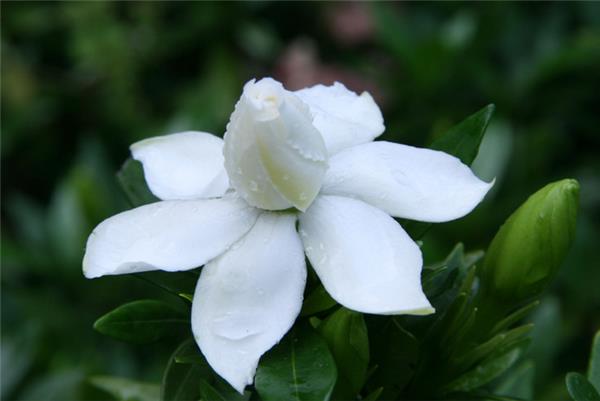
III. Gardenia Varieties
1. Large-leaf gardenia: also called large-flowered gardenia; a cultivated variety with large leaves, large, strongly fragrant, double flowers that do not set fruit.
2. Water gardenia: a small plant with small flowers and small leaves, double-flowered.
3. Bird's-tongue gardenia: also known as small-flowered gardenia or bird's-tongue flower. The plant is low-growing and prostrate, with small, narrow, oblanceolate leaves. The flowers are also relatively small and strongly fragrant. The flowers are double.
4. Yellow gardenia: also known as mountain gardenia, it is the wild species of gardenia. The leaves are somewhat small, the flowers are single, and in autumn it bears orange-red fruits that do not fall for a long time; it is also strongly alkali-resistant and a good tree for viewing flowers and fruit.
5. Ovate-leaf gardenia: the leaves are obovate with rounded tips.
6. Narrow-leaf gardenia: the leaves are narrow; it grows wild in Hong Kong, China.
7. Variegated gardenia: the leaves have markings. Other names: bird's-tongue gardenia, small-flowered gardenia, bird's-tongue flower; Rubiaceae, Gardenia genus.
8. Small-leaf gardenia: an evergreen shrub with a small plant and spreading branches; the leaves are narrow and oblanceolate, opposite or in whorls of three, with membranous sheath-like stipules; the flowers are relatively small, solitary in the leaf axils or at the tips of the branches; the calyx tube is ribbed; the corolla is salverform, white, double, and fragrant; the fruit is ovoid with 6 longitudinal ridges.
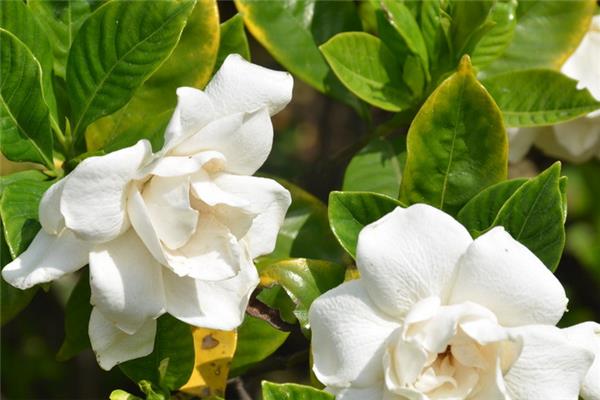
Besides being ornamental, the flowers, fruits, leaves and roots of the gardenia can be used as medicine, with the effects of clearing fire and relieving restlessness, clearing heat and promoting urination, and cooling the blood and removing toxins. The single leaves are opposite or in whorls of three, obovate, leathery, and glossy green. The berry is ovoid, yellow or orange. It likes a warm, humid environment with plenty of sunlight and is relatively cold-tolerant; the gardenia tolerates partial shade and fears waterlogging, and requires loose, fertile, acidic sandy loam. It likes a sunny, well-ventilated environment but dislikes intense direct sun.