What are the care methods for Gardenia during its blooming period
In daily life, gardenias can be seen everywhere, and whenever the blooming season comes, you can smell that lingering fragrance, and in many parks and communities, gardenias are very important ornamental courtyard plants. Gardenias are also very easy to grow and have tenacious vitality. So when exactly does the gardenia bloom? And how should it be cared for during its blooming period? Let's answer these questions together below.
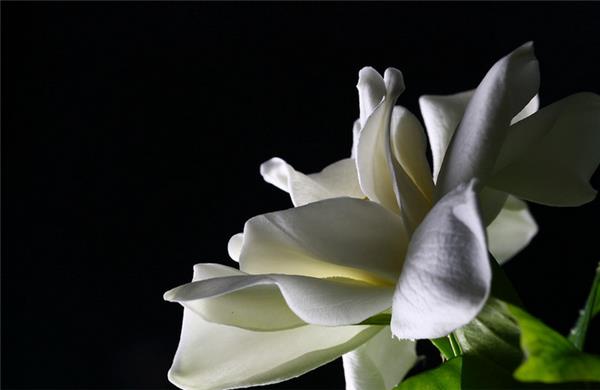
I. Care of Gardenia during the Blooming Period
1. It likes a shady environment: never let the blazing sun scorch it, but some people also mistakenly think that the gardenia is a fully shade-loving plant, which leads to mistakes in cultivation. In fact, while paying attention to creating a shady environment for it, we should also maintain 60% sunlight all day, so as to better meet its growth needs.
2. It likes moisture: when the air humidity drops below 70%, it will directly affect flower bud differentiation and the growth of flower buds, but excessive moisture can also easily cause root rot as well as withered branches and yellow leaves dropping off. Besides normal watering, we should also often spray its leaves and the nearby ground with clean water, which can appropriately increase the air humidity.
3. It likes fertilizer: although the gardenia likes fertilizer, it needs fertilizer that has been fermented and decomposed and is acidic, and it must follow the principle of light fertilizer applied frequently. Be sure to avoid concentrated fertilizer and raw fertilizer, and no fertilizer should be applied during its dormant period.
4. The temperature it likes: during the growing season, the most suitable temperature is between 18-22 degrees, and the temperature needed for overwintering is 5-10 degrees. If the temperature once drops below minus 10 degrees, it will easily suffer frost damage.
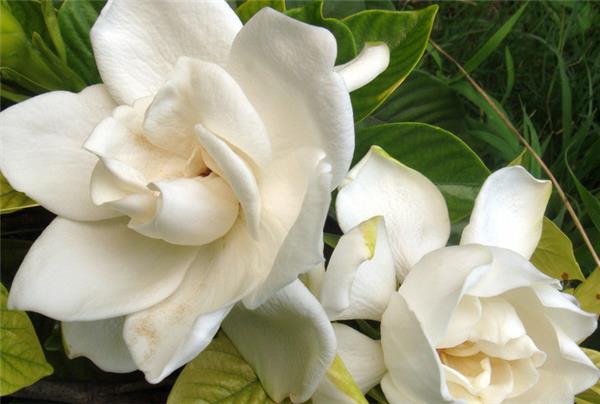
II. Points to Note for Gardenia
1. Gardenia likes acidic soil: if the soil, water and fertilizer contain alkali, the plant cannot absorb iron, which affects the formation of chlorophyll, causing branches to wither, leaves to scorch, and even death. Use fertile, loose, well-drained acidic soil, such as pine sawdust that has been thoroughly composted and mixed into the soil; the effect is also very good.
2. Gardenia likes shade and coolness: never expose it to the blazing sun, but some people often mistakenly think that the gardenia requires full shade, causing mistakes in cultivation. In fact, while paying attention to creating a shady environment for it, you should maintain 60% sunlight all day to meet its growth needs.
3. Gardenia likes moisture: if the air humidity is below 70%, it will directly affect flower bud differentiation and the growth of flower buds, but excessive moisture will cause root rot, withered branches and yellow leaves dropping off. Besides normal watering, you should often spray the leaves and the nearby ground with clean water to appropriately increase air humidity.
4. Gardenia likes fertilizer: it is suitable to apply decomposed soybean cake, sesame paste residue, peanut bran and other fertilizers, which can become acidic after fermentation and decomposition, but light fertilizer must be applied frequently. Be sure to avoid concentrated fertilizer and raw fertilizer, and do not fertilize during the dormant period. For plants grown less than three years, be sure not to apply human excrement and urine. Applying too much nitrogen fertilizer will cause thick branches and large, dark green leaves, but no flowers. When phosphorus and potassium fertilizer are lacking, it will also fail to bloom or the flower buds will wither and drop off.
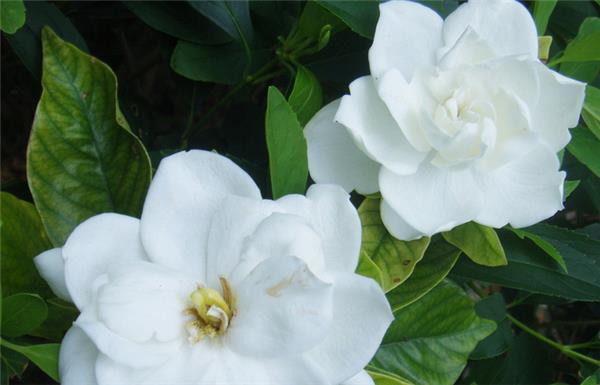
III. Propagation Methods for Gardenia
It is mainly propagated by cuttings and layering, and can also be propagated by sowing and division.
(1) Cutting propagation
In the north, do it in a greenhouse from October to November; in the south, cuttings can be taken anytime from April to the beginning of autumn, but the survival rate is highest between summer and autumn. Select healthy 2-year-old branches as cuttings, 10-12 cm long, cut off the lower leaves, first dip them in vitamin B12 injection, then insert them into sand. Under conditions of 80% relative humidity and a temperature of 20-24°C, roots can form in about 15 days. If soaked in 20*10 to the -6th power to 50*10 to the -6th power indolebutyric acid for 24 hours, the effect is even better. When the rooted seedlings begin to grow, transplant them or pot them individually; they can bloom after 2 years.
(2) Layering propagation
In April, select vigorous branches 25-30 cm long from a 3-year-old mother plant for layering. If there is a three-forked branch, you can layer at the fork, and get three seedlings at once. Generally, roots form after 20-30 days, and in June they can be separated from the mother plant; by the next spring they can be planted separately or potted individually.
(3) Seed propagation
This is mostly done in spring. The seeds germinate slowly, sprouting about 1 year after sowing, and blooming after 3-4 years. In the north, potted plants rarely produce seeds.
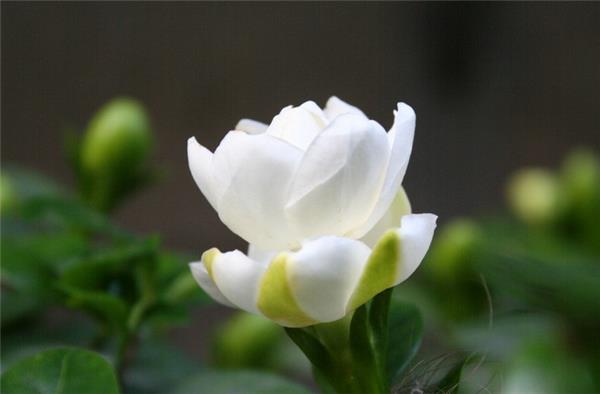
From the above introduction, we can clearly know that the gardenia blooms from May to June every year, and during this period we also need to take careful care of it. Let its fragrance always stay by our side.
During this period we also need to take careful care of it. Let its fragrance always stay by our side.