[When Does Gardenia Bloom] How Long Is the Gardenia Blooming Period
Pure white flowers and deep green leaves are a major characteristic of the gardenia. The small gardenia tree is a green plant that people grow at home as a potted plant, used for ornament and to improve air quality. So do you know about the gardenia's blooming time and blooming period? Today let us learn about the beautiful and fragrant gardenia!
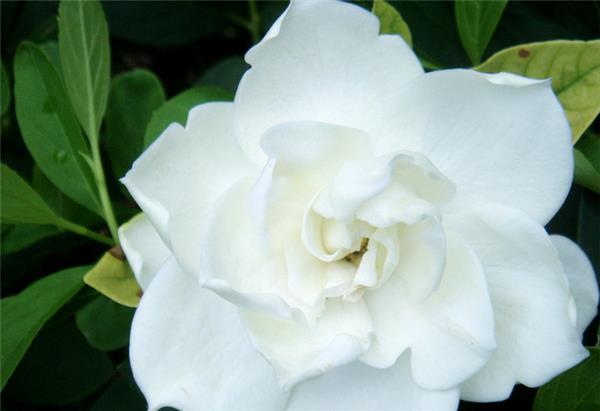
I. When Does Gardenia Bloom
When Does Gardenia Bloom - Habits
The gardenia blooming season is from June to August each year, with continuous blooming, and its fruit ripens around October. Now that we know the answer to when the gardenia blooms, let us further understand the gardenia! The gardenia likes to grow in a warm, humid environment with plenty of sunlight; it fears waterlogging, tolerates cold, and tolerates partial shade. The gardenia's soil requirements are fertile, loose-textured, acidic soil.
When Does Gardenia Bloom - Varieties
There are many varieties of gardenia, including large-leaf gardenia, water gardenia, sparrow's-tongue gardenia, yellow gardenia, ovate-leaf gardenia, narrow-leaf gardenia, and variegated-leaf gardenia. So when do different varieties of gardenia bloom? Although gardenia varieties differ, as for when different varieties of gardenia bloom, we still need to tell everyone that different varieties of gardenia bloom at the same time, with the blooming period all in June to August.
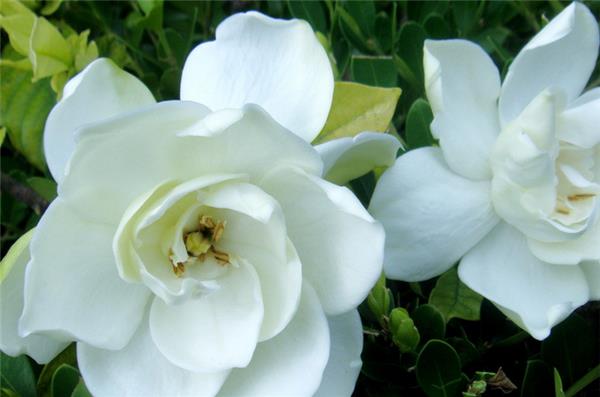
II. Characteristics of Gardenia
Gardenia belongs to the Rubiaceae family. It is an evergreen shrub. The single leaves are opposite or in whorls of 3, with obovate, leathery, emerald green and glossy blades. The flowers are white and extremely fragrant. The berries are ovate, yellow or orange.
1. Gardenia likes fertilizer, and it is best to apply organic fertilizer with balanced and mild fertilizing power, such as decomposed soybean cake, sesame paste residue, peanut bran, etc.; after fermentation and decomposition they can become acidic fertilizer, but only light fertilizer should be applied frequently, and strong fertilizer or raw fertilizer must be avoided.
2. Gardenia is a flower that likes a humid environment, but if watered too much, making the potting soil too wet, it will reduce the air in the soil, injure the root system, and also cause the leaves to turn black and drop.
3. Gardenia also especially needs the nourishment of iron; a lack of iron will cause chlorosis.
4. Excessive light can also cause the leaves to turn yellow or even fall off.
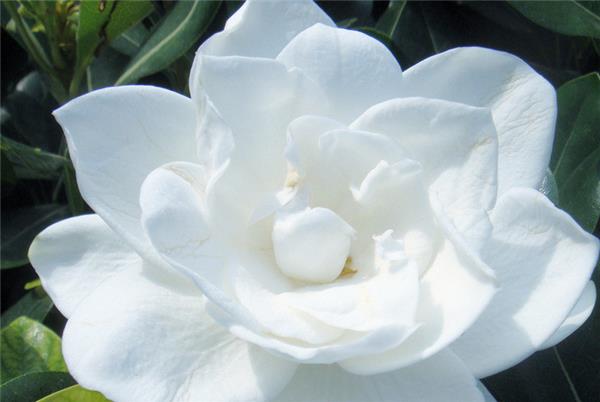
III. Uses of Gardenia
Gardenia flowers, fruit, leaves and roots can be used as medicine, generally taken as tea or decocted in water. Gardenia contains gardenoside, dehydroxyl gardenoside, paederoside methyl ester and a small amount of shanzhiside, and has effects such as clearing heat and promoting urination, cooling blood and detoxifying, treating jaundice, painful and difficult blood strangury, red swollen and painful eyes, fire-toxin sores, and lowering blood pressure. Among these, the gardenia fruit used as medicine mainly treats high fever from heat disease, restlessness and insomnia, toothache from excess fire, sores of the mouth and tongue, epistaxis, vomiting blood, conjunctivitis, sores and swellings, icteric infectious hepatitis, favism, and hematuria; for external use it treats traumatic bleeding and sprains and contusions. The root used as medicine mainly treats infectious hepatitis, traumatic injuries, and wind-fire toothache. "Compendium of Materia Medica" calls it "pleasing the complexion; the face cream in 'Qianjin Yi' uses it." "Diannan Bencao" says it "drains lung fire, stops cough from lung heat, stops nosebleeds, and reduces phlegm."
Dietary Taboos of Gardenia
Those with spleen deficiency and loose stools should avoid taking it.
① "Bencao Huiyan": For vomiting blood and nosebleeds, it is contraindicated unless caused by a violent outbreak of yang fire.
② "Depei Bencao": When pathogenic factors are on the exterior, or when deficient fire rises, both are prohibited.
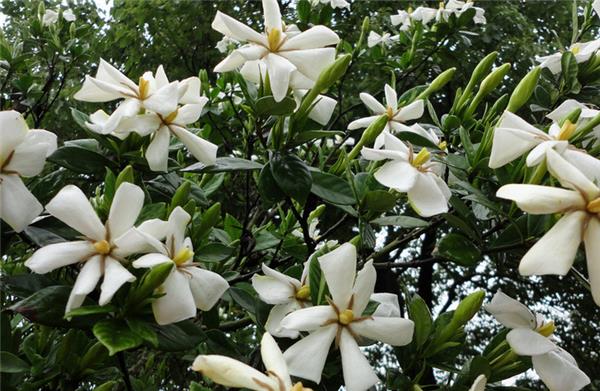
I hope the above introduction is of some help to you in growing gardenias in the future! Gardenia is recognized by flower-growing enthusiasts as one of the flowers that are difficult to grow. In fact, as long as you understand any plant's living habits, and according to its requirements give it a suitable environment and proper management, no plant is difficult to grow. Gardenia is no exception!