When do pomegranate flowers bloom? Key points for flowering-period care and management
Usually at home we all grow some small potted plants and the like, and it can also serve as a little hobby. As for potted pomegranates, the flowers are bright red like fire, the fruit is large and attractive, and the seeds are red like agate and edible too. I believe many people like it just as I do, haha. Now let me tell you some little tips about growing pomegranate flowers, and see how to keep pomegranate flowers alive.
I. When do pomegranate flowers bloom
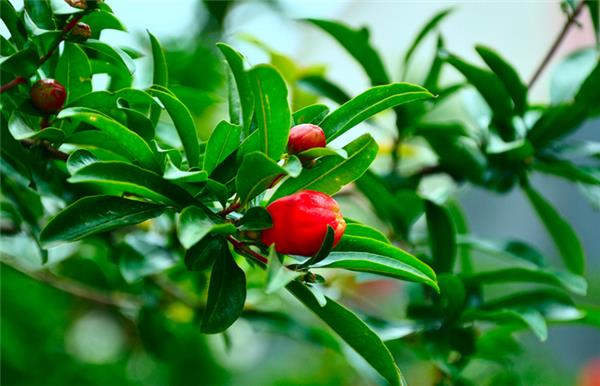
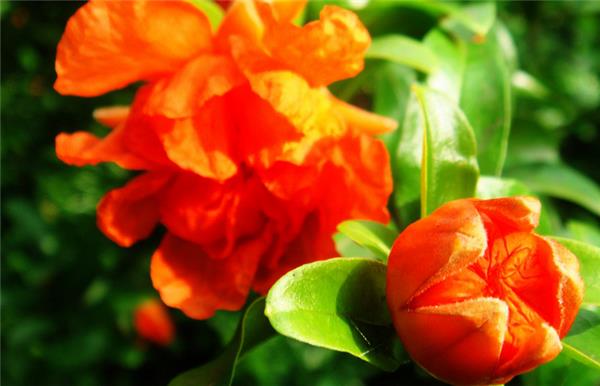
The pomegranate flower is a plant that likes heat and fears cold, and it fruits in autumn, so its flowering season is late spring to early summer. In the south, the flowering date is generally in the 5th lunar month, and then the flowering period ends in the 7th lunar month. There are female and male flowers; the way to tell them apart is that the base of the female flower is relatively large, and after flowering it rarely falls off because it needs to bear fruit, while male flowers will not bear fruit.
The pomegranate tree generally begins to sprout around March, starts to leaf out in early April, and can form buds in early May. Then June is the peak flowering period, and it begins to bear fruit in September; generally by October the fruit is ripe. Its flowers usually have 5 petals, and some have 7 petals, mainly red and white, and the berry is spherical and generally shows a yellow-red color.
II. Pomegranate flower blooming, care and management
1. Management after planting. Pomegranate likes fertilizer; when planting, more base fertilizer should be applied, and after the leaves fall in autumn and winter, some organic fertilizer should be applied again. Apply a quick-acting fertilizer once each when leaves emerge, before flowering, and after the flowers fall. For potted pomegranates, because the potting soil is limited, the amount of fertilizer each time cannot be too much; it should be "eat small meals often." The commonly used fertilizer is mainly organic fertilizer such as cake fertilizer, which after fermentation is applied as liquid fertilizer.
2. Shaping and pruning. Potted pomegranates have the characteristic of tight branches and dense leaves. During the dormant period, one thinning pruning can be carried out. They can be shaped into a single-trunk round-headed form, or into a multi-trunk clumping form or a flat-topped form.
3. Pest and disease control. If pomegranate suffers from dry rot or sooty mold, the diseased branches can be cut off and burned. The main pest is the peach fruit borer. During the egg hatching period, spray 50% dichlorvos 500-1000 times dilution; from early June to early July, before the larvae bore into the fruit, spray fenvalerate 2000 times dilution, which also controls other leaf-eating pests; after fruit set, 5 g of phoxim emulsion can be mixed with 500 g of dry fine soil and an appropriate amount of water to make a medicinal paste for control.
4. Winter cold protection. In winter, place potted pomegranates in a sunny shed or indoor area, and the room temperature must not exceed 5°C, so as to maintain normal dormancy.
III. The effects of pomegranate flowers
1. Strengthening the body
Pomegranate helps digestion, resists gastric ulcers, softens blood vessels, lowers blood lipids and blood sugar, lowers cholesterol and has many other functions. It can prevent coronary heart disease and hypertension, and can achieve the effects of strengthening the stomach, refreshing the mind, increasing appetite, and prolonging life.
2. Inhibiting Escherichia coli
Pomegranate peel has obvious antibacterial and astringent functions. It can make the intestinal mucosa contract and reduce the secretions of the intestinal mucosa, so it can effectively treat diarrhea, dysentery and other symptoms, and has a good inhibitory effect on Shigella and Escherichia coli.
3. Deworming
The peel of pomegranate contains alkaline substances and has a deworming effect.
4. Stopping bleeding and improving eyesight
The pomegranate flower is sour and astringent in nature and neutral in property. If dried in the sun and ground into powder, it has a good hemostatic effect and can also stop red and white vaginal discharge. Soaking pomegranate flowers in water to wash the eyes also has an eyesight-improving effect.
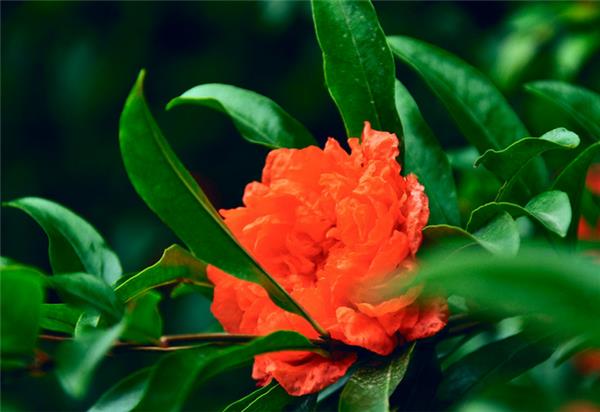
When do pomegranate flowers bloom? The above has provided a detailed explanation for everyone, and also explained in detail the functions and uses of pomegranate flowers, when pomegranate flowers bloom, and the care and management of pomegranate flower blooming, for your reference.