What are the benefits and effects of pomegranate flowers
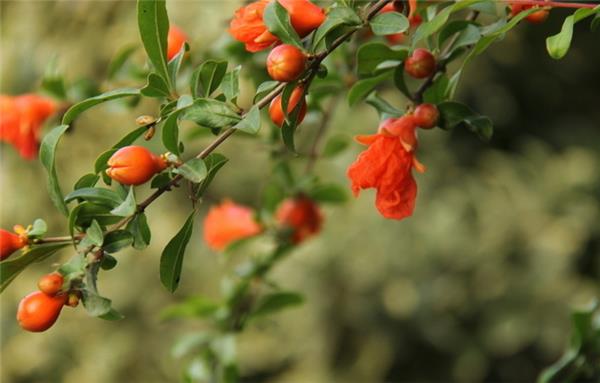
The pomegranate is a very delicious fruit, not only bright and juicy, but also full of plump seeds, and pomegranate flowers are the blossoms produced by the pomegranate tree. They can often be seen in our daily lives. These flowers not only have ornamental value, but also have good medicinal value. Today I will share with you an appreciation of pomegranate flower pictures and the benefits and effects of pomegranate flowers.
I. Benefits and Effects of Pomegranate Flowers
1. Pomegranate flowers have many uses. They can not only decorate the home environment, but can also be used for viewing. As greenery, the pomegranate tree has a graceful form and beautiful branches and leaves. In early spring, tender green leaves emerge; in midsummer, it is full of blooming flowers; in autumn, heavy fruits hang on the branches, creating a lively scene. If small potted pomegranate flowers are placed on windowsills and balconies at home, they can make the home environment both lively and elegant.
2. Pomegranate flowers also have a certain greening effect. The pomegranate is a type of plant that can not only effectively remove harmful gases such as sulfur dioxide, chlorine, ether, ethylene, carbon monoxide and nitrogen peroxide, playing a role in purifying the air and promoting good health, but the red-and-green plant can also enrich the visual experience, allowing one to experience the breath and feeling of nature.
3. The flowers and leaves of the pomegranate both have considerable medicinal value. First, pomegranate flowers taken internally can stop nasal obstruction, vomiting of blood and bleeding from external injuries, and can also treat excessive vaginal discharge in women, while external use can treat otitis media. Second, the tender leaves of the pomegranate taken internally can strengthen the stomach, regulate the intestines and aid digestion, while external use can treat eye diseases and skin diseases. Moreover, modern medical research also believes that the pomegranate has the effect of inhibiting various bacilli and skin bacteria.
II. How to Grow Pomegranate Flowers
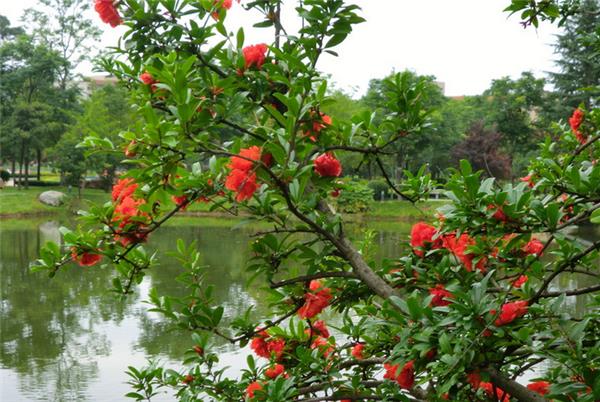
Pomegranate flowers are distributed quite widely, and are grown in many places. They can be cultivated in many soils and environmental climates. Generally speaking, pomegranates cultivated in courtyards or dwarf pomegranates can also be grown in pots. Their lifespan is relatively long; if grown reasonably, they can live for several decades, and in some tropical rainforests, pomegranate trees can grow for more than 200 years. As an evergreen fruit tree, pomegranate flowers like light. Unlike some household ornamentals such as snake plant, clivia and peace lily, they only need sufficient water and can grow well even under strong light. As pomegranate trees are also planted in the north, their drought tolerance is relatively strong. Generally, the best growing method is half-cultivated and half-wild. They can grow in ordinary soil, as long as the annual temperature is not lower than 10°C. Below this temperature, the leaves will fall off and they will enter dormancy. Summer temperatures are very suitable for growth, so pomegranate trees bloom relatively well in summer. Pomegranate trees generally sprout in early spring, then begin to grow branches and leaves. They generally grow relatively quickly in summer, but generally they cannot bloom in the first year of growth. They generally bloom more in the second year, then bear fruit, and by the third year they may grow relatively large.
III. Pruning Potted Pomegranate Trees
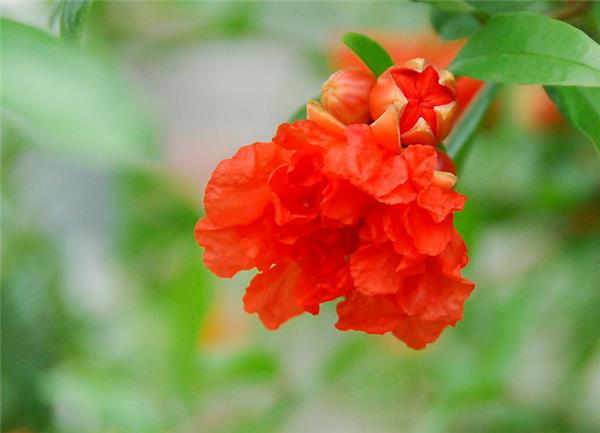
Winter pruning is also called dormant-period pruning. It is best carried out after leaf fall and before bud break. In arid and cold areas, pruning in severe winter can easily cause cold damage, so it can be postponed until before bud break in spring.
For the handling of fruit-bearing mother branches, when pruning fruit-bearing mother branches, you must first identify the flower buds and the fruit-bearing mother branches that bear flower buds. Retain as many fruit-bearing mother branches with flower buds as possible, and keep 3-5 vegetative branches around them, with the ratio of fruit-bearing mother branches to vegetative branches roughly 1:5-15. If the original tree's branches are too dense and no flower buds or very few flower buds have formed, then simply prune until the small branches no longer cross or overlap each other and space is left.
For the handling of large branches, it should be carried out according to the principle of "three sparse and three dense" (large branches sparse, small branches dense; upper part sparse, lower part dense; periphery sparse, inner canopy dense). The three main branches and side branches should keep a distance of 80-100 cm from each other, so as to facilitate the space for small branches (branch groups) to grow. When the distance between main and side branches is small, large branches can be thinned out or large branches can be spread apart.
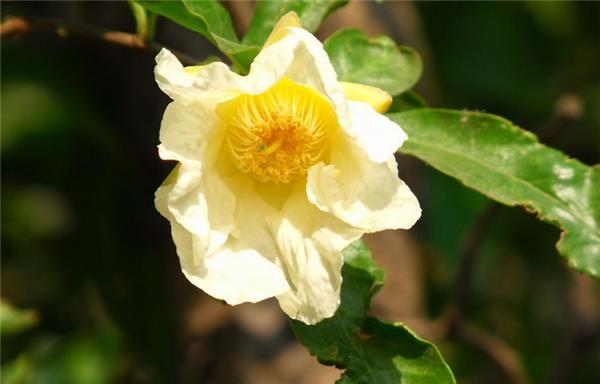
Pruning of the pomegranate is very important, as it can affect the ability to bloom and bear fruit. Heavy pruning is carried out in autumn and winter. After new branches grow, overly dense, weak and base-clustered branches should be cut away in time to ensure that the main branches have sufficient nutrients, which is conducive to flowering and fruiting.