What are the effects and benefits of golden camellia?
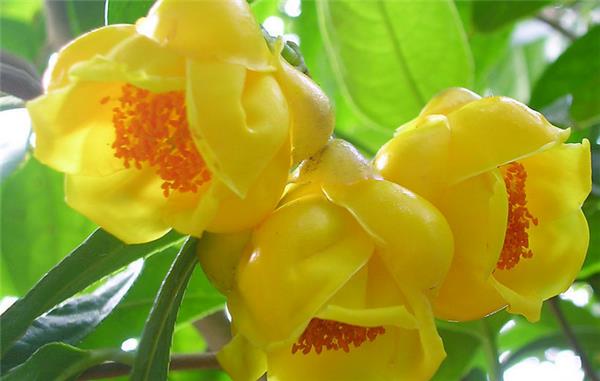
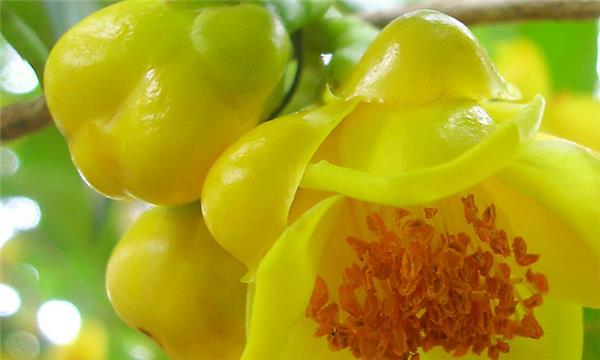
Golden camellia grows singly in the leaf axils. When it blooms, the flowers are cup-shaped, pot-shaped or bowl-shaped, delicate and varied, elegant and graceful, dazzling to the eye, as if coated with a layer of wax, crystal clear and glossy, with a sense of being semi-transparent. Today we will introduce golden camellia cultivation, and the effects and benefits of golden camellia.
I. Effects and Benefits of Golden Camellia
Golden camellia not only has high economic value, but also has pharmacological effects that cannot be ignored. Golden camellia can lower blood sugar, enhance immunity, eliminate toxins from the body and provide many other benefits.
Golden camellia can promote the secretion of insulin, thereby rapidly breaking down blood sugar and effectively lowering blood sugar. It also promotes the ability of cells to absorb blood sugar, so that the symptoms of diabetic patients are alleviated;
Golden camellia contains a variety of nutritional elements. Taking golden camellia products will make our blood weakly alkaline, thereby activating the lymphocytes of the immune system, improving human immunity, and strengthening our resistance to viruses;
Golden camellia helps the human body quickly eliminate toxins from the body and lower the peak blood sugar level in the body.
II. Propagation of Golden Camellia
Golden camellia can be propagated by grafting, cuttings, layering and tissue culture. Seeds can be sown once mature; seedlings grown from seed take about 7-8 years to bloom. Cuttings are mostly taken from one-year-old branches in spring, grafting is best done in autumn, and layering can be carried out at any time during its growing period.
1. Cuttings. Golden camellia cuttings are generally taken in the dry season from May to June. Select a young mother tree, cut a one-year-old tender branch from the top, about 10 cm long, remove the lower leaves, trim flat below the node with a blade, keep one terminal bud and one lateral bud at the top, and 2-3 leaves, then insert into a medium of river sand or gravel, with an insertion depth of 1/3 to 2/3. After insertion, cover with a straw curtain for shade, increase foliar spraying, maintain the air humidity of the cutting bed, and promote rooting. To improve the survival rate of cuttings, soak the cuttings in a 50-100 ppm ABT rooting powder solution for 8-12 hours.
2. Grafting. Choose vigorous seedlings or camellia varieties that root easily from cuttings as the rootstock, cut it off at 4-5 cm from the ground diameter, split it about 1.5 cm deep through the pith, use 1-2 year old branches as scions, keep 1-2 leaves on the upper part of the scion, cut the lower part into a wedge shape, insert it into the split opening of the rootstock, make sure the cambium layers on both sides fit closely, then tie it tightly with plastic tape. After grafting, cover the scion with a plastic bag and tie it below with a string, but not too tightly, so that water droplets form inside the bag and drip onto the rootstock from time to time. Then put a paper bag outside the plastic bag to shade it from direct sunlight.
III. Storage Methods for Golden Camellia
The discovery of golden camellia caused a sensation in the horticultural world, and it received great attention from horticulturists at home and abroad. It is considered an excellent original material for breeding golden-yellow camellia varieties.
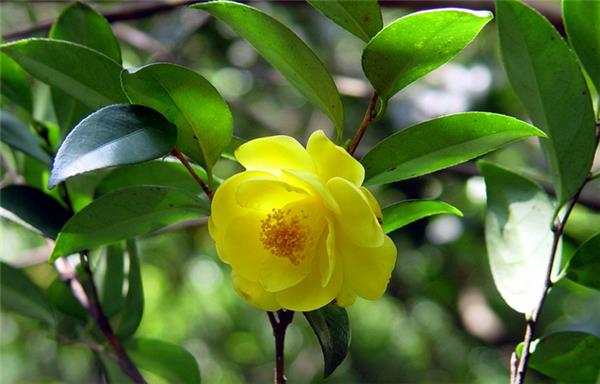
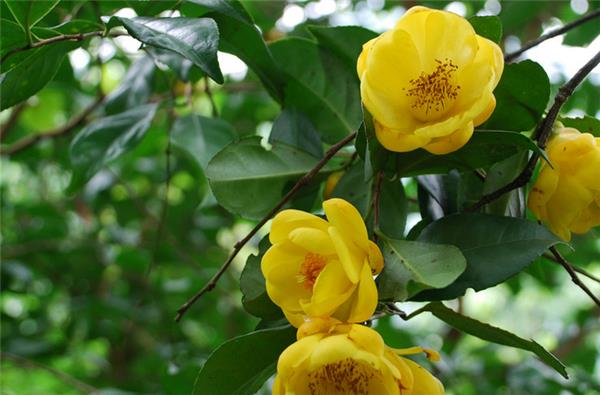
Golden camellia belongs to the genus Camellia in the family Theaceae, and is a twin sister of tea, camellia, Camellia nanchuanica, oil tea, and sasanqua. Its branches are loose, the bark is light grayish yellow, and the leaves are dark green, thick and leathery, narrowly oblong. The apex is caudate-acuminate or acute, the leaf margin curls slightly toward the back, with fine, hard serrations. The flowers of golden camellia are golden yellow, dazzling to the eye, as if coated with a layer of wax, crystal clear and glossy, with a sense of being semi-transparent.
1. Short-term storage (within 20 days), seal and place in a cool, dry place, avoiding direct sunlight;
2. Long-term storage, seal and store in a freezer to maintain freshness (note: ensure the tea is sealed, and do not store items with strong odors in the freezer at the same time); a temperature of minus 5°C is best.
The above is the golden camellia-related information shared with everyone today. Golden camellia is expensive and combines rarity, ornamental value, blood sugar lowering, immunity boosting and many other benefits. Now do you know when golden camellia blooms, and the effects and benefits of golden camellia?