Detailed Explanation of Nine Key Precautions for Cultivating Longan Tree Seedlings
The longan is a tree species whose flesh, peel, and roots all have medicinal value, and its flowers are small and charming while its fruit is round and lovely, giving it very high ornamental value as well. To cultivate such a tree species with so many benefits, extra care is needed in nine aspects.
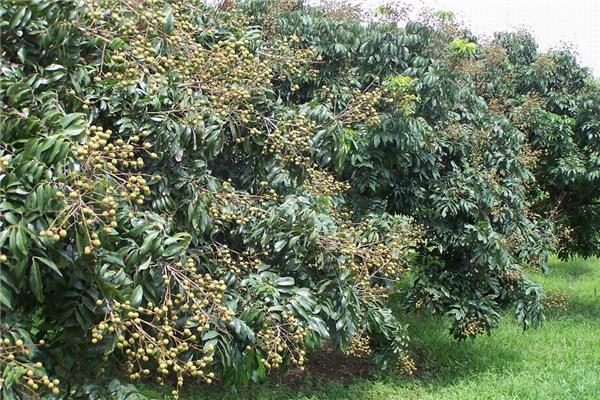
Seedling selection: Seedling selection is an important technical step. It requires pure variety, robust plant growth, deep green leaf color, well-developed fibrous roots, and no pests or diseases. Grafted seedlings should have more than two mature growth flushes above the graft union. Old and declining seedlings with aged trunks and yellowing leaves, as well as seedlings that are too small, are not suitable for planting.
Planting: The size of the planting hole mainly determines how much organic soil-improving fertilizer is used, and it should be no smaller than 0.8 x 0.8 x 0.6 m in length x width x depth. The base fertilizer filled into the hole mainly includes topsoil, weeds, pond mud, garbage, pig and cattle pen manure, and chicken manure, which can be backfilled into the hole in layers or mixed, and generally after backfilling it is composted for 1-2 months before planting. Except for winter, planting can be done in all other seasons. Spring planting is generally best. For planting, it is suitable when the loose soil in the planting hole settles and the root collar is level with the ground or 3-5 cm below the ground, so that the soil fully contacts the root system, and then sufficient water for settling the roots should be poured. After planting, water to keep the soil moist. Note that seedlings should be planted as far as possible not on rainy days; when planting seedlings with soil balls, the soil ball must not be broken apart, and when planting bare-root seedlings, the root system should be fully spread out and evenly distributed.
Fertilization: Fertilization can begin 1 month after the longan tree is planted. It is recommended to apply "two fertilizers per flush", that is, apply the 1st fertilizer when the terminal bud of the branch flush begins to sprout; apply the 2nd fertilizer when the new shoot has basically stopped elongating and the leaf color changes from red to green. In addition, apply winter fertilizer mainly based on organic manure in November-December each year.
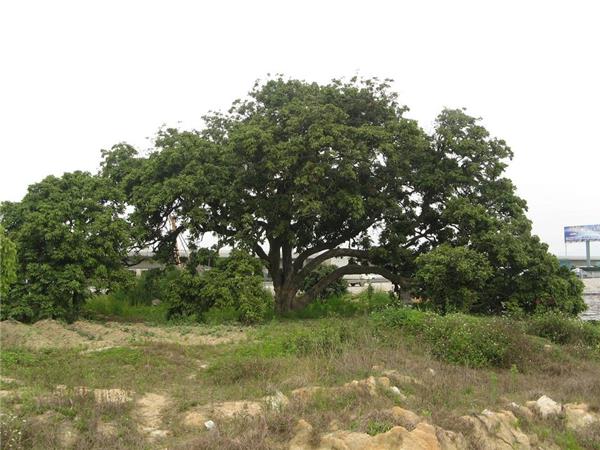
Watering: Keep the soil relatively dry before flowering. From the flowering stage to the autumn shoot flushing stage, keep the soil moist and ensure balanced water supply. Irrigate (or water) during drought, and promptly drain accumulated water after rain.
Pruning: In the 1-3 years after planting, longan trees are mainly pruned lightly. At a trunk height of about 30-50 cm, cultivate 3-4 evenly distributed and robust main branches, and afterward let the main branches extend naturally, pruning out overly dense branches and diseased or pest-infested branches, so that they form a three-dimensional fruiting canopy.
Pest and disease control: During the new shoot growth period, if leaf spot disease, anthracnose, longan psyllid, stem borer, or stink bug occurs, you can use trichlorfon at 600 times plus 50% carbendazim at 700 times, or dimethoate at 800 times plus 70% thiophanate at 800 times, mixed for spraying control. In addition, for longan witches' broom disease, every year in April-May, combined with shaping and pruning and thinning of flower spikes and fruit clusters, cut off diseased spikes and diseased shoots 10-20 cm from the diseased part. If small seedlings and newly planted orchards are affected, they should be removed promptly; for longan downy blight, before flowering or after flower drop, spray once every 15 days for 2-3 consecutive times. The agents can be 0.5:0.5:100 Bordeaux mixture, 70% thiophanate-methyl wettable powder 1000 times solution, 25% metalaxyl (Ridomil) wettable powder 800-1000 times solution, or 64% oxadixyl wettable powder 600 times solution.
Flower promotion: Before the winter shoots sprout, carry out girdling treatment on the trunk about 8-10 cm in diameter. For new shoots that emerge after November, manually remove them when they are below 10 cm, or spray-kill them with ethephon solution or other shoot-killing chemicals when they are below 5 cm.
Fruit retention: Ring-cut or shorten flower spikes to delay flowering time so as to avoid flowering in rainy weather; spray compound nucleotide fruit retention agent at the flowering stage to improve fruit set rate and prolong the flowering period; release bees and attract flies at the flowering stage, shake flowers after rain, spray water in dry weather, and perform artificial pollination, etc.
Harvesting: It is generally best to pick in the morning or evening, and it is not suitable to harvest in rainy weather, typhoon weather, foggy weather, or when the morning dew has not dried. It must be emphasized to use the correct harvesting method, requiring harvesting the entire spike, preferably by cutting 3-6 cm from the base of the fruit spike with 2 compound leaves attached, and the cut should be neat. The harvested fruit spikes should be handled carefully and placed gently, and cooled in a shaded place to help preserve nutrients and extend the fresh-keeping period.
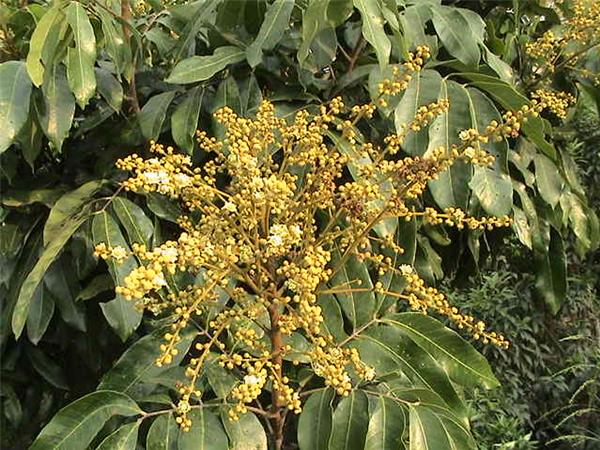
The above are the nine main precautions for planting longan tree seedlings to make them easier to survive and to increase the fruit set rate of longan trees. It is believed that if you take good care in these aspects, the longan tree will surely repay everyone with an abundance of fruit.