How to grow the Tia succulent? Master its ecological habits and care precautions
Tia's other name is "Green Flame," because its shape somewhat resembles a burning green flame, hence the name. Although Tia is a foreign beauty, it is very adaptable, and can easily be kept alive even in China.
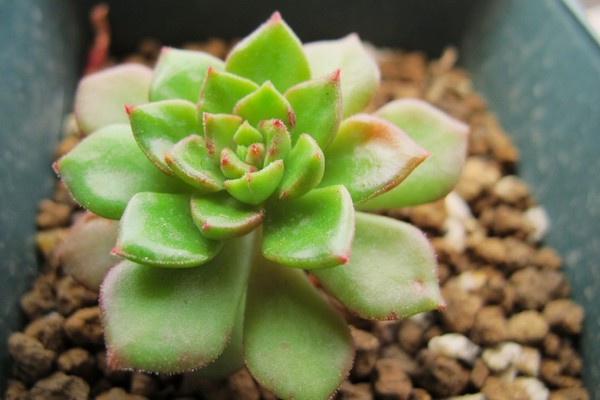
I. Introduction to Tia
Tia, also called Green Flame, is a hybrid variety of the Crassulaceae family and the Echeveria genus. The plant is a perennial succulent herb, with a height that can reach 20cm, and it easily clusters from the base of the stem, forming a multi-branched structure. The plant can grow to around 10-odd cm, and the base of new branches has leaves, which gradually fall off over time, forming an old stump, and the old stems easily grow aerial roots. Tia's fleshy leaves are arranged in a lotus shape, very beautiful, with short pointed obovate-cuneate leaves, a keel on the back of the leaf (a raised center on the back of the leaf), and extremely short stiff bristles on the edges. In summer or when light is insufficient, the leaves appear green, but in the autumn and winter seasons with large temperature differences, with sufficient light, the leaf edges turn a beautiful red. The plant blooms in cymes, with small white bell-shaped flowers, and multiple flower buds gathered on the peduncle open in sequence, fresh and elegant.
Tia's flower language: gratitude.
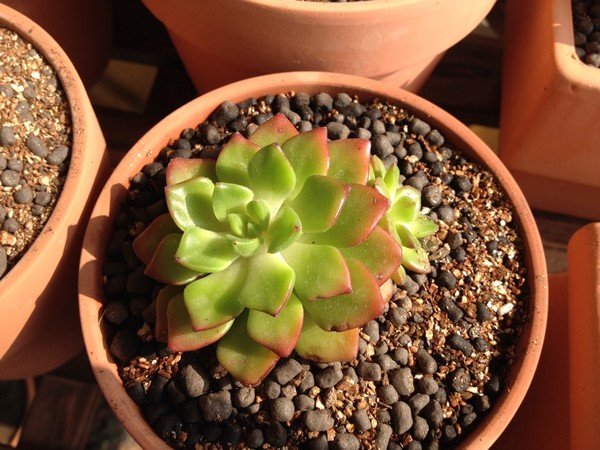
II. Tia's growth habits
Tia's ecological habits: Tia likes a warm, dry and sunny environment, is drought-tolerant, not cold-tolerant, and can tolerate slight semi-shade. The Tia succulent likes a warm, dry, ventilated and sunny environment, is drought-tolerant, cold-tolerant, shade-tolerant, and highly adaptable, but is not tolerant of prolonged direct sun exposure. It generally has no obvious dormant period. In summer, when temperatures are high, the plant has a brief dormant period, during which the plant grows slowly or completely stalls; it can be placed in a well-ventilated spot for care, avoiding prolonged rain, with slight shading and controlled watering. Spring, autumn and early summer are the plant's main growth periods. The potting soil should be watered thoroughly after drying out; during the growth period, being too dry can easily cause the old leaves to wither (except during the dormant period). Overall, Tia is relatively easy to care for; usually give it sufficient light and water thoroughly after the soil dries out. In summer, ventilate and control water with appropriate shading, but do not shade too much, which would instead cause leggy growth. Generally speaking, getting through summer is not difficult, but the leaves turning green is basically unavoidable. Avoid prolonged sun exposure or insufficient light, which would cause it to lose its looks. After summer, it can become beautiful again in autumn and winter. In fact, as long as the green Tia maintains a dignified plant shape, it is also very much worth admiring
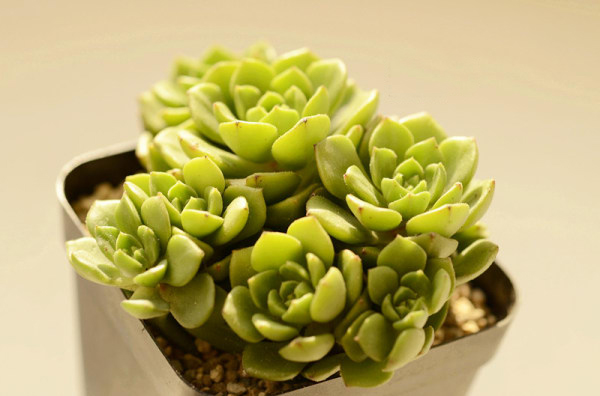
III. Tia's care and nursing
Tia, a succulent, likes a warm, dry, ventilated and sunny environment, is drought-tolerant, cold-tolerant, shade-tolerant, and highly adaptable, but is not tolerant of prolonged direct sun exposure. It generally has no obvious dormant period. During the growth period, it can be watered thoroughly; in summer when temperatures are high, attention should be paid to shading, and water should be given in small amounts. At the same time, strengthening ventilation is also essential. Be sure to give the plant sufficient light; insufficient light easily causes leggy growth, and the leaves become loose and thin. In winter, move it indoors to a sunny spot for care. The key point of the medium is that it is loose, has good drainage, and is relatively fertile. It is recommended to add an appropriate amount of bone meal to the bottom of the pot as a base fertilizer.
Spring, autumn and early summer are the main growth periods of the Tia succulent. The potting soil should be watered thoroughly after drying out; during the growth period, being too dry can easily cause the old leaves to wither. In winter, if the lowest temperature is not below 5°C, it can be watered normally so the plant continues to grow; if such a high temperature cannot be maintained, then watering should be gradually controlled to let the plant gradually go dormant. When the potting soil is dry, it can withstand an indoor low temperature of minus 3°C.
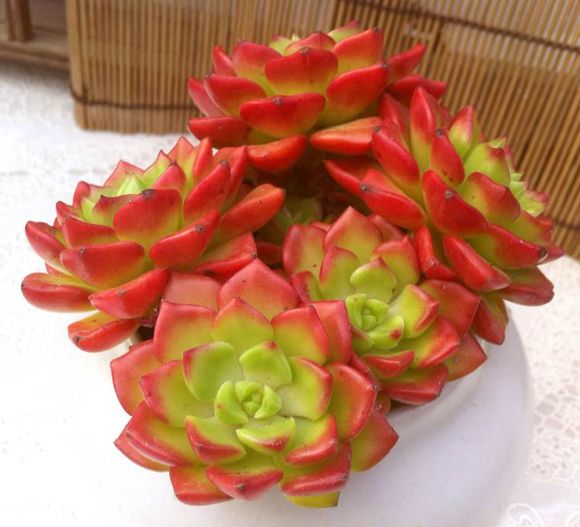
For growing the Tia succulent, the soil just needs to be breathable. Tia has relatively strong adaptability to soil and is not prone to disease; just be careful not to attract aphids when it blooms. Cinder mixed with peat, with breathability as the priority, with no specific ratio; the pot surface is covered with granular river sand, which is both attractive and breathable.