What plant is the Easter cactus? A detailed guide to care precautions
The Easter cactus resembles the Christmas cactus (Schlumbergera) and the Easter cactus (Hatiora) in appearance, with small short bristles along the edges of its segments, very much like crab legs, so it is also called "crab flower." Now let us take a look at how to grow the Easter cactus.
I. Morphological characteristics of the Easter cactus
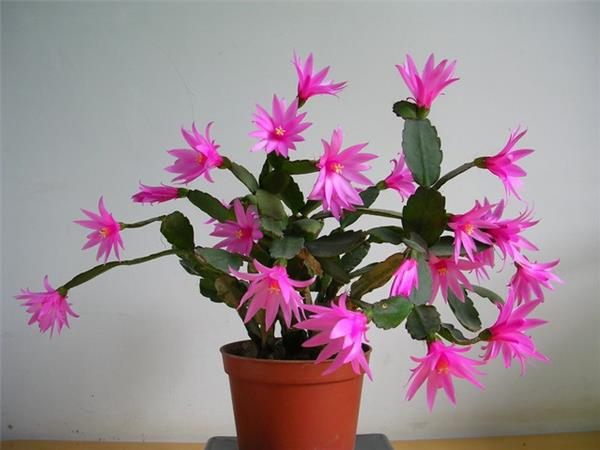
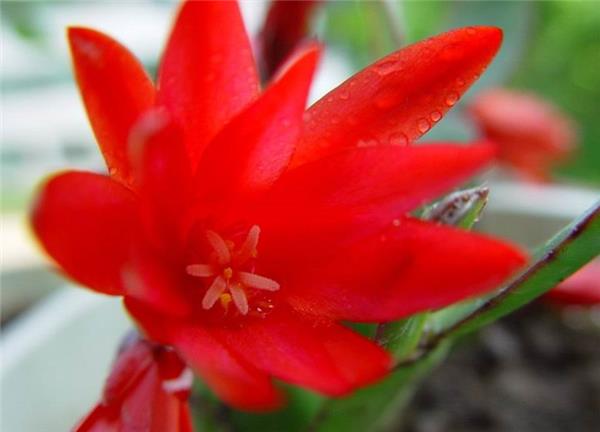
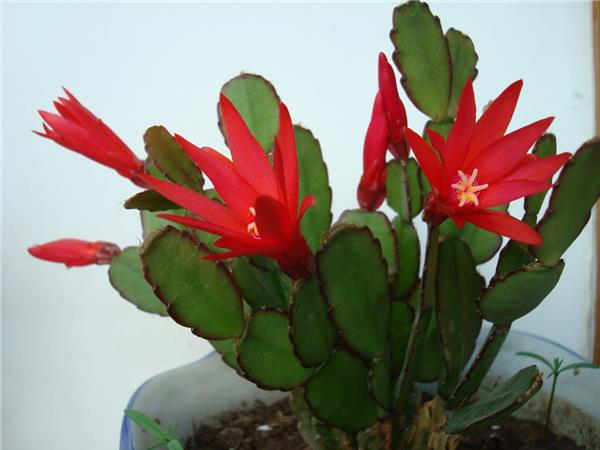
The Easter cactus is an epiphytic succulent of the Cactaceae family and the genus Hatiora, native to tropical South America, especially widely distributed in Brazil, and cultivated in many countries around the world. Its appearance closely resembles the Christmas cactus and the Easter cactus. The flowers grow at the tips of the stem segments, are red, large, with neat petals in a standard radial arrangement. The plant is 15 cm to 20 cm tall, much branched, with leaves reduced and branches hanging in stem-segment form. The stem segments are elliptical, flat, jointed, blue-green, with rounded wavy or notched margins, and the axils of the rounded teeth bear short hairs or a few yellow bristles, very similar in appearance to the Easter cactus, hence also called "crab flower." The floral tube is short, and the flower diameter is 6 cm to 8 cm; the petals spread widely, forming a standard radial flower, orange-red and bright in color, usually blooming from March to April, which coincides with Easter in European and American countries, so it is also called the "Easter cactus." The fruit has 5 ridges, about 1.5 cm long, and the flowering period is March to April.
II. Propagation methods of the Easter cactus
Cuttings: In March to April, cut healthy, plump stem segments and insert them into a sand bed, keeping it moist. At a temperature of 25°C, they root in about 40 days. When the young roots turn from white to yellow-brown, they can be potted. Place some organic fertilizer at the bottom of the pot, cover it with soil, and then plant the seedlings.
Grafting: To cultivate an umbrella-shaped, trailing plant form to increase ornamental value, grafting can be used for propagation. Grafting is usually done in spring and autumn. The rootstock is often Hylocereus undatus, Pereskia, or flat-leaf cacti. If Hylocereus undatus is used as the rootstock, graft one scion onto each of its three ribs; if Pereskia or a flat-leaf cactus is used as the rootstock, make a vertical slit at the top, peel the bark off both sides of the scion base with a blade to expose the xylem, insert it directly into the slit of the rootstock, bind it with plastic strips and cover it with a plastic bag, then place it in a shaded spot for care.
Sowing: Mostly used for breeding new varieties. Seed-grown plants need 4 to 5 years to flower. After sowing, the Easter cactus germinates in about 2-3 weeks.
III. Care precautions for the Easter cactus
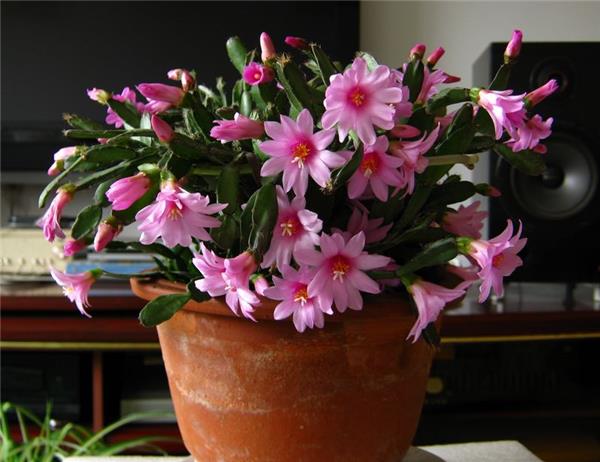
Habits: The Easter cactus prefers a warm, humid environment with plenty of sunlight. It is not cold-tolerant and dislikes direct strong light. The soil should be an acidic sandy loam rich in humus. In winter, the temperature should not be lower than 5°C.
Potting soil: Use 3 parts peat soil or leaf mold plus 1 part sand or perlite as potting soil.
Watering: The Easter cactus needs plenty of water throughout its growth and flowering period, keeping the potting soil constantly moist, but avoid waterlogging in the pot. After the flowering period ends, there is a 2-3 week dormant period. Water less, only keeping the potting soil from drying out completely. After the dormant period, gradually increase the amount of watering. At first, when the top 1 cm or so of the potting soil has dried but the lower soil is still moist, it can be watered, until early spring.
Fertilizing: During the growing season, apply a liquid fertilizer mixed with nitrogen and phosphorus about once every 20 days; during the bud stage, apply more phosphorus and potassium fertilizer.
Light: The Easter cactus prefers a semi-shaded environment, so it should be placed in a semi-shaded, well-ventilated and cool place, avoiding excessive rain. In winter, it can go without shading in a greenhouse. Indoors, in winter it can be placed by a sunny window or on an enclosed balcony, and the overwintering temperature should not be lower than 10°C.
Pruning: During the bud stage, promptly remove new shoots from the modified stems so that nutrients are concentrated in the flower buds; after flowering, prune promptly, remove old branches, and apply 1-2 applications of nitrogen fertilizer as appropriate.
Generally speaking, grafting is a relatively popular method of propagating the Easter cactus. Grafting it onto relatively sturdy succulent plants such as cacti and dragon bones can create a mutually beneficial, win-win effect, that is, it can increase ornamental value and also allow the plants to depend on each other well.