Detailed Explanation of Propagation Methods and Pest and Disease Control Techniques for Osmanthus
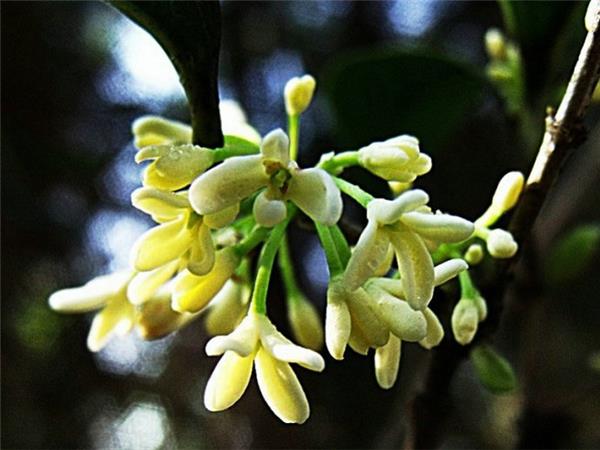
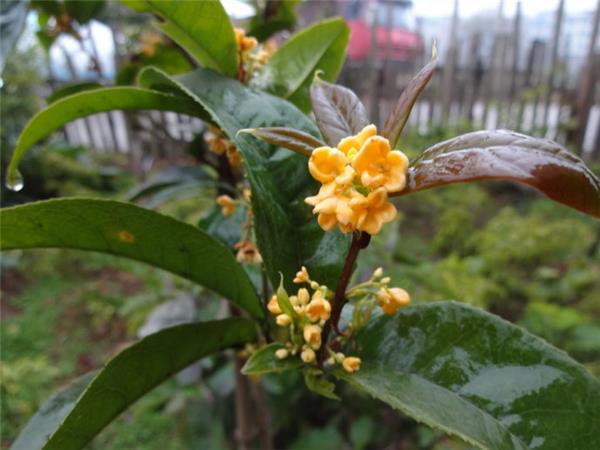
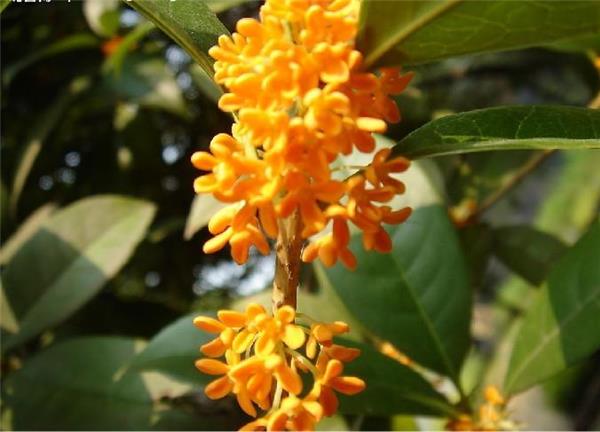
Osmanthus, also known as Four-Season Osmanthus, is a relatively common flowering ornamental plant. Its flowers are cute in clusters, elegant and pure in color, and its fragrance is light and alluring, giving it very high cultivation value.
Propagation Methods of Osmanthus
Cuttage: Hardwood cuttings are taken in March of spring. Select the previous year's autumn shoots as cuttings, 7-8 cm long, with a heel, using sand or vermiculite as the cutting medium. After inserting, build a plastic arch shed to enclose them, provide shade, and keep them moist frequently. The survival rate is about 60%. Softwood cuttings with leaves can also be done during the growing season using an automatic misting full-light cutting bed. When cutting in open-field beds in June-July, insert 4-6 cm deep, water thoroughly, then shade and keep moist, allowing only a little morning and evening sunlight. Osmanthus can root in about 40 days, with a survival rate above 90%. In winter, use a plastic arch shed for cold protection, and transplant in the second year.
Air Layering: For one- or two-year-old branches, make a notch or ring-bark them, then wrap the notched area with a split bamboo tube, flower pot, thick paper tube, or plastic film, filling the gap inside with rice husk ash, moss, potting soil, perlite, and other materials. Keep it moist frequently, but do not overwater. Once roots form, it can be cut away from the mother plant. The high-pressure bag made of plastic film generally has an inner diameter of 4-5 cm and a length of 8-10 cm. The notch and ring-bark should be made below a node, where rooting is easier. The width of the removed phloem is 1-2 cm.
Sowing: Collect seeds in September, dry them in the shade with the fruit coat, then store them in sand. Before sowing, soak the seeds in warm water at 50°C for 2 minutes, then in cold water for 24 hours, remove and air-dry. This can promote earlier germination of osmanthus seeds. Sow in spring in rows with a spacing of 15 cm. Cover with 2 cm of soil and then with grass. They sprout and emerge in May. Build a shade shed in time, thin the seedlings on cloudy and rainy days, keeping the strong and removing the weak. Do not make the plant spacing too large, as this helps them shade each other. The seedlings can reach about 10 cm in height in the same year. In spring, March-April, they can be transplanted with a soil ball.
Grafting: The rootstocks mainly used for grafting osmanthus are privet, ash, lilac, fringetree, and others. The disadvantage of privet as a rootstock is that its root system is too developed, making it unsuitable for pot cultivation, and it flowers late. The disadvantage of ash as a rootstock is its short lifespan, and it easily loses leaves in winter and flowers less. Lilac as a rootstock results in a trunk that is thick at the top and thin at the bottom, giving the tree a top-heavy shape. Fringetree as a rootstock has good compatibility, drought and cold resistance, strong adaptability, and a long lifespan, with trees living over a hundred years. Therefore, the most suitable rootstock for potted osmanthus grafting is fringetree.
Disease Control of Osmanthus
Blight: The pathogen mostly invades from the leaf margin and leaf tip, occurring at the leaf margin and leaf tip. In the early stage of the disease, small light brown spots appear on the leaves, gradually expanding into circular or irregular lesions, then enlarging into nearly circular or irregular grayish-brown large spots with dark brown edges. Blight occurs from July to November, and can occur year-round in greenhouses with poor environmental conditions. The pathogen spreads and infects via conidia through wind and water. High temperature, high humidity, and poor ventilation favor the disease. When plants are weak, and on old leaves after overwintering and lower leaves of the plant, the disease is more severe.
Anthracnose: This disease infects osmanthus leaves. In the early stage, chlorotic small spots appear on the leaves, gradually expanding to form circular, semicircular, or elliptical lesions. The lesions are light brown to grayish-white, with a reddish-brown ring at the edge. In the early stage, spray Bordeaux mixture at 1:2:200. Afterwards, spray 50% carbendazim wettable powder at 1000 times dilution or 50% benomyl wettable powder at 1000 to 1500 times dilution. In severely affected areas, when seedlings leave the nursery, soak them in 1000 times potassium permanganate solution for disinfection.
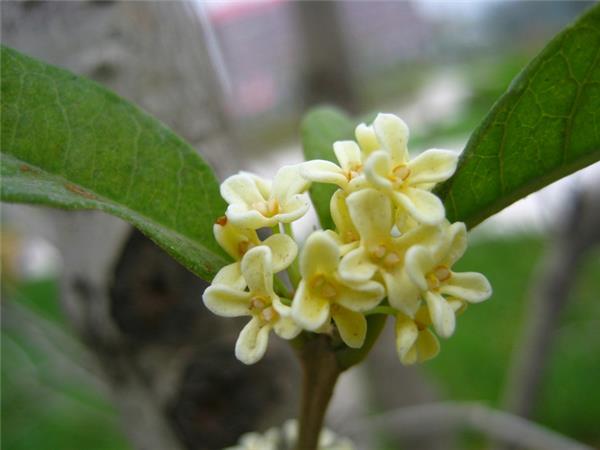
Osmanthus gets its name because, unlike other varieties, it can bloom all year round, so it is also called "Four-Season Osmanthus." It has very high ornamental value and is one of the top choices for courtyard landscaping.