What flower is Rhododendron mucronulatum? Detailed guide to cultivation methods
Rhododendron mucronulatum is a fairly typical flowering ornamental plant; cultivating it at home can enhance the beauty of a room and bring a touch of nature's atmosphere.
 I. Morphological characteristics of Rhododendron mucronulatum
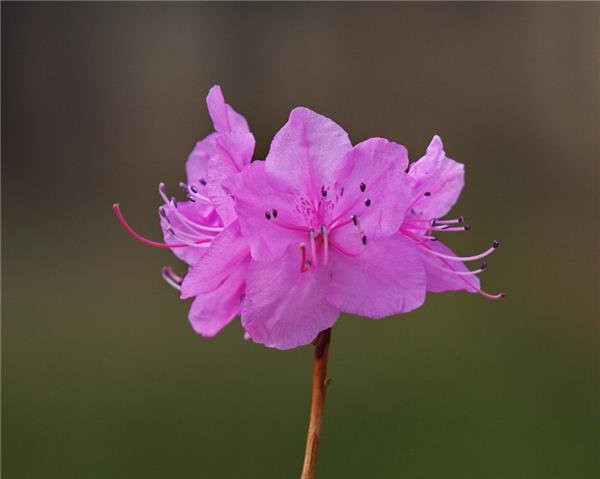
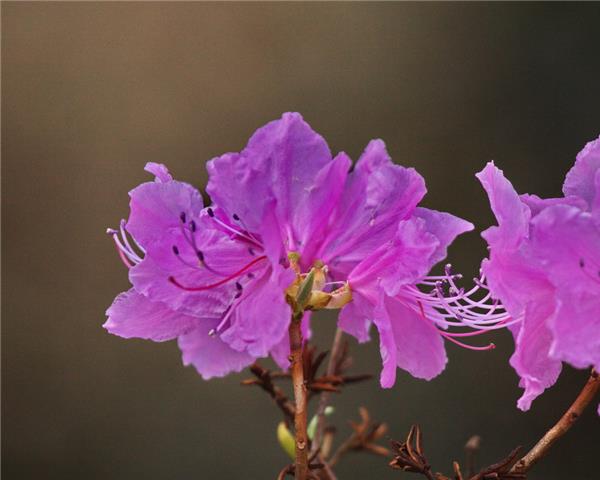
The young branches of Rhododendron mucronulatum are slender and sparsely covered with scales. The leaves are thin in texture, elliptical or elliptic-lanceolate, 3-7 cm long and 1-3.5 cm wide, with sharp-pointed, acuminate or blunt tips, entire or finely crenate margins, and wedge-shaped or blunt bases; the upper surface is sparsely scaly, while the scales on the lower surface are of unequal size, brown, and spaced 2-4 times their diameter apart; the petiole is 3-5 mm long. The inflorescence is axillary at the branch tip or pseudo-terminal, with 1-3 flowers, blooming before the leaves, arranged in an umbel; the flower bud scales persist; the pedicel is 5-10 mm long and sparsely scaly; the calyx is 0.5-1 mm long, 5-lobed, scaly, hairless or sparsely bristly; the corolla is broadly funnel-shaped, 2.3-2.8 cm long and 3-4 cm in radius, pale red-purple, covered with short soft hairs on the outside and without scales; there are 10 stamens of unequal length, slightly shorter than the corolla, with the lower part of the filaments covered in short soft hairs; the ovary has 5 chambers and is densely scaly, and the style is smooth and longer than the corolla. The capsule is oblong, 1-1.5 cm long and 4-5 mm in diameter, splitting open at the tip with 5 valves.
II. Uses and value of Rhododendron mucronulatum
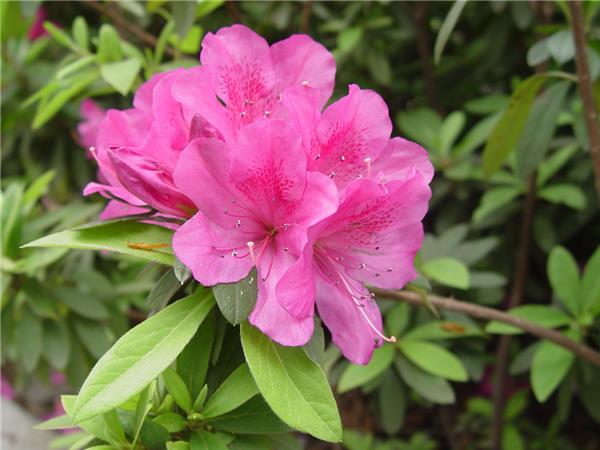
1. Ornamental value: The branches and leaves of Rhododendron mucronulatum are very lush and beautifully varied, and the flowers are bright red as if about to drip; its sprouting ability is very strong, it tolerates pruning well, and its root stock is very unusual, making it an excellent material for bonsai.
2. Medicinal value: It not only has very high ornamental value, but also possesses certain medicinal value and economic value. The roots of the rhododendron are sweet, warm and sour in nature, and have effects such as dispelling wind and relieving pain and promoting blood circulation to relieve pain, especially for hematemesis, epistaxis, irregular menstruation, metrorrhagia and metrostaxis, rheumatic pain, and traumatic injuries. The leaves of the rhododendron are neutral and sour in nature, and have effects such as stopping bleeding and clearing heat and detoxifying. They are especially effective for patients with boils and sores, urticaria, and traumatic bleeding. The flowers of the rhododendron grow in sweet, warm and sour soil, and are generally used for promoting blood circulation, regulating menstruation, and dispelling rheumatism, and are especially effective for irregular menstruation, amenorrhea, metrorrhagia and metrostaxis, traumatic injuries, rheumatic pain, hematemesis, and epistaxis.
3. Economic value: The flowers and leaves can be refined into aromatic oils and medicines; some flowers are edible; the bark and leaves can be processed into tannin extract and used as materials for wood and other crafts; the root system is relatively well developed, making it a good plant for conserving soil and water.
III. Cultivation precautions for Rhododendron mucronulatum
1. Soil: Use acidic soil with a relatively loose texture and good drainage; some leaf mold and sawdust can also be used. When filling the pot with soil, note that coarse soil should be used at the bottom layer and fine soil on top.
2. Watering: Except during the winter dormant period, you should water frequently to keep the soil moist. Especially during the growth period after March each year, the flowering period, and the high-temperature period from July to September, the frequency of watering should be increased, preferably ensuring watering about twice a day; in autumn and winter, watering can be reduced appropriately.
3. Light: Always ensure it receives sufficient light, because only with sufficient light will it bloom well. Of course, in the hot summer it should not be put out for direct sun exposure; instead, shading work should be strengthened to prevent it from being sunburned. In addition, during the flowering season, appropriate protection should also be provided, and a shade net can be used for protection; it also cannot be exposed to direct sun during the flowering period.
4. Fertilizing: The principle is also to apply thin fertilizer frequently, that is, add a little at a time and apply it several times. When old leaves turn green, during the flowering period, and after flowering, apply fertilizer appropriately two to three times; during hot and scorching weather, fertilizer must absolutely not be applied. For fertilizing rhododendrons, materials such as grass juice, fishy water, and rapeseed cake can be used.
5. Pests and diseases: The main pests include the Stephanitis takeyai and aphids. When pests are found and the number is small and visible to the naked eye, they can be wiped off with a wet cloth strip; if the number is large and the pest infestation is severe, insecticide solution should be purchased from a local pharmacy for effective control.
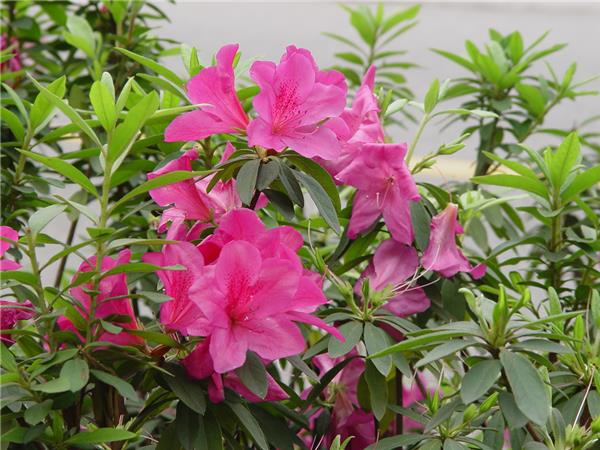
Rhododendron mucronulatum has bright flower colors and can bring people fiery passion and motivation, so cultivating Rhododendron mucronulatum can also effectively improve home feng shui.