How to care for Alocasia amazonica? Differences from the Sedum genus Sempervivum
There are two kinds of "Guanyin lotus." The one discussed here, black-leaf taro, also called black-leaf Guanyin lotus, is a member of the large Araceae family, while the other, the succulent Guanyin lotus, belongs to the Crassulaceae family. The two are not the same. Like most Araceae plants, the large stems and leaves of black-leaf taro can store water and nutrients, so it is very easy to grow.
I. Differences between the Crassulaceae Guanyin lotus and the Araceae Guanyin lotus (black-leaf taro)
1. The Crassulaceae Guanyin lotus is a small succulent grown mainly for its foliage, and is also one of the succulents with relatively large sales volume in recent years. Its plant form is dignified, like a blooming lotus, and its leaf color is rich in variation, with a very distinctive purplish-red leaf tip. It is suitable for small and medium potted plants or combination plantings. Grown in flower pots of different shapes, its ornamental effect also differs greatly: grown in a cartoon-style flower pot, it is lively and cute and very popular with children; grown in a purple clay pot or blue-and-white porcelain pot, it is dignified and elegant and quite favored by middle-aged and older people; while planted in a small wooden flower pot, it is fashionable and natural and much loved by young people.
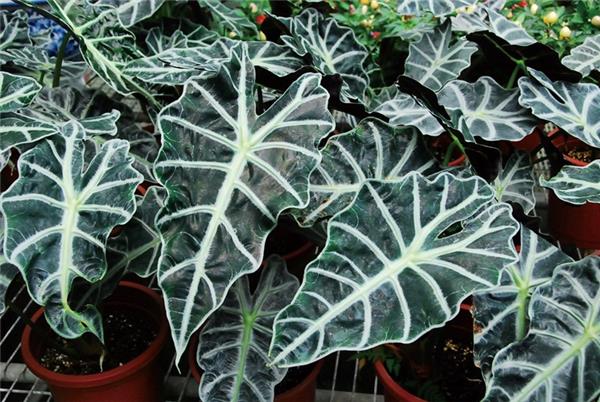
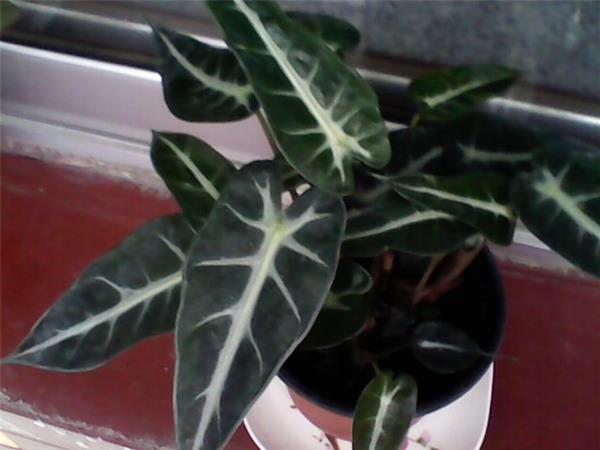
2. The Araceae Guanyin lotus, also known as black-leaf taro or black-leaf Guanyin lotus, is a foliage plant of the genus Alocasia in the Araceae family. It is a perennial herbaceous plant, with a fleshy tuber underground, and it readily tillers to form a clumping plant. Its leaves are arrow-shaped and peltate, and its flowers are spadix inflorescences that emerge from the stem tip. It likes a warm, humid, semi-shady growing environment. The Araceae Guanyin lotus likes semi-shade and must never be exposed to strong direct sunlight. In a semi-shady environment, the leaves are tender and glossy, the veins are clear, and the leaf color is dark green.
II. How to grow black-leaf taro
Planting: Guanyin lotus is commonly propagated by division. Generally, in spring and summer each year when temperatures are relatively high, divide the plants whose underground tubers have tillered and grown densely along the separation points of the tuber, so that each part has 2-3 plants, then pot and plant them separately. When dividing, damage the roots as little as possible, and after potting, place them in a shady, humid environment, keep the potting soil constantly moist, and pay attention to misting the leaf surfaces to help the new plants recover their growth. You can also dig out the underground tubers in spring before new buds sprout, cut the tubers into sections, disinfect and preserve the wounds with plant ash or sulfur powder, let them dry slightly, then wrap them in sphagnum moss, or place them in loose, air-permeable, well-drained soil so that they grow adventitious roots and sprout new shoots.
Soil: Leaf mold or peat soil is suitable.
Fertilizing: During the vigorous growth period, according to the plant's growth condition, apply 1-2 times a month of dilute liquid fertilizer, and additionally apply phosphorus and potassium fertilizer, so as to help the plant's stems stand upright and grow robustly, and at the same time help the underground tuber grow plump and resist cold for overwintering.
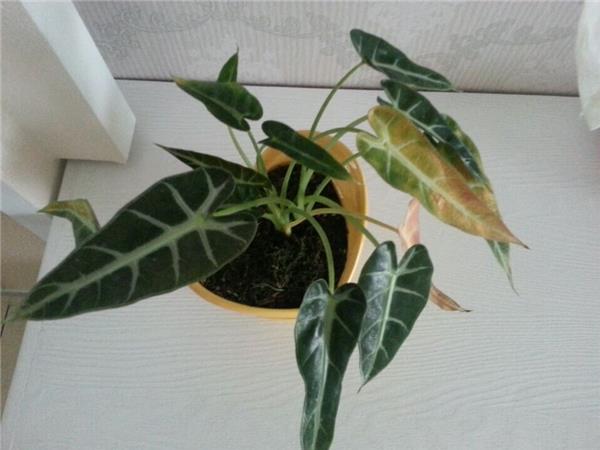
Light: Guanyin lotus likes semi-shade and must never be exposed to strong direct sunlight. In a semi-shady environment, the leaves are tender and glossy, the veins are clear, and the leaf color is dark green. If the light is too strong, the leaf color easily becomes dull, and sunscald may even occur, with the leaf surface becoming rough, the leaf color grayish-white, the veins blurred, and sometimes scorch spots appearing on the leaf surface; but if the light is too weak, it also easily causes leggy growth, and the plant grows slender and easily lodges.
Temperature: The suitable growth temperature is 25-30°C, and the winter temperature should not be lower than 15°C. From March to September it is 22-27°C, and from September to March of the following year it is 16-22°C. Below 15°C, growth stalls and the plant enters a dormant state.
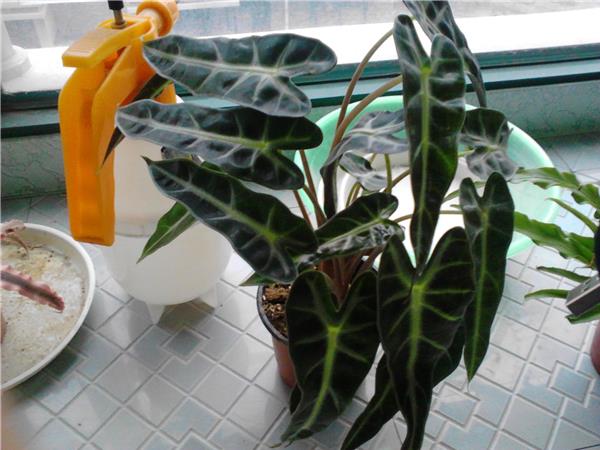
Humidity: It likes moisture. If the room is too dry, the leaves of black-leaf taro will not look so good. Because we mostly grow it at home or at work, the home cannot be too humid, and at the office you cannot control it, so you need a spray bottle and to mist the leaves frequently. This is also the way to grow black-leaf taro well indoors.
Black-leaf taro can not only beautify the home and purify the air; placing a pot of black-leaf taro in your office can also let you relax a little amid tense work and relieve your eye fatigue.