Iris is the embodiment of the beautiful rainbow in Greek mythology
Iris is a very beautiful flower. It appeared in Greek mythology long ago. Legend says it is the embodiment of the rainbow goddess in Greek mythology, and some say it was brought down to the mortal world by the rainbow goddess. In any case, all the versions are very romantic.
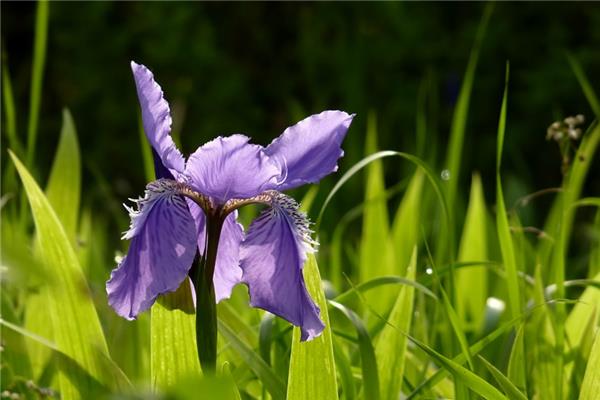
I. The Legend of Iris
Legend of Iris, Part One
The genus name of iris, iris, means "rainbow" in Greek, so the iris flower has a transliterated common name, "Alice." In Greek mythology, Alice is the rainbow goddess, the messenger between the gods and the mortal world. The Greeks called iris the rainbow flower because its colors are gorgeous, as beautiful as a rainbow in the sky.
Legend of Iris, Part Two
In Southeast Asia, the legend of iris is like a fairy tale. Millions of years ago, iris grew only in tropical dense forests. They were so beautiful that not only birds, beasts and bees loved them, but even the breeze and flowing water would stop to admire them. Israelis generally regard yellow iris as a symbol of "gold," so they have the custom of planting iris, hoping it will bring wealth.
Legend of Iris, Part Three
This flower consists of a sheath formed by 6 petal-like leaves, 3 or 6 stamens, and an ovary enclosed by the flower base. The name of this plant comes from the messenger of God and the rainbow that connects the earth with other worlds. Legend says that a rainbow once saved the life of a 6th-century Frankish king. When he saw the rainbow rising from the Rhine River, he knew the river water was shallow enough, so he crossed the river and escaped the enemy's pursuit.
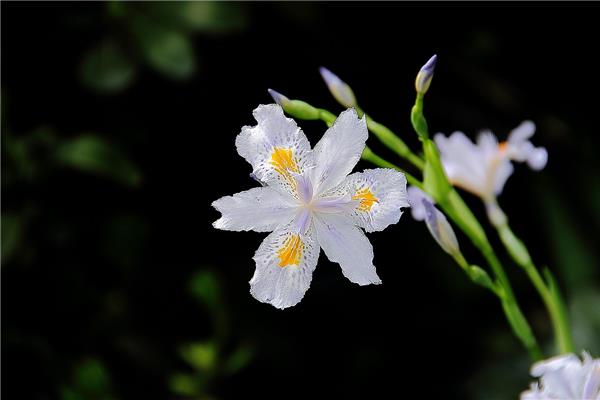
II. How to Grow Iris
Propagation: Iris cultivation is often combined with propagation, and the main propagation methods are division and sowing. Division is carried out in early spring or late autumn. For open-field cultivation, a planting bed should first be prepared, and soybean cake fertilizer or barnyard manure should be applied as a base fertilizer.
Soil: It requires moderately moist, well-drained, humus-rich, slightly alkaline clay soil.
Planting: During and after planting iris, the soil temperature should be below 20°C. Planting iris in summer carries certain risks, because iris yield depends directly on the temperature during the growing period. If the average temperature is expected to be higher than 25°C, then the planting plan will have to be cancelled. In this case, planting can only be moved earlier or postponed.
Watering: Watering depends on the situation. For open-field cultivation, water once a week during the growing period, and gradually reduce the amount of watering as the temperature drops. Generally, it is best to keep the soil slightly dry. Do not let the soil become waterlogged or stay too wet for a long time, to avoid root rot or disease.
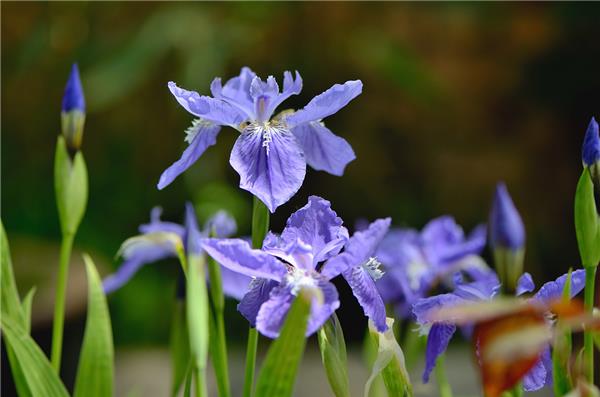
Sunlight: Iris likes sufficient sunlight and is also slightly tolerant of shade. It can be grown in the open field. It has strong adaptability, and generally vigorous growth can be achieved with normal care.
Humidity: The ideal relative humidity for iris is around 75%. Be careful to avoid large fluctuations in humidity or gradual changes in humidity. On warm sunny days, shady days or humid weather, the relative humidity tends to be higher. Corresponding measures must be taken, and the humidity needs to be reduced by heating and ventilating at the same time.
Fertilizing: Base fertilizer can be applied before planting the plants. Fertilize once each autumn, and top-dress with chemical fertilizer during the growing period.
Weeding: The growth process of iris takes only 8-12 weeks. In such a short growing time, if the soil has been treated by steaming, flooding, plowing, etc., then there is no need to consider the weeding problem during the plant's growth process. After the plants are planted, chemical herbicides are mainly used to remove weeds. However, when applying them, be careful not to cause damage to the plants.
Pests and diseases: Common diseases of iris include rust and soft rot. In the early stage of rust, 25% triadimefon at 400 times dilution can be used for control, and soft rot can be controlled with Bordeaux mixture at 1:1:100. Among pests, there is the iris borer moth, which can be controlled by drenching the roots with 90% trichlorfon at 1200 times dilution.
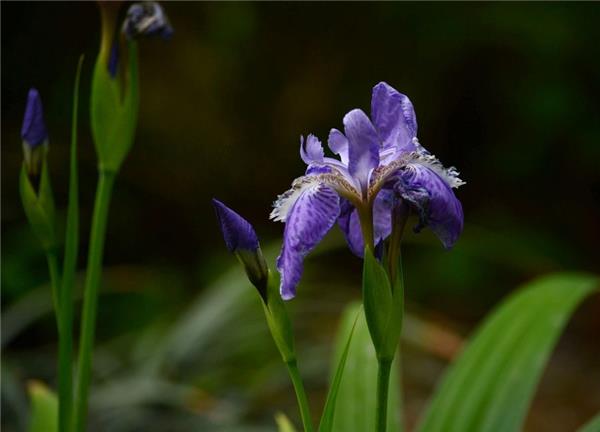
Relatively speaking, iris is actually quite easy to grow. As long as you understand its growth habits and take targeted care measures, you can ensure that it produces beautiful flowers.