How to Grow Luffa? Detailed Guide to Planting Methods and Management Techniques
Luffa originated in the tropics, so it is naturally heat-tolerant but not cold-tolerant. The suitable temperature range for its growth and development is 18-33°C, and within this range, the higher the temperature, the faster it grows. Winter-warm greenhouses create relatively good conditions for it, but ultimately the low winter temperatures still affect its growth and reduce yield. In deep winter, the greenhouse temperature often drops below 18°C, and even lower during severe cold, causing luffa to suffer cold damage, resulting in weak growth and low yield. The lowest temperature luffa can tolerate is 10°C, so luffa should not be planted in greenhouses with poor insulation performance or in regions where the temperature cannot reach this minimum value due to local conditions.
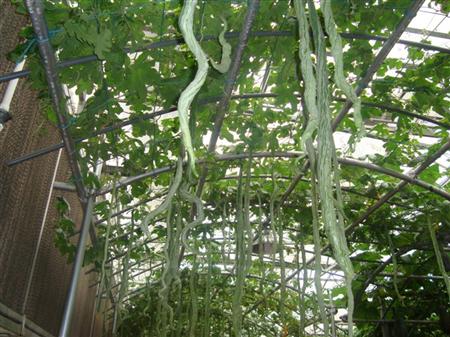
The optimal temperature for the vegetative growth stage of luffa is 18-28°C, so after transplanting and before trellising, efforts should be made to maintain this temperature range. In greenhouse cultivation, attention should be paid to controlling the minimum nighttime temperature, which should be 4-6°C higher than that for cucumber, eggplant, and pepper. The temperature required during the flowering and fruiting stage of luffa is even higher, at 25-33°C. It is worth noting that if the temperature is higher still, the vine growth becomes abnormal, which is unfavorable for flowering and fruit setting, and often leads to an increase in big-bellied and curved fruits. Appropriately widening the day-night temperature difference, that is, lowering the nighttime temperature somewhat, is beneficial for setting more fruits and achieving higher yields. This is because lower nighttime temperatures allow more photosynthetic nutrients to accumulate and less to be consumed through respiration, relatively increasing the accumulation. That is why many vegetable growers have the experience that "when the autumn wind turns cool, luffa yields are high."
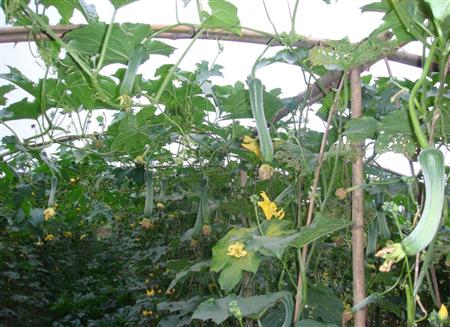
Luffa Cultivation Techniques
Propagated by seeds, either by direct seeding or by raising seedlings and transplanting. Direct seeding method: in March-April, prepare the land and make beds about 3 m wide. After soaking and sprouting the seeds, sow 2 rows on each side of the bed surface. With a plant spacing of 35 cm, open holes and sow 3 seeds per hole. About 300-450 g of seeds are needed per 1 hm2. Seedling transplanting method: in February-March, raise seedlings in nutrient pots on a heated seedbed, and transplant when the seedlings grow 2-3 true leaves. The planting density is the same as for direct seeding. Variety Selection
Choose varieties with good quality, high yield, good marketability, and suitability for the market. For winter-spring cultivation, choose long club-shaped varieties intended for the markets of Hong Kong, China and South China, such as Bilu, Shuangqing, and Lüwang; for summer-autumn cultivation, choose short club-shaped varieties intended for the local island market, such as Thai luffa. The land for luffa production should be sandy loam with deep soil, fertile texture, convenient drainage and irrigation, and a neutral to slightly acidic pH.
During the luffa growing period, fertilize once a week. When luffa reaches maturity, fertilize once every 1 to 2 harvests. Because luffa is mainly used for food and medicinal purposes, it is generally better to apply organic natural fertilizers, such as human and animal manure. In addition, when growing luffa, weeding and ridging should be carried out frequently.
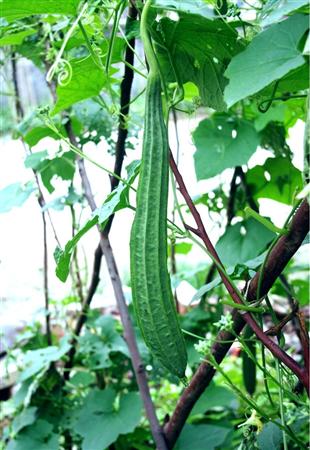
How to Achieve High Yield in Luffa Cultivation
Removing Male Flowers - Luffa is a cross-pollinated crop
Each female flower produces one fruit, and it takes about 15 days from bud appearance to fruit harvest. Male flowers are indeterminate racemes, and each raceme can open 20-35 flowers. The total number of male inflorescences per plant exceeds the number of female inflorescences, and the pollination capacity greatly exceeds the needs of female flowers. Because male inflorescences have a longer flowering period of about 30-40 days, equivalent to 3-4 times the fruiting period of female flowers, they consume a large amount of nutrients during this time. Therefore, removing excess male inflorescences as early as possible can save nutrients and supply them for female flower fruiting.
Method of removing male flowers: starting from the appearance of female flower buds, remove 80% of the male inflorescences on each luffa plant, keeping 20% for pollination.
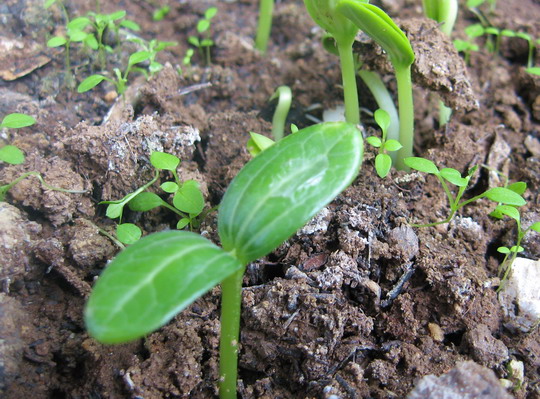
Removing Tendrils
Tendrils play a role in climbing and securing branches in vining crops. Luffa tendrils take a long time from emergence to withering and death, consuming relatively more nutrients, which is unfavorable for setting more and better fruits. Removing tendrils and using manual tying to replace their climbing function is beneficial for the plant's photosynthesis, nutrient production and accumulation, and pest and disease control, enabling good pollination and fruit setting in luffa for a bumper harvest. Method of removing tendrils: in the early growth stage of the luffa plant, remove tendrils while tying them, guiding the vines onto the trellis; after the branches are evenly distributed and fixed on the trellis, remove the tendrils at any time as the vines are trained.