Identification Tips and Cultivation Methods for Dracaena deremensis 'Rothiana' Explained in Detail
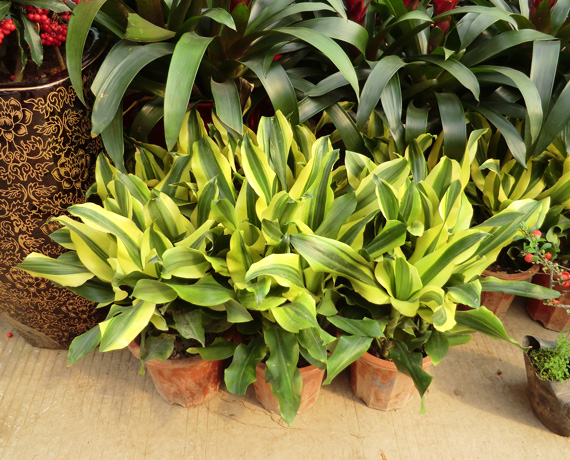
Dracaena deremensis 'Rothiana' is also called willow-leaf dracaena, because its leaves look like large willow leaves. It looks very similar to the Brazil wood (Dracaena fragrans) and Dracaena arborea, giving the impression of triplets, so if you do not distinguish them carefully, they are very easy to confuse.
I. Differences Between Dracaena deremensis 'Rothiana', Brazil Wood, and Dracaena arborea
Dracaena deremensis 'Rothiana'
The leaf tips of Dracaena deremensis 'Rothiana' basically do not droop, and the leaves grow upward in a spiral.
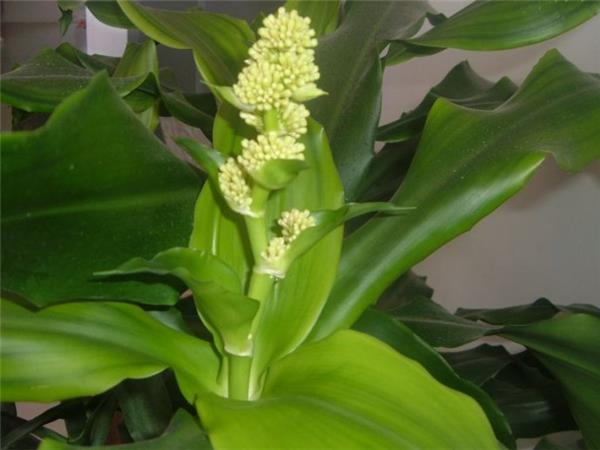
Dracaena deremensis 'Rothiana' is also called spiral dracaena and curled-leaf dracaena, and its leaves spiral upward. Spiral dracaena is a plant of the Liliaceae family and the genus Dracaena. It likes growing in a high-temperature, high-humidity, half-day shade environment, and is especially suitable for indoor display, but flowering indoors is quite rare. When spiral dracaena grows to 4 years, the plant height reaches about 1 m, and under sufficient temperature, humidity, and half-day shade light it can send up a flowering stalk and bloom. The flowering stalk is 30 cm long, the corolla spirals upward, and there are 7 to 10 layers of flower buds. The flower buds bloom one after another for half a month.
Dracaena arborea
The leaves of Dracaena arborea are relatively hard, the leaf tips do not droop obviously, and they spread out at an angle. The leaves are broadly linear, dark green, sessile, and the leaf margins are slightly wavy.
Dracaena arborea, Latin name Draceana arborea, is a plant of the Liliaceae family and the genus Dracaena. Dracaena arborea likes a warm, humid, and well-ventilated environment. The suitable growth temperature is 20-30°C, and in winter, adverse reactions appear when the temperature is below about 10°C. It likes half shade and is also shade tolerant, but keeping it in a long-term shady place is not good for the plant's health. It is best placed in a bright place with scattered light. In summer, avoid direct light so the leaves are not sunburned, which can cause the leaves to turn yellow or white.
Brazil Wood
The leaves of Brazil wood are relatively soft and wide, the leaf tips droop obviously, and the form is arching and drooping, with branches; the leaves are clustered at the top of the stem.
Brazil wood is also called Brazil iron tree, Brazil millennium tree, and golden-edged fragrant dracaena, among other names. It is an evergreen tree of the Liliaceae family, more than 6 m tall, and when potted it is 50 cm-150 cm tall, with branches; the leaves are clustered at the top of the stem, 40 cm-90 cm long and 6 cm-10 cm wide, curved in an arch shape, and bright green and glossy. The flowers are small and inconspicuous, fragrant, and it is a famous new-generation indoor foliage plant. The plant shape is graceful and neat, and it is slightly shade tolerant. It likes high temperatures, and below 13°C the plant goes dormant and stops growing. It likes loose, well-drained soil; use leaf mold or peat soil in the pot.
II. Cultivation Methods for Dracaena deremensis 'Rothiana'
1. Pot selection: choose a 14 cm pot, with a height of 35 cm, a crown width of about 40 cm, and a market cycle of 7-8 months.
2. Substrate preparation: use imported peat of the Klasmann 5-40 mm specification that is loose and has good drainage and aeration. Add water to the peat and mix well. The standard for adding water is that after mixing, when you tightly squeeze a handful of peat, water seeps out from between your fingers, and then it is ready for cup planting. The amount of peat used per pot is about 400 ml.
3. Requirements for seedlings to be potted: choose high-quality seedlings from professional production, free of pests and diseases, and free of dead leaves and yellow leaves.
4. Cup planting: for old pots that are reused, they must be soaked in a 1000-fold potassium permanganate solution for more than half an hour, then rinsed with clean water and dried for later use. Generally, pots with a diameter of 14 cm are used for planting. When planting, first place about 2 cm of substrate at the bottom of the cup, then move the screened seedlings into the cup. Small seedlings should not be planted too deep; it is best to keep them level with the base of the plant. The substrate should be moderately firm, and fill the cup to 9 parts full.
III. Care Precautions for Dracaena deremensis 'Rothiana'
1. The demand for water is not very great. Generally, watering should be done by the principle of watering when dry and stopping when wet.
2. For fertilizer, Peters Professional 20-20-20 water-soluble fertilizer can be used, and the demand is relatively small. In the first 3-4 months after planting, because the root system is not well developed, generally apply Peters Professional 20-20-20 water-soluble fertilizer at 2000 times dilution once every half month. If too much fertilizer water is used, it is instead unfavorable to growth. If too much fertilizer is used, newly sprouted leaves will shrink and fail to open; in the later 4-5 months, the plant grows larger and the root system is relatively well developed, so generally apply Peters Professional 20-20-20 water-soluble fertilizer at 1000 times dilution once every half month.
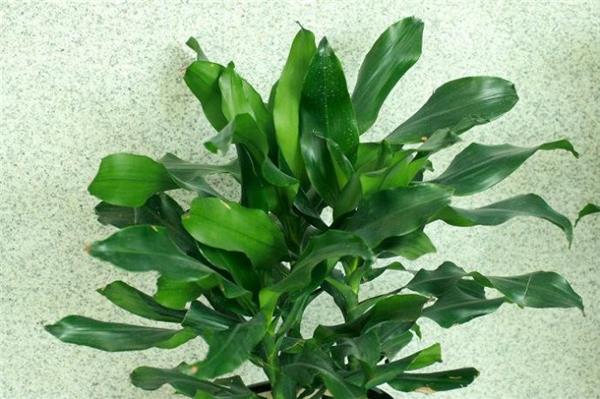
Have you all learned how to cultivate Dracaena deremensis 'Rothiana'? Through the introduction above, have you become interested in this plant? There is now a relatively large quantity of Dracaena deremensis 'Rothiana' for sale in flower markets, so you can choose to keep a pot at home to beautify your room and purify the air.