Is oleander poisonous? Detailed guide to growing it
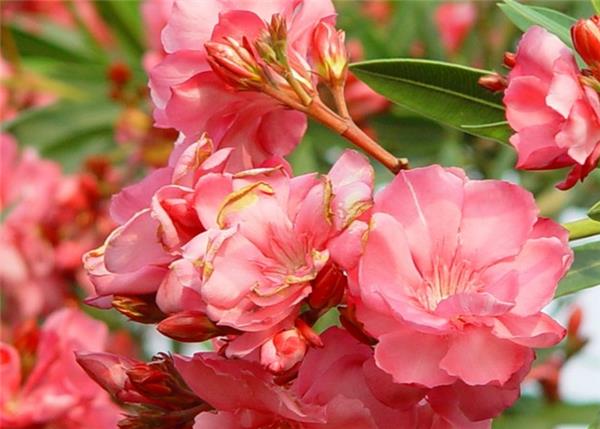
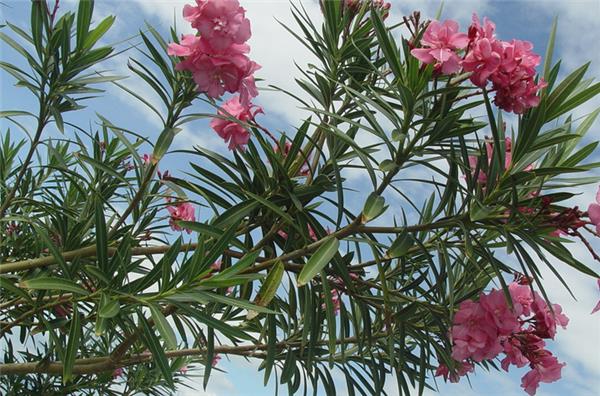
Oleander, also known as willow-leaf peach and half-year red, is native to India, Iran and Afghanistan. Oleander gets its name because its leaves resemble willow leaves, its flowers resemble peach blossoms, and its color is mostly pink or white. Oleander can stay evergreen for three seasons of the year, and from spring through summer and autumn, its flowers bloom and fall. It has strong adaptability to the environment. Whether it is windy and rainy or under a scorching sun, it can always give off fragrance, so it is also one of the ornamental flowering trees and shrubs commonly planted in courtyards.
I. Is oleander poisonous?
In fact, oleander is a plant whose entire plant contains highly toxic substances, and it is one of the most toxic plants in the world. It contains many types of toxins, including even toxins that can be fatal. The toxins in the sap of oleander can cause numbness of the skin, and the sap has the highest toxin concentration in the whole plant. The bark of oleander also contains toxins. The toxicity of oleander persists for a long time; even dried branches and trunks still contain toxins, so the smoke produced by burning oleander is also highly toxic. Oleander can also cause adverse reactions only in adults, and a single leaf can cause the death of infants with low resistance, so attention should be paid to the toxicity of oleander when planting it.
The origin of oleander's toxicity also comes from a legend: in the legend, oleander was originally white. A beautiful princess loved to plant oleander and filled her palace with it. The tragedy began when the beautiful princess fell in love with her own retainer, but she encountered opposition from her family. The fragile princess chose to die together with her lover, but the retainer did not truly love her; he acted only for profit. After the sorrowful princess learned the truth, she killed herself beneath her beloved oleander. One person's blood soaked into the oleander, and the intense poison generated by the princess's resentment grew along with the roots and stems, blooming in the world.
II. Oleander cultivation techniques
Oleander has strong adaptability, and cultivation and management are relatively easy. Whether planted in the ground or in pots, it is relatively undemanding. In places where it is planted in the ground, transplanting should be done in spring, and heavy pruning should be carried out when transplanting. Pay attention to protection in winter. The branches and leaves are easily harmed by scale insects, so attention should be paid to prevention and control.
For potted oleander, in addition to requiring good drainage, sufficient fertility is also needed. In spring, shaping and pruning should be carried out when it sprouts. For overgrown branches and weak slender branches on the plant, they can be cut off from the base. For excessively dense inner branches, part of them should also be thinned. At the same time, apply a callus antiseptic film to the pruning cuts to protect the wounds, so that the branches are evenly distributed and the tree shape remains full. After 1 to 2 years, repot once, and repotting should be done after pruning. Summer is the period of vigorous growth and flowering for oleander, and its water demand is high. In addition to watering once each in the morning and evening every day, if the potting soil is seen to be too dry, an additional misting should be added to prevent young branches from wilting and to avoid affecting the life of the flowers. After September, water should be withheld to inhibit continued growth of the plant, promote maturation of branch tissues, and increase nutrient accumulation, so as to help it overwinter safely. The overwintering temperature must be maintained at 8 °C to 10 °C. When the temperature is below 0 °C, oleander will shed its leaves. Oleander is a fertilizer-loving plant. For potted plants, in addition to applying sufficient base fertilizer, fertilizer should be top-dressed once a month during the growing period.
III. Uses of oleander
1. Ornamental. The leaves of oleander are like willow and bamboo, and its red flowers are brilliant, even more beautiful than peach blossoms. The corolla ranges from pink to deep red or white, with a special fragrance. The flowering period is from June to October, and it is a famous ornamental flower.
2. Air purification. Oleander has the ability to resist smoke, resist dust, resist toxic substances, purify air and protect the environment. The leaves of oleander are toxic to humans and have a strong resistance to harmful gases such as sulfur dioxide, carbon dioxide, hydrogen fluoride and chlorine. According to measurements, potted oleander at a distance of 40 m from a pollution source suffered only mild damage, and at 170 m it was basically unharmed and could still bloom normally. The sulfur content of its leaves was more than 7 times higher than that of unpolluted leaves. Even if oleander is covered with dust all over, it can still grow vigorously, and people call it the "guardian of environmental protection."
3. Medicinal use
Modern medical research has shown that oleander leaves contain various substances such as oleandrin and glycosides, and the flowers contain components such as digitalis glycosides, aglycones and peach glycosides. They have significant cardiotonic, diuretic, diaphoretic, emetic and analgesic effects, similar to digitalis, and belong to the slow-acting cardiac glycoside drugs. Clinical reports say that the water decoction of oleander is suitable for heart failure caused by various reasons and has achieved good results. Oleander is bitter and cold, and toxic. It can be used to treat heart disease, heart failure and amenorrhea, and can also be used for traumatic injuries, blood stasis, swelling and pain and other conditions.
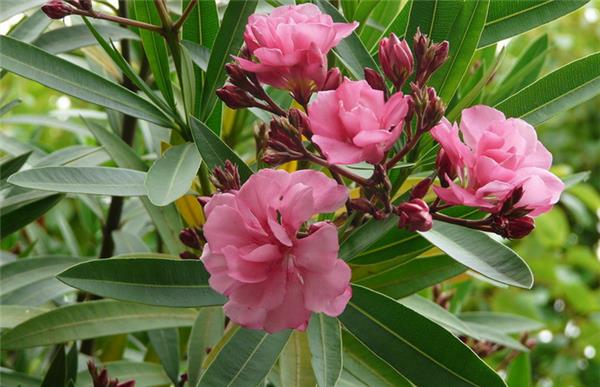
Oleander is as beautiful as peach blossoms and as tough as bamboo. Beneath its beautiful appearance and within its melancholy story, it lets you experience the beauty and toughness unique to oleander. Oleander is a toxic plant, so I hope you will pay extra attention when planting it.
Oleander is as beautiful as peach blossoms and as tough as bamboo. Beneath its beautiful appearance and within its melancholy story, it lets you experience the beauty and toughness unique to oleander. Oleander is a toxic plant, so I hope you will pay extra attention when planting it.