How to graft Christmas cactus? A detailed explanation of the method and steps
The Christmas cactus is extremely adaptable, so to achieve a more striking ornamental effect, many enthusiasts choose grafting. Today we present the grafting method for Christmas cactus, along with grafting Christmas cactus pictures, so you can understand the method at a glance.
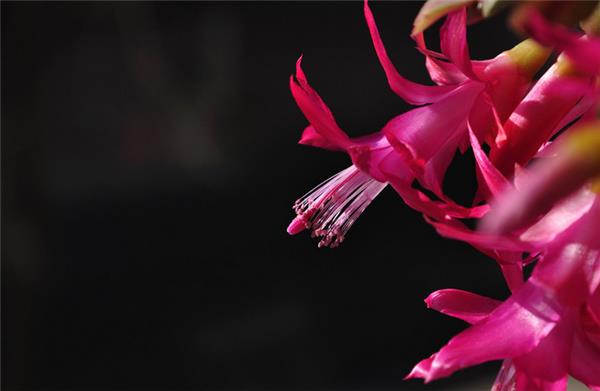
I. Methods for grafting Christmas cactus
1. Grafting time
Apart from the bitter cold and scorching summer seasons, the Christmas cactus can be grafted under temperature conditions of 10-30°C. If the temperature is too high, the scion and the cut surface are prone to drying out or rotting; if the temperature is too low, healing is difficult and the survival rate is low. The specific grafting period is best on warm sunny days around Qingming to Guyu, and around Hanlu to Lidong.
2. Rootstock selection and preparation
For the Christmas cactus grafting rootstock, you can use prickly pear cactus, ball cactus, or cereus. Cut from the mother plant a green, robust, elongated, plump, fleshy branch with a length of more than 10 cm, place it in the sun to dry for 3-4 days, and after the cut at the base has dried slightly, insert it into moist sand to encourage rooting. Once rooted, plant it in a pot, and graft after it has taken. Alternatively, grow grafted seedlings in a seedbed, then transplant them into pots.
3. Cutting the scion
Select a green, robust, pest-free Christmas cactus mother plant, and cut off the top 2 to 4 segments of one-year-old branches as the scion. Use a blade to pare away the lower 1/4-1/3, exposing the white woody part, cutting both sides evenly so that it forms a wedge shape. When making the cuts, it is best to do it in a single cut, and not to cut repeatedly.
4. Grafting method
First use a stainless steel knife to cut off the top of the rootstock, and make a vertical cut about 2 cm deep along the center of the flat direction, with a slot the same width as the scion. Then pare the base of the scion on both sides into a duck-tongue-shaped cut surface of about 1.5 cm, insert it into the cut in the rootstock, and push it in firmly to prevent it from slipping out. If the rootstock is taller, you can also graft multiple scions on the stem at different orientations and at set intervals along the sides.
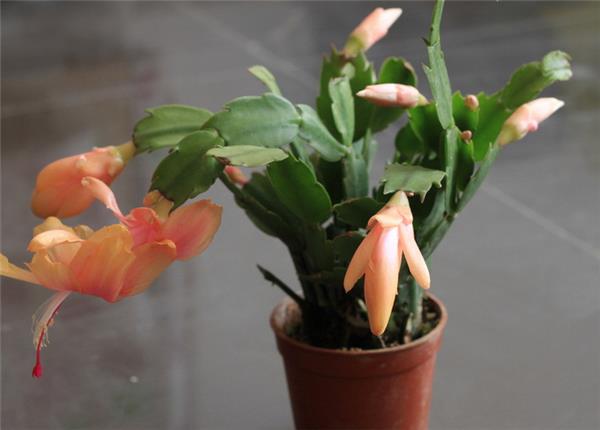
II. How to grow Christmas cactus
Potting: When potting small seedlings, first place coarse-grained substrate or clay pebbles 2-2 cm thick at the bottom of the pot as a drainage layer, then sprinkle a layer of fully decomposed organic fertilizer on top as a base fertilizer, about 1-2 cm thick, then cover with another layer of substrate about 1-2 cm thick, and then place the plant in, so as to separate the fertilizer from the roots and avoid burning the roots.
Humidity management: It likes a relatively dry air environment. If rainy overcast weather lasts too long, it is easily infected by pathogens. It is afraid of rain, so keep the leaves dry at night. The most suitable relative air humidity is 40%-60%.
Temperature management: The most suitable growth temperature is 15-32°C. It is afraid of high temperature and stuffiness, and enters a dormant state when the summer heat exceeds 33°C. It avoids cold and frost, and the overwintering temperature needs to be kept above 10°C. It also enters a dormant state when the winter temperature drops below 7°C, and if the ambient temperature approaches 4°C, it will die from frost injury.
Light management: In summer, keep it in a semi-shaded place, or shade it by 50%, and the leaf color will be even more beautiful. In spring and autumn, since the temperature is not very high, give it direct sunlight to help it carry out photosynthesis and accumulate nutrients. In winter, keep it indoors in a place with bright light. If it is normally kept indoors, place it near a southeast-facing door or window so it can receive light, and after every one month or one and a half months, move it outdoors for two months, otherwise the leaves will grow thin and yellow, and the new branches or leaf stalks will be slender with elongated internodes, in a state of leggy growth.
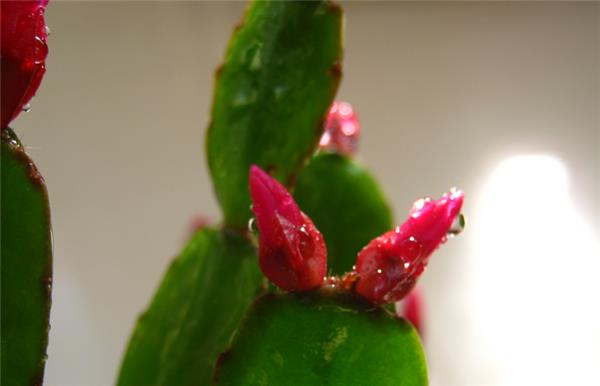
III. The effect of Christmas cactus on the home environment
The Christmas cactus has many cultivated varieties. Common ones include the white-flowered Christmas White, Dosse, Gina, and Snowflake; the yellow-flowered Gold Charm, Christmas Flame, Gold Fantasy, and so on. The Christmas cactus can effectively absorb carbon dioxide from the air and can purify the air very well. The flowering period of the Christmas cactus is from September to April of the following year. The bright and gorgeous Christmas cactus brings people the breath of spring. Whether in the days of waiting for the flowers to bloom, or the days bathed in the faint floral display, it can make people feel happy. Especially since the Christmas cactus blooms right at Christmas, New Year's Day, and other festive and lively holidays, with a trailing plant shape and bright, lovely flower colors including deep red, pink, apricot yellow, and pure white, hanging it in midair at windowsills, entranceways, and exhibition halls as decoration makes it look extraordinarily lively and instantly brightens the whole room. If improved or artificially controlled, some Christmas cacti can be regulated to bloom in October. The flowers are delicate and graceful, radiant and charming, bright and moving, and are especially loved and praised by people.
The Christmas cactus is best propagated by grafting, preferably carried out in May-June or September-October. It is best to choose a cold-tolerant and robust prickly pear cactus as the rootstock, and select two robust, thick modified stem segments as the scion, pare the lower end into a duck-bill shape, and use the splice grafting method. Each rootstock plant can take 3 scions. After grafting, place it in a cool place. If after 10 days the scion is still fresh and upright, it has already taken. In the process of caring for its growth, you will inadvertently harvest a lot of unexpected joy.
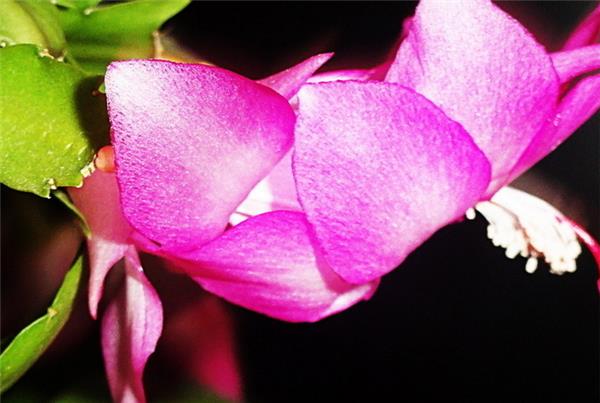
Place a pot of Christmas cactus in your room, and you cannot help but sigh at why such a potted flower can give you so many unexpected experiences and feelings.
Place a pot of Christmas cactus in your room, and you cannot help but sigh at why such a potted flower can give you so many unexpected experiences and feelings.