What Are Coconut Shells Good For? Teach You Clever Uses for Coconut Shells
Coconut shells look quite ordinary, and they are hard and stiff too. Many people throw away the coconut shell after eating the coconut flesh and drinking the coconut water. In fact, the coconut shell is also rich in nutritional value and is a kind of Chinese medicinal material. And if you use coconut shells cleverly, you can even make things like flower pots out of them.
Before learning about the various uses of coconut shells, let's first look at how to open a coconut shell and separate the coconut shell from the coconut meat.
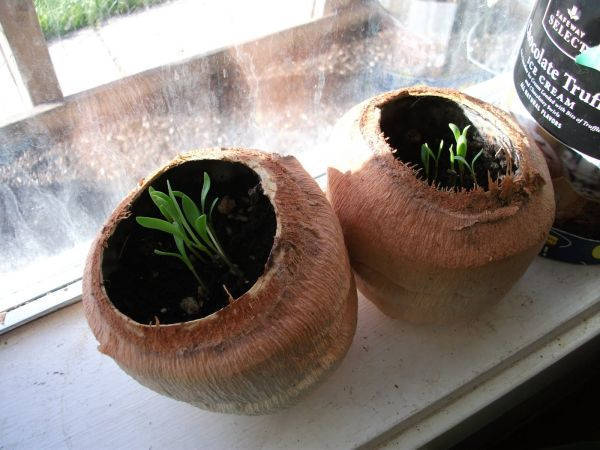
I. How to Open a Coconut Shell
Knocking with a Blunt Knife
1. Hold the coconut in the palm of your hand, over a bowl. After it is opened, the remaining coconut water inside will flow into the bowl.
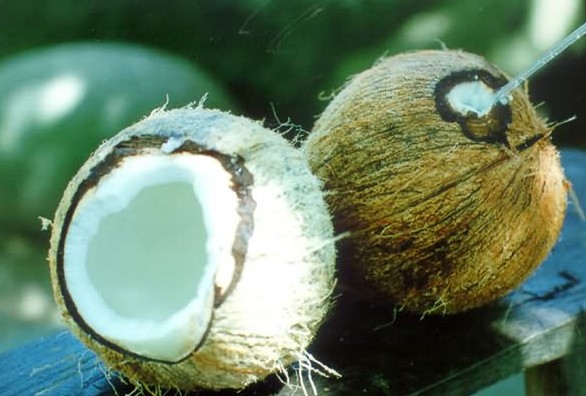
2. Look for the natural seams on the surface that run between the three eyes, aim along the "equator" of these eyes, and use the blunt edge of a fairly heavy knife to knock firmly, turning the coconut by hand as you knock so that the knife can strike around in a circle.
3. Keep knocking until the coconut splits completely apart. As long as you strike accurately, after a few rounds the coconut will split into two equal halves.
Using the Temperature Difference Method
1. Pierce the eyes of the coconut with a metal roasting fork and pour out the coconut water.
2. Put the coconut into an oven and bake at 90° for about 15 minutes. Or you can put it in a quick-freeze for 15 minutes as well. Tip: when the coconut water is still inside and the coconut has not been opened at all, absolutely do not put it in the oven and bake it randomly.
3. Hold the coconut in one hand and raise a large hammer in the other. Hammer along the "equator" of the coconut and it will open.
4. Now you can take out the coconut meat very easily - because of the ice-and-fire steps above, the flesh has loosened completely.
5. In addition, you can also choose to boil the coconut in boiling water.
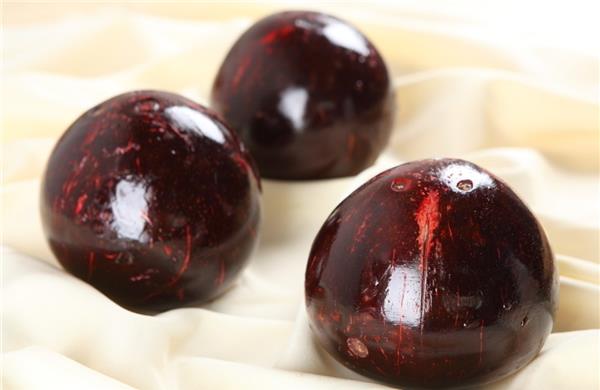
II. The Medicinal Value of Coconut Shells
1. Brief Introduction and Chemical Composition of Coconut Shells
Coconut shells contain 0.61% ash, 36.51% lignin, 53.06% cellulose, and 29.27% pentosan (total). Cellulose contains 20.54% pentosan, and the main component of the ash is potassium hydroxide.
2. The Effects and Functions of Coconut Shells
"Gangmu": For syphilitic sores with tendon and bone pain, burn coconut shells until their nature is retained, stir-fry them until hot at the time of use, soak and take two or three qian in boiling wine, then cover up warmly to induce sweating.
"Gangmu Shiyi": Boil coconut shells into a paste and apply it to treat ringworm effectively.
"Bencao Qiuyuan": Treats cold damage with yin clamping and alternating chills and fever.
"Zhonghua Bencao": Dispels wind; relieves pain; promotes diuresis; relieves itching.
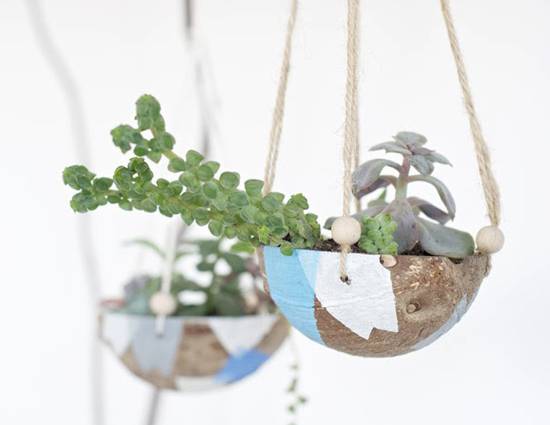
III. How to Cleverly Use Coconut Shells to Make Small Flower Pots
1. Divide the coconut shell evenly into two halves and take one half of the coconut shell.
2. First, make clear in your mind the pattern you want to decorate the coconut shell with. Use tape to frame out the area to be painted first, and then painting will be more convenient in a moment. Then paint, and next let it dry.
3. After the paint dries, use an electric drill or an awl to drill five holes in the coconut shell: one at the bottom for drainage, and the other four at opposite places on the rim (at the four equally divided points), so that a string can pass through them and hang the pot up.
4. Take a piece of string, first thread it through the small holes on the rim of the coconut shell, then pass both ends of the string together through 1 decorative wooden bead. Thread the string through all 4 holes on the rim of the coconut shell and decorate them all with wooden beads. The decorations can be chosen according to your own preference.
5. Fill the coconut shell with the string already threaded through it with potting soil, with the potting soil slightly lower than the rim of the coconut shell. Then put in a succulent plant and you are done.
6. Hang up the finished small potted plant - isn't it beautiful?
Coconut shells have so many uses, and can be used both medicinally and ornamentally, so wouldn't it be a shame if they were thrown away? By the way, common handicrafts made from coconut shells also include bracelets, piggy banks, and so on. If you are interested, you can give them a try.