Why Does the Sensitive Plant Fold Up? An Analysis of the Reason for Its Shyness
The sensitive plant (Mimosa pudica) is a perennial herb or subshrub belonging to the Fabaceae family. Of course, the sensitive plant is also often kept as an ornamental plant, because it is relatively easy to grow and is best suited to being placed on balconies and in indoor flower pots. The sensitive plant is different from ordinary plants: when it is touched by people, its leaf stalks droop and its small leaflets close up, which is why people interpret it as "shy." So today we will explain why the sensitive plant folds up.
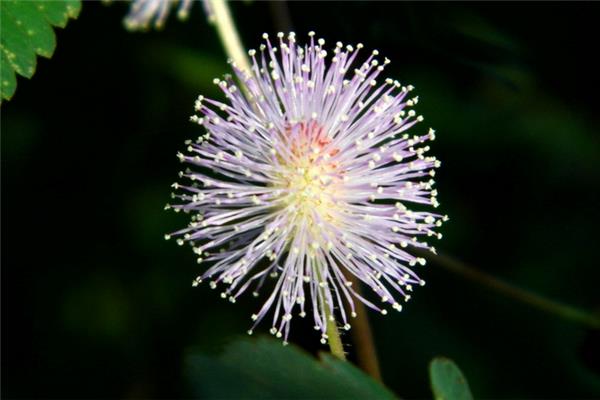
I. Why Does the Sensitive Plant Fold Up
The sensitive plant's greatest characteristic is that it can fold up, so why does the sensitive plant fold up? In fact, plants are different from animals: they have no nervous system and no muscles, so they are even less able to perceive external stimuli. Yet the sensitive plant is different from ordinary plants: when it is touched by the outside world, its leaf stalks begin to droop and its small leaflets close up. People interpret this action as "shyness," which is why it is called the sensitive plant, the shy plant, and the bashful plant.
This special ability of the sensitive plant has a certain historical origin. Its original home is in Brazil in tropical South America, where strong winds and heavy rain are common. Whenever the first raindrop strikes its leaves, it immediately closes its leaflets and droops its leaf stalks to avoid the damage that violent wind and rain could do to it. This is an adaptation to changes in external environmental conditions. In addition, the movement of the sensitive plant can also be seen as a form of self-defense: as soon as an animal touches it, it folds its leaves, and the animal no longer dares to eat it.
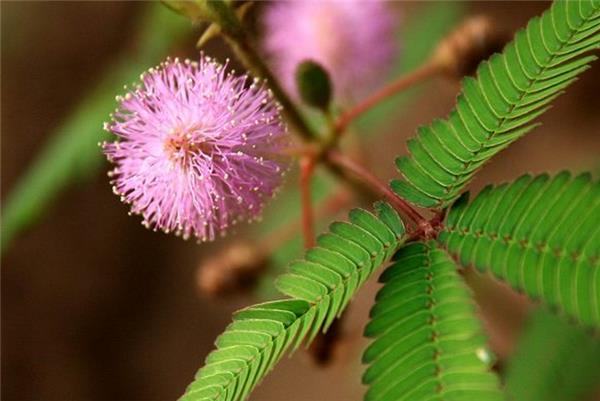
II. Notes on Growing the Sensitive Plant
1. Prevent cold damage. The sensitive plant is suited to growing in a warm environment, with a suitable temperature between 20 and 28 degrees. If the temperature is too low, it will hinder its growth. Because winter temperatures are too low, you should water less to avoid cold damage to the roots and stems. Water at about the time of day when the temperature is at its highest. If the temperature is below 10 degrees, it is best to provide some protective measures.
2. Prevent pests and diseases. The sensitive plant generally has very few pests and diseases, and the most common pest is the slug. If pests are found, you can sprinkle some lime powder to deal with them.
3. When fertilizing, fertilize according to your own situation. The sensitive plant can be fertilized about once a month. If you think the potted sensitive plant looks good growing larger, you can give up fertilizing it.
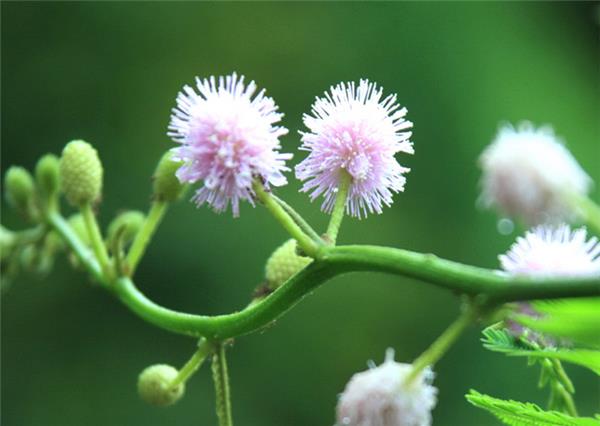
III. How to Grow the Sensitive Plant Well
1. The roots of the sensitive plant rarely branch, so it is not suitable for cuttings; it is suitable for propagation by seed. The plant is small and delicate, so it is very suitable for sowing indoors and growing in pots.
2. For growing the sensitive plant at home, watering is generally done on a one-day cycle, though watering needs to be reduced in winter. For fertilizing, fertilize once a month, and this will be enough to keep the plant in good form. Otherwise, fertilized plants will either die or become very large. As a warm-climate plant, the sensitive plant will wither and die in winter and will sprout again on its own the following spring. In daily growth, it is best to place it in sunlight so that its growth needs can be maintained. The requirements for potting soil should be considered when growing it, because it likes relatively fertile and moist soil. When watering, note that you only need to keep the soil moist; do not let it become overly waterlogged.
3. Because of its plant characteristics, the sensitive plant rarely gets sick, so generally rough, extensive care is enough.
4. Why does the sensitive plant not bloom? The usual reason the sensitive plant does not bloom is that its lighting needs have not met its own requirements. So it is best to receive a fixed amount of sunlight every day; only then can it bloom.
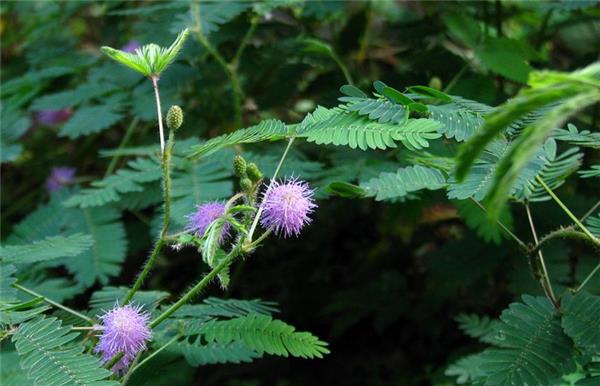
Now that you have read the introduction to the characteristics of the sensitive plant and its care methods, do you know how to grow the sensitive plant? And you also know the reason why the sensitive plant is shy, right? So do not laugh at it anymore for being a "shy little thing"! I hope you enjoy the introduction above.