How to Grow Mimosa pudica? A Detailed Guide to Mimosa pudica Care
Nowadays people's interest in growing plants and animals is growing stronger and stronger. Using plants you grow yourself to decorate your cozy and lovely home lets us both enjoy the fun of planting and achieve a decorative effect - killing two birds with one stone, so why not do it? Now let's take a look together at how Mimosa pudica should be grown!
I. How to Grow Mimosa pudica
Potted cultivation
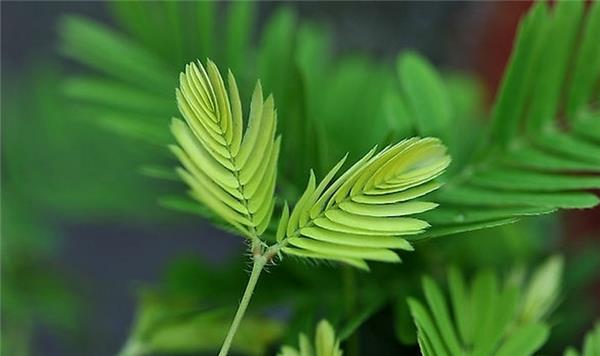
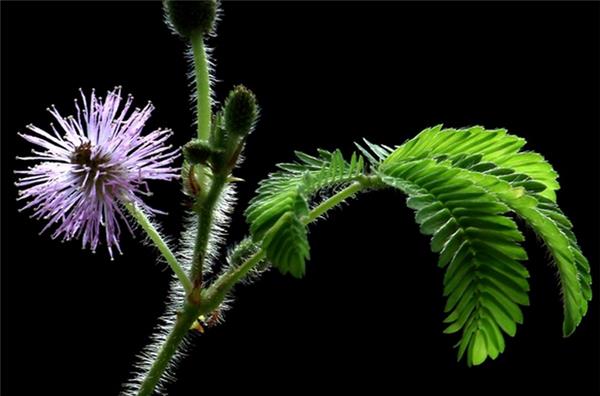
When you touch the leaves of Mimosa pudica, they slowly close up, which is very peculiar. Its flowers are like little fuzzy pink balls, especially cute. Because of its growing habits, Mimosa pudica is a small plant suitable for potted cultivation.
Watering:
Since Mimosa pudica is originally a tropical plant and very fond of moist environments, we should always keep the potting soil moist. In summer, water according to the condition of the potting soil, roughly once a day, and never let the soil dry out. You can also mist the plant regularly. In winter, to prevent frost damage, reduce the amount of watering.
Fertilizing:
Mimosa pudica does not have high soil requirements; ordinary soil will do. But if you want Mimosa pudica to grow better, you can choose soil that is relatively loose and fertile. You can also use a mixture of leaf mold and sandy soil, or use only leaf mold, and humus soil is also a good choice.
Sunlight:
Mimosa pudica likes sunlight. Placing it in a sunny spot is very beneficial to its growth. If there is too little sunlight, it is instead unfavorable to its growth.

II. Notes on Growing Mimosa pudica
1. Ensure sufficient sunlight. Mimosa pudica likes sunlight, so it is best to place it on a sunny balcony or by a window. Full exposure to sunlight is good for the growth of Mimosa pudica. If there is too little sunlight, it may hinder its growth.
2. Prevent frost damage. Mimosa pudica is suited to growing in a warm environment, with 20°C to 28°C being ideal. If the temperature is too low, it stops growing. In winter, because the temperature is too low, water less to avoid frost damage to the roots and stems. Watering should be done when the temperature is higher during the day. If the temperature is below 10°C, it is best to provide some protective measures.
3. Prevent pests and diseases. Mimosa pudica generally has very few pests and diseases. The most common pest is the slug. If found, you can sprinkle some lime powder to control it. If the plant is not growing well, check whether there is insufficient light or not enough water.
4. Fertilize according to your own situation. Mimosa pudica only needs fertilizing once a month, but some people think a potted Mimosa pudica looks bad when it grows too large, so those who think this way should not fertilize it.
III. The Uses of Mimosa pudica
1. Mimosa pudica can clear heat and promote urination, resolve phlegm and relieve cough, calm the nerves and relieve pain, detoxify, disperse blood stasis, stop bleeding, and astringe. It is used for colds, high fever in children, acute conjunctivitis, bronchitis, gastritis, enteritis, urinary stones, malaria, and neurasthenia; externally it is used to treat swelling and pain from falls and bruises, sores and swellings, hemoptysis, and shingles.
2. Ornamental value
The Mimosa pudica plant has a loose form, and its feathery leaves are slender and elegant; its leaves close as soon as they are touched. Mimosa pudica has many delicate and lovely flowers, charming and endearing, giving people an impression of delicate elegance. It can be planted in the ground at the corner of a courtyard, or grown in pots on a windowsill or desk.
3. Predicting earthquakes
According to Turkish seismologist Ercan, several hours before a strong earthquake occurs, the leaves of Mimosa pudica, which are sensitive to external touch, suddenly shrivel and then wither. In earthquake-prone Japan, scientists have found through research that under normal conditions, the leaves of Mimosa pudica open during the day and close at night. If the leaves of Mimosa pudica show the abnormal phenomenon of closing during the day and opening at night, it is a precursor to an earthquake.
4. In addition, Mimosa pudica can also predict disastrous weather changes, producing growth activities contrary to the norm in response to sudden out-of-season temperature differences, geomagnetic changes, geoelectric changes, and so on. We can place some potted Mimosa pudica plants indoors to observe and help predict and guard against natural disasters.

When Mimosa pudica blooms, its flowers are exceptionally numerous, giving people a feeling of delicate elegance. At home, we can plant Mimosa pudica in the courtyard, or keep it as a potted plant on a windowsill or balcony. You can also give a blooming Mimosa pudica as a gift: gently cover the pot with a pink gauze, tie on a pink ribbon bow, and if you can add a pink mohair pompom as decoration, it looks really lovely!
It looks really lovely!