How to grow golden-edged lucky bamboo? With pictures and cultivation methods
Golden-edged lucky bamboo, also called longevity bamboo, and it also has a nice name, edged dracaena, is a plant of the genus Dracaena in the Asparagaceae family. It likes a hot, humid and sunny environment, is not cold-tolerant, and avoids direct strong light in summer. Its stems are slender and grow upright, and its leaves are slightly wavy, curved and lanceolate. Why is it called golden-edged lucky bamboo? Because on both sides of the midrib of its leaf surface there are yellow longitudinal bands, and this is the origin of its name.
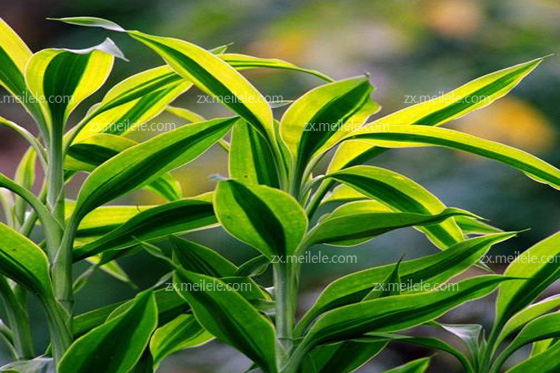
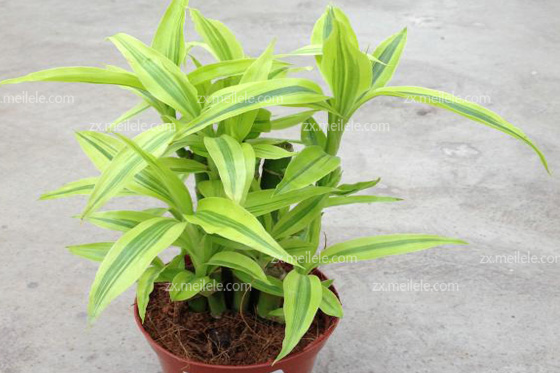
Golden-edged lucky bamboo can be grown not only in pots but also in water. For pot cultivation, loose sandy loam is best. During the growing period, keep the potting soil moist; in a dry environment, you can spray water appropriately to increase air humidity. For fertilizing, it is best to apply once every half month, and you can choose relatively dilute liquid fertilizer or compound flower fertilizer. Usually pay attention to pruning the plant to make its shape more beautiful. Golden-edged lucky bamboo grows relatively vigorously in summer, and at this time it needs appropriate shading, frequent watering, and keeping the potting soil moist; in winter, when the temperature is lower, golden-edged lucky bamboo needs to be placed in a sunny place. If the light is too dim, it is not conducive to plant photosynthesis and will affect the plant's growth.
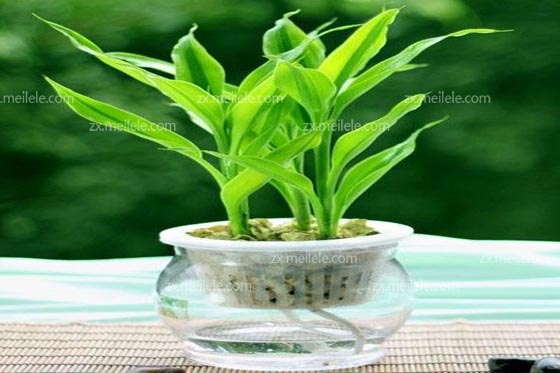
The water cultivation method is relatively simple. For water cultivation, it is best to choose a glass bottle with a tall body and a wide mouth. Most people directly buy a few stems of golden-edged lucky bamboo from the market and can directly put them in a bottle to grow in water, but before growing in water, it is best to cut off the leaves near the roots, preferably with a diagonal cut, as this helps the plant absorb water and nutrients. Although this water cultivation method for golden-edged lucky bamboo is very simple, it should be noted that before it takes root, do not change the water too frequently, nor too seldom; it is best to change the clean water once every 3 days. Many people change and move the direction of the plant from time to time, but this is instead not conducive to the plant absorbing sunlight. Water-cultivated golden-edged lucky bamboo begins to grow white fibrous roots in about 15 days. Be sure not to change the water frequently after rooting; you can add some nutrient solution in an appropriate amount to let the plant grow better.
Care precautions
The care of golden-edged lucky bamboo and lucky bamboo is extremely similar, so the following points need to be done during care.
1. Before rooting, change the water frequently. If the water in the bottle has an odor, it should be changed in time to avoid affecting the plant's growth.
2. If the leaves turn yellow, pay attention to whether it is due to insufficient light or excessive fertilizing. Move the plant to a place with sufficient light in time, and fertilize in an appropriate amount.
3. If root rot or leaf rot is found, remove it in time so that it does not affect healthy leaves.
4. Keep the plant able to obtain a relatively suitable growing environment, with a suitable temperature of 20-28°C.
5. Pay attention to the prevention and control of pests and diseases.
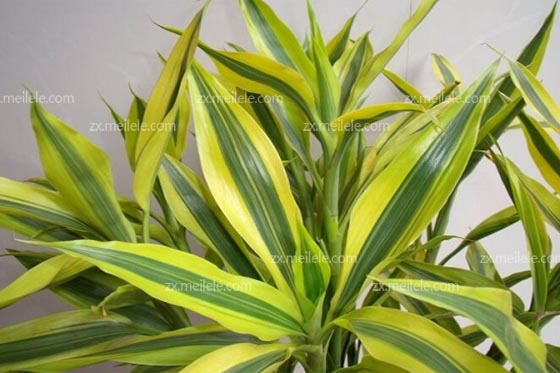
Summary: Golden-edged lucky bamboo has a short plant shape and brilliant colors. It is suitable as home greenery, can purify the air, and add indoor vitality; its cultivation method is relatively simple and it is easy to keep alive. The above are the key cultivation points of golden-edged lucky bamboo introduced to you by the editor. If you also like this lovely plant, why not get hands-on and grow a few yourself.