How to Grow Orchids? Complete Guide to Cultivation Methods and Precautions
Orchids, also known as lanhua, belong to the Orchidaceae family of dicotyledonous plants and are perennial herbs. The leaves of orchids grow in clusters from the stem, and the linear, lanceolate leaves remain evergreen year-round. They are numerous yet orderly, able to bend and lift freely, with an elegant and uniquely charming posture. Their flowers are plain yet not gaudy, standing gracefully erect, and are greatly loved by people. Today, let us take a look together at the introduction to orchid cultivation methods and precautions.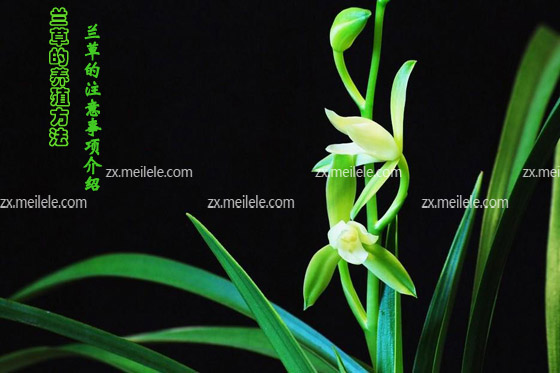
Orchid Cultivation Methods: Division
Generally, orchids need to be divided and repotted once the pot becomes full, once every 2-3 years, carried out in March-April each year, or it can also be done in mid-October to November. When dividing, the potting soil should be somewhat dry. If it is wet mud, it will be inconvenient to work with and can easily break and injure the roots. After turning out the mother plant, gently remove the soil clumps, separate according to natural growth clusters, prune withered roots and residual leaves, and take care not to damage the leaf buds and fleshy roots. Then rinse the roots clean with pure water, place in a shady, cool spot, and wait until the root color turns white and dry-looking before separating and potting. If the weather is becoming humid, the orchid should first be placed in sunlight for about 10 minutes, which benefits the orchid's growth.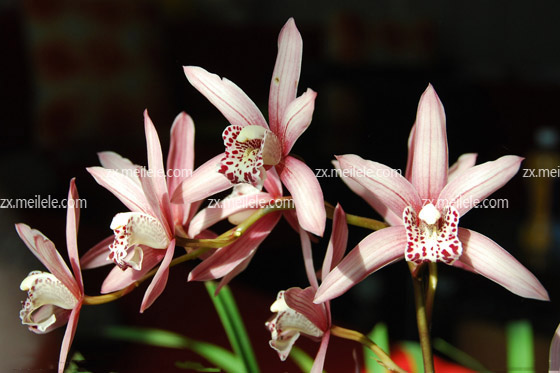
Orchid Cultivation Methods: Soil Selection
When planting orchids, the soil is best slightly acidic, and the flower pot is best made of tile clay or Yixing clay, which helps the orchid's aerial roots breathe within the pot. When planting, first cover the drainage hole at the bottom of the pot with clam shells, palm fiber, etc., then add coarse sand, coal cinder and charcoal in a steamed-bun shape, accounting for about 1/3 of the capacity. Add cultivation soil on top to a thickness of about 3-5 cm. Then place the orchid into the pot, arrange the roots evenly, and add the prepared fine soil until it is 2-3 cm from the pot rim. Slightly lift the orchid plant, with the height determined by having the top of the pseudobulb level with the soil surface - it should not be too shallow or too deep.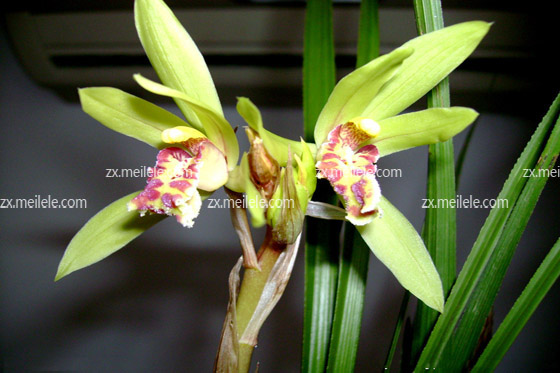
Orchid Cultivation Methods: Watering
When growing orchids, watering them properly is very important. When watering, use clean, slightly acidic water to irrigate the orchids. Watering should vary depending on the plant. Loose mountain soil holds sufficient water, and granular soil mixed with volcanic rock also absorbs water fairly well without becoming waterlogged. After watering different media once thoroughly, wait until the potting soil dries - about 1 cm of the medium turns white. During cultivation, to increase the air humidity for the orchids, you can add some moisture to the top-dressing medium on the pot surface to keep the orchids and pseudobulbs moderately moist. Water again when the entire pot has not dried out completely, and be sure to water thoroughly each time.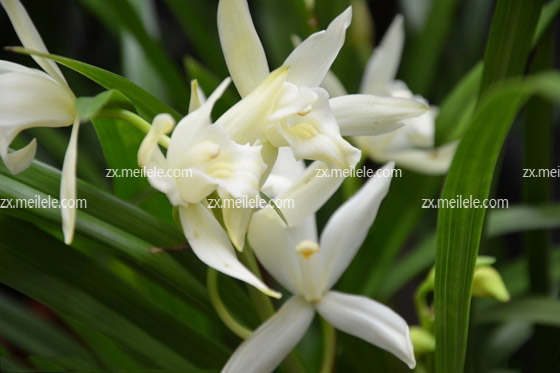
Orchid Cultivation Methods: Fertilizing
To better promote the growth of orchids, fertilizing them is very important. When fertilizing, organic fertilizer can be used. Organic fertilizer, namely farmyard manure, should be diluted and applied once every ten or so days. If other inorganic fertilizers are used, they should be applied according to their instructions. During the growing season, foliar fertilizer can be applied as a top dressing to the roots. When repotting and changing soil, the base fertilizer is very important, but the fertilizer must not come into contact with the orchid's roots. An appropriate amount of base fertilizer can be added to the soil. If too much fertilizer is applied, it will burn the orchid roots and cause black spots; if applied properly, it can produce strong seedlings and good flowers. When fertilizing orchids, the requirements are small amounts, clear and dilute - follow the principle of light fertilizer applied frequently.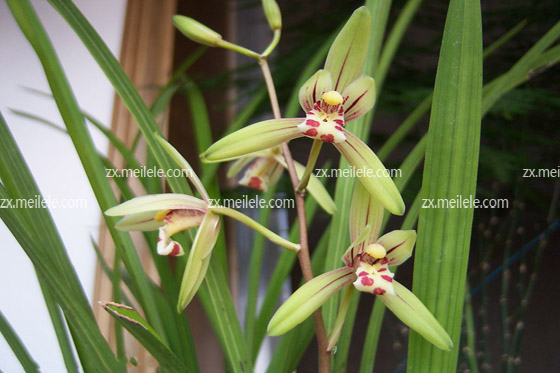
Orchid Cultivation Methods: Precautions
1. When the orchid's potting soil is on the dry side and the watering interval is prolonged, the leaf tips often become scorched and withered. This phenomenon is also a signal that watering is needed, but by then it is already too late, because the orchid leaves have been damaged by thirst, and this damage cannot be healed.
2. From spring to early summer, the climate is relatively dry, so water more when watering. After autumn when it is dry, also water more; in the rainy summer, water less. Be sure to follow the rule of watering more on days with strong hot winds and watering less on days with frequent moist winds.
3. Orchids are light-loving plants, but they should also avoid strong light when it comes to lighting, so shading should be carried out according to their growth habits, with the amount of shading reaching up to 70%.
4. Orchids are light-loving plants, but this does not mean they do not need sunlight. If grown in a dark place for a long time, their accumulation of organic matter is limited and cannot meet the needs of growth, which will affect flower bud differentiation, and naturally there will be no flowers or very few flowers the following year.
5. If scale insects and other pests are found on orchids, spray with omethoate or decis according to the instructions, preferably used in combination, 2-4 times a year. During the growing season, regular alternating treatment and preventive spraying can be done every 15-20 days. If orchids kept at home have bacterial soft rot, the plant should be removed promptly, because this disease is a terminal illness among orchids and cannot be fundamentally cured.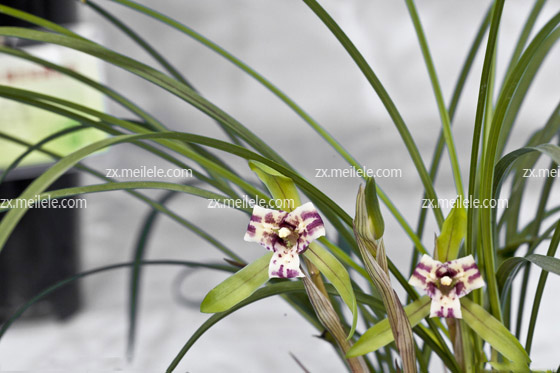
Summary: The above is the introduction to orchid cultivation methods and precautions that we have brought to you. After reading this introduction, I believe everyone has gained some understanding. The orchid is a flower of unique style with high ornamental value. The flower colors are elegant, and the fragrance is clear without being heavy. With one pot in a room, fragrance fills the air. When watering, be sure to water more; after autumn when it is dry, also water more; in the rainy summer, water less. Be sure to follow the rule of watering more on days with strong hot winds and watering less on days with frequent moist winds.
3. Orchids are light-loving plants, but they should also avoid strong light when it comes to lighting, so shading should be carried out according to their growth habits, with the amount of shading reaching up to 70%.
4. Orchids are light-loving plants, but this does not mean they do not need sunlight. If grown in a dark place for a long time, their accumulation of organic matter is limited and cannot meet the needs of growth, which will affect flower bud differentiation, and naturally there will be no flowers or very few flowers the following year.
5. If scale insects and other pests are found on orchids, spray with omethoate or decis according to the instructions, preferably used in combination, 2-4 times a year. During the growing season, regular alternating treatment and preventive spraying can be done every 15-20 days. If orchids kept at home have bacterial soft rot, the plant should be removed promptly, because this disease is a terminal illness among orchids and cannot be fundamentally cured.
Summary: The above is the introduction to orchid cultivation methods and precautions that we have brought to you. After reading this introduction, I believe everyone has gained some understanding. The orchid is a flower of unique style with high ornamental value. The flower colors are elegant, and the fragrance is clear without being heavy. With one pot in a room, fragrance fills the air.