How do you care for a rubber plant? Master these small cultivation tips
The rubber plant is a large tree in the genus Ficus of the family Euphorbiaceae, with a distinct trunk, few branches, and aerial roots. Its leaves are large and glossy, evergreen all year round, making it a large shade-tolerant foliage plant. Because the rubber plant has high ornamental value, many people like to grow small and medium-sized rubber plants in their living rooms, studies, and other places. Today, let's take a look with the editor at how to care for a rubber plant and an introduction to small tips for growing a rubber plant.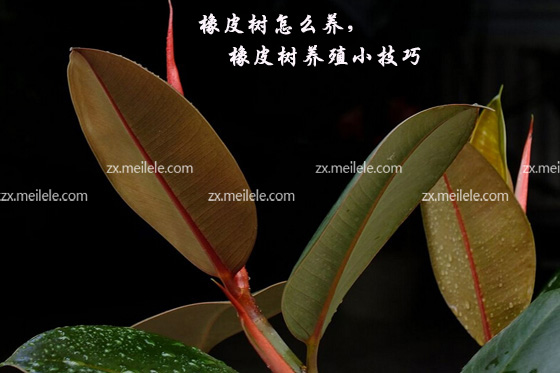
How to care for a rubber plant
The rubber plant is also known as the rubber tree or Para rubber tree. It is a large tree in the genus Ficus of the family Euphorbiaceae. Its trunk is distinct, with few branches; its leaves are alternate, long-elliptical, thick and leathery, bright green, with many parallel lateral veins; the young leaves are red, and the leaf stalks are thick and sturdy. The rubber plant likes a hot, humid environment with plenty of sunlight. Its suitable growing temperature is 20-25°C, but it cannot be exposed to direct sunlight. The rubber plant can also tolerate shade but not cold; in winter the temperature must not be lower than 5°C. It is relatively tolerant of dryness. When growing it, do not use sticky soil; it does not tolerate poor, thin soil or drought, and it grows well in loose, fertile, well-drained, slightly acidic soil.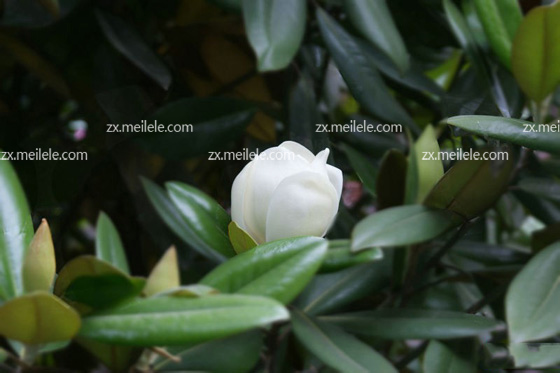
Small tips for growing a rubber plant: temperature and light
The rubber plant is a plant that likes a warm environment, and its best growing temperature is 20°C-25°C. It is relatively tolerant of high temperatures and can still grow well when the temperature is above 30°C. It is not cold-tolerant; in winter the temperature must not be lower than 10°C. The rubber plant likes bright, diffused light, but it also has a certain ability to tolerate shade. It does not tolerate intense sunlight exposure; when the light is too strong, it can scorch the leaves, causing yellowing and burnt leaf edges. From May to September each year, it needs to be shaded.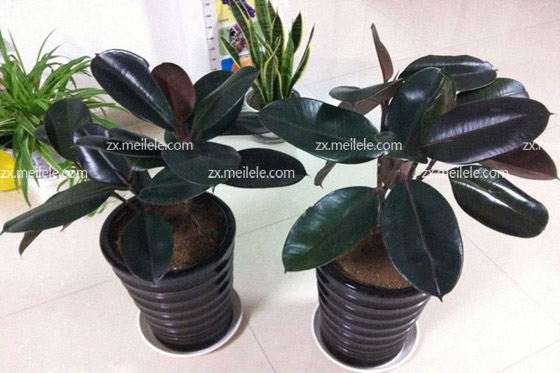
Small tips for growing a rubber plant: humidity and watering
The rubber plant likes a humid environment, so during its growing season, when the weather is clear and the air is dry, spray water frequently on the branches, leaves, and surrounding environment to increase the relative air humidity. During the growing period, water it promptly to keep the potting soil moist, while in winter the amount of watering should be controlled promptly; when the temperature is low and the potting soil is too wet, it can cause root rot.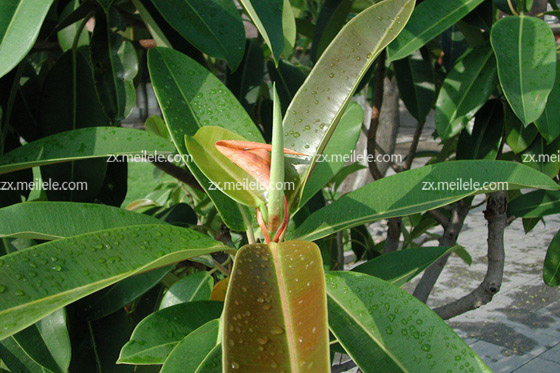
Small tips for growing a rubber plant: fertilizing and pruning
Because the rubber plant grows relatively quickly, nutrients must be replenished promptly so that the plant can grow well, and a nitrogen-based fertilizer should be applied 2-3 times a month. The variegated and patterned varieties of rubber plant grow relatively slowly, so the number of fertilizations can be appropriately reduced. In September, nitrogen fertilizer should be stopped, and only phosphorus and potassium fertilizer should be applied, to improve the plant's cold resistance. In winter the plant goes dormant, so fertilizing should be stopped. In spring, pruning should be done in combination with its repotting, removing the forked branches, inward-growing branches, dead branches, and thin weak branches inside the crown, and cutting back the runaway branches that protrude beyond the crown, so as to keep its plant shape neat.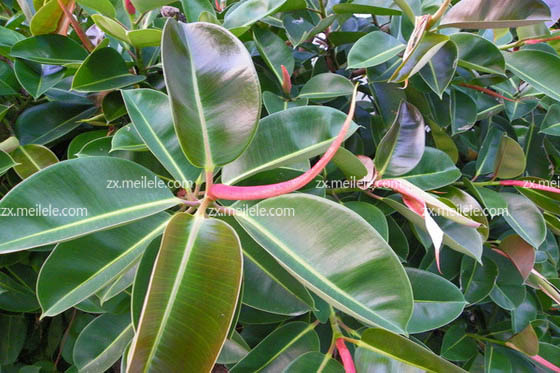
Summary: The above is the editor's introduction to how to care for a rubber plant and small tips for growing a rubber plant. After reading the editor's introduction, I believe many people understand it fairly well. The rubber plant has high ornamental value and is a well-known potted foliage plant. Its unique ability to purify dust is also very popular with people.