Tradescantia zebrina Pictures, Growing Methods and Precautions
Tradescantia zebrina is a plant with medicinal value. It has the functions of cooling blood and stopping bleeding, clearing heat and detoxifying, and promoting urination, and can be used for the treatment of acute conjunctivitis, sore throat, leukorrhea, venomous snake bites and so on. It is called diaozhumei (hanging bamboo plum) because its leaves resemble bamboo leaves and it is grown as a hanging potted plant, with its stems and leaves admired as they trail down on all sides. Below, let us take a look at pictures of Tradescantia zebrina and what its growing methods and precautions are.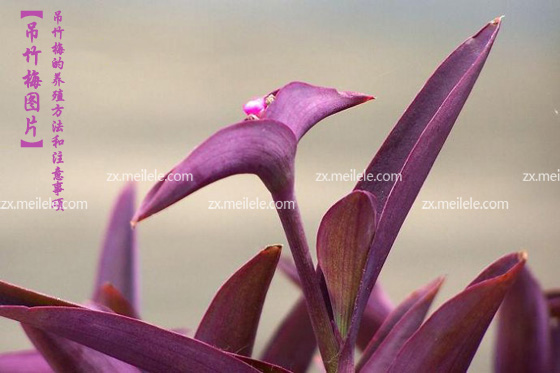
Introduction to Tradescantia zebrina
Tradescantia zebrina is also known as diaozhulan, variegated inch plant, huayezhujiacai, honglian and so on. It is a perennial herbaceous plant of the genus Tradescantia, with stems up to one meter long, somewhat weak, semi-succulent, branching, and spreading or hanging. The leaves are alternate, rather like the shape of bamboo leaves, with tips acute to acuminate or slightly obtuse, the base sheathing and clasping the stem, the leaf sheath sparsely covered with long hairs, the upper surface purple-green mixed with silvery white, with purple stripes in the middle and along the margins, and the underside of the leaf purple and hairless. The flowers of Tradescantia zebrina are clustered in a pair of unequal-sized terminal leaf-like bracts, rose-purple in color, with the flowering period from June to August each year.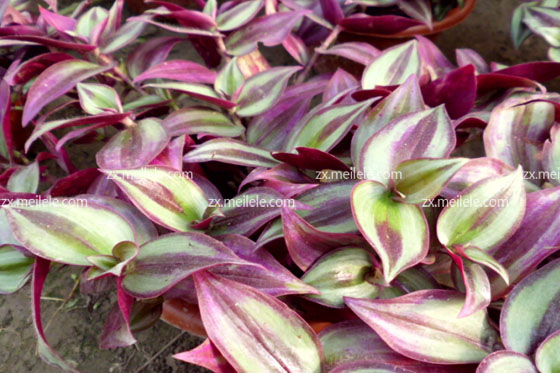
Propagation as a Growing Method for Tradescantia zebrina
When propagating Tradescantia zebrina, cuttings are usually used. Take several nodes of healthy stems and insert them into moist sand and they will survive. The best rooting temperature for its cuttings is 18-25°C. If the temperature is below 18°C, the cuttings will find it very hard to root, and growth will be very slow. If the temperature is above 25°C, the cut ends of the cuttings are easily infected by pathogens and rot. After taking cuttings of Tradescantia zebrina, the air humidity needs to be kept at 75%-85%.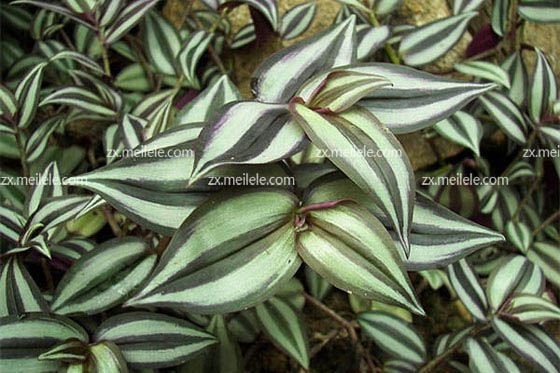
Temperature and Light as Growing Methods for Tradescantia zebrina
Tradescantia zebrina is a plant that likes a sunny environment, and also quite likes semi-shade; it is rather afraid of direct sunlight. During the growth of Tradescantia zebrina, it cannot be placed under strong light, but it also cannot be kept in too dim an environment for a long time. Tradescantia zebrina quite likes a warm environment and is not cold-tolerant; its ideal growing temperature is 15-25°C. In winter, it should be moved indoors to overwinter, and the indoor temperature must not be below 10°C.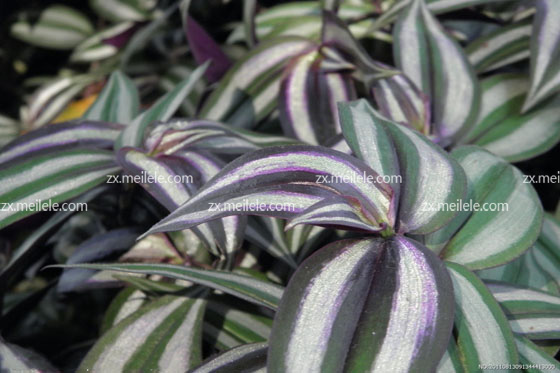
Watering and Fertilizing as Growing Methods for Tradescantia zebrina
Tradescantia zebrina likes a moist environment, so when growing it you must keep the potting soil moist and not too dry, otherwise the old leaves at the lower part of the plant easily dry up, turn yellow and drop off. During its growing season, water once a day, and also spray water on the leaf surfaces and the surrounding environment of the plant to encourage faster growth of the branches and leaves. When it enters the dormant period, watering should be controlled. Tradescantia zebrina does not have high fertilizer requirements. When its stems and vines first begin to grow, apply a low-concentration liquid fertilizer once every 15 days; during the growing season, apply liquid fertilizer once every 2-3 weeks, while also applying 2-3 additional applications of phosphorus and potassium fertilizer to promote the growth of the stems and leaves of Tradescantia zebrina and make its leaf surfaces fresh and glossy.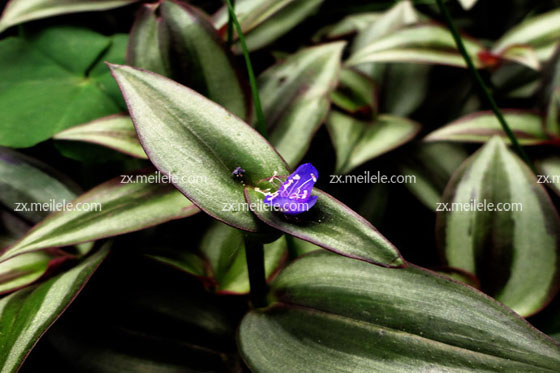
Pruning and Repotting as Growing Methods for Tradescantia zebrina
Tradescantia zebrina grows very fast at suitable temperatures, so during its growing period it should be pinched back, pruned and adjusted. The roots of Tradescantia zebrina live longer than its leaves, and as the stems and vines grow longer and longer, the leaves at the base gradually dry up, turn yellow and drop off. Therefore, overly long branches and leaves should be cut off in time to encourage new shoots and new branches to sprout from the base. Generally, after a potted Tradescantia zebrina has been grown for two years, all the old vines should be cut off, and its pot should be changed in spring; when repotting, the fibrous roots on the outside of the root ball should be removed, to encourage it to sprout new roots and stems and vines.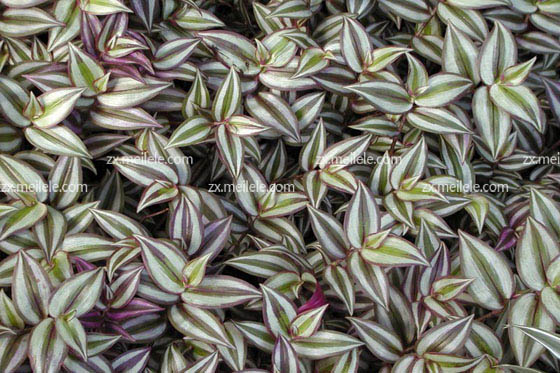
Precautions for Tradescantia zebrina
The best growing temperature for Tradescantia zebrina is 15-25°C, and the temperature must not be below 10°C; if it is below 10°C, growth will stop. Since Tradescantia zebrina likes moisture, during its growing period it should be watered every day, the soil should be kept moist, and the leaves and their surroundings should be sprayed with water. In winter, Tradescantia zebrina enters its dormant period, and the amount of watering should be controlled. Tradescantia zebrina likes semi-shade, and during cultivation it should be kept away from intense sunlight. However, spending a long time in too shady a spot often causes the stems and leaves to grow leggy and the leaf color to fade.
Summary: The above is the editor's introduction to pictures of Tradescantia zebrina plus its growing methods and precautions. After reading this introduction, I believe everyone has a fairly good understanding. Tradescantia zebrina in its place of origin mostly creeps and grows on shady, damp ground, and is afraid of blazing sun. It has no requirements for the soil in which it is grown, and can grow well in ordinary soil.