The flower language of the yellow rose is a blessing for lasting friendship and romance
The yellow rose, like other roses, belongs to the Rosaceae family, but what sets it apart from other roses is that it is one of the rarer flowers that mainly represents friendship; its color is not as alluring as that of the red rose, but rather lighter and brighter.
I. Introduction to the yellow rose
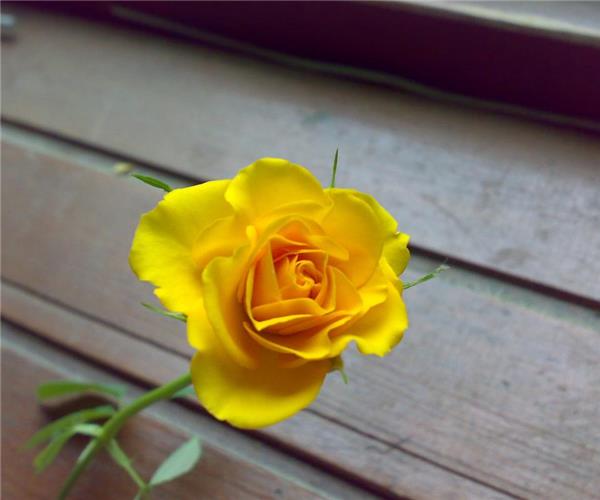
In plant taxonomy, rose (meigui) refers to the shrub Rosa rugosa of the genus Rosa in the Rosaceae family, which is an invasive weed with no ornamental value. In everyday life, rose is the collective name for a series of large-flowered, showy cultivated varieties of the genus Rosa; in plant taxonomy these cultivated varieties should be called Chinese rose (yueji) or rose (qiangwei). The "yellow rose" is the yellow variety among cut-flower Chinese roses. With its elegant posture and bright color, it has become a flower that people love. It is relatively common in daily life. The yellow rose is a herbaceous plant; its flowers are yellow with a red blush, open easily, and its branches are rather slender and long with many thorns. Its grading standards are: Grade I, above 40cm, with straight stems, plump buds, fresh leaves, and no pests or diseases. Grade II, 30~40cm, with straight stems, plump buds, relatively fresh leaves, and no pests or diseases. Grade III, below 30cm, with curved stems, fairly plump buds, leaves with slight discoloration, and no pests or diseases.
II. What is the flower language of the yellow rose
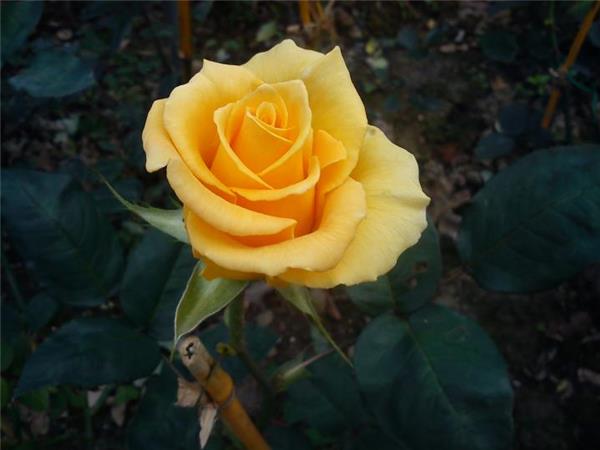
The bright yellow rose carries a sunlight-like color that makes people feel warmth and happiness. Yellow represents joy, wisdom and strength. However, in European culture, yellow also has its negative connotations. The yellow rose also represents love symbolizing jealousy and death.
Yellow rose flower language 1: "Pure friendship"
As for friendship, the yellow rose represents pure friendship and the best blessings, so giving one to your friend, buddy or bestie is also a good choice.
Yellow rose flower language 2: "Fading love"
The day you left, there was no warning or premonition, and my predictive ability, of which I had always been so proud, gave me no hint either - or rather, it was the day I gave you a yellow rose. No, perhaps it should be even earlier; on the day the garden was full of blooming yellow roses, the moment I met you, our parting was already destined, and the flower language of the yellow rose would play out between you and me.
Yellow rose flower language 3: "Waiting love"
There are mainly two scenarios for this. If you are interested in a guy or a girl, and after he/she has rejected you once, you can give him/her a yellow rose to show that you will always wait.
III. Growth habits of the yellow rose
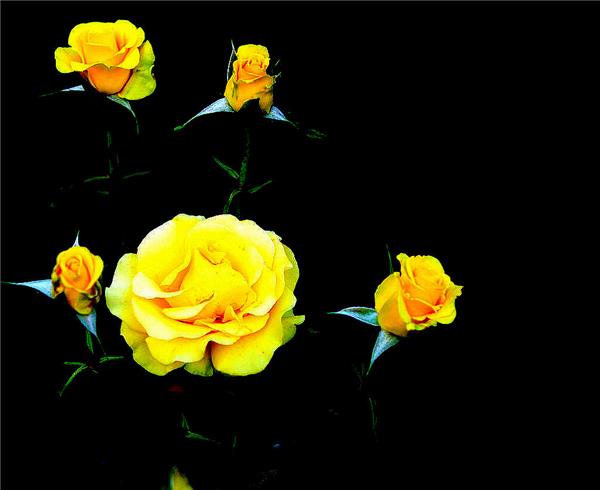
Roses all like ample sunlight, and they are all relatively cold-tolerant and drought-tolerant, preferring loose, fertile loam with good drainage. In clay loam they will grow poorly and will bloom poorly. It is best to plant them in a well-ventilated place far from walls, and to prevent sunlight reflection so as not to affect their blooming.
It likes sunlight by nature and has strong cold tolerance. It is drought-tolerant but not waterlogging-tolerant; standing water will cause leaf drop and even death. It prefers fertile, loose, moist, well-drained sandy loam. A large day-night temperature difference and a dry environment are conducive to growth. Light and temperature: ample sunlight promotes good growth. Whether planted in the ground or in a pot, it should be placed in a sunny place and receive more than 4 hours of direct sunlight every day. It cannot be kept long-term indoors in a place with insufficient light. In winter, bring it indoors and place it in a sunny spot. The suitable growth temperature is 12-28°C, and it can tolerate a low temperature of -20°C.
IV. How to cultivate the yellow rose
Soil preparation: Before planting, plow the soil deeply and disinfect it with huaku (a soil disinfectant), so that the soil and fertilizer are fully mixed. Make beds 12cm wide, with ditches 40cm wide and beds 5.5-6.0m long. The soil should not be broken up too finely, because if it is too fine, its air permeability will be poor, which will lead to slow seedling recovery and slow later growth. On the south side of the greenhouse, only about 50cm needs to be left.
Planting: There is no strict limit on planting time; it can be planted in all four seasons, with spring and autumn being the best times. When planting, plant 2 rows per bed, with a row spacing of 40cm and a plant spacing of 10~12cm; leave a 40cm interval on both sides of the planting bed, averaging 7~8 plants/m2, and maintain about 63,000 plants/hm2. The planting density differs somewhat among varieties.
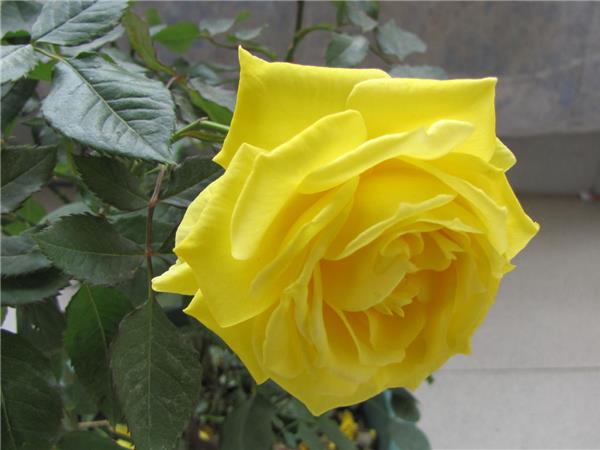
Well, after reading the introduction above, are you all fairly familiar with the yellow rose? If you are interested in growing yellow roses, you can refer to the methods for growing red roses, because their habits are almost the same.