How to grow anthurium? Soil culture methods and hydroponic precautions
Because of its elegant flower shape, bright flower colors and emerald green leaves, the anthurium is one of the mainstream indoor potted ornamental plants. Anthuriums can be grown by two methods, soil culture and hydroponics, both of which are fairly simple.
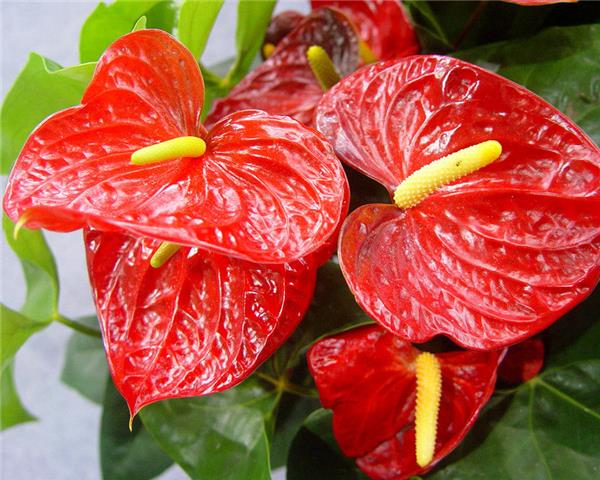
I. Growth habits of anthurium
Anthurium is a perennial evergreen herbaceous flower. It likes a warm, hot and humid environment with good drainage, and fears drought and strong direct sunlight. Its suitable daytime growing temperature is 26-32°C, and nighttime temperature is 21-32°C. The highest temperature it can tolerate is 35°C, and the lowest temperature it can tolerate is 14°C. The suitable light intensity is 16000-20000lx, and the ideal relative air humidity is 70%-80%.
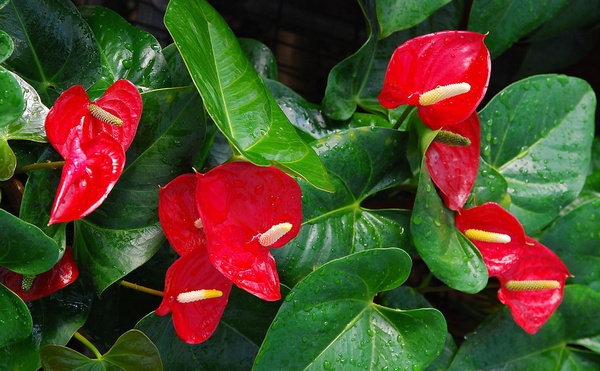
II. Soil culture methods for anthurium
Planting: There are four common types of anthurium potting material: tissue-cultured plantlets, divisions, plug seedlings and potted seedlings. A basic principle: the smaller the plant, the greater the difficulty of cultivation. For growers, if the cultivation conditions are relatively good and you also have some experience, you can choose potted seedlings with a plant height of 10-15 cm; such seedlings can be planted directly into the final pot and are relatively safe. When you have enough experience, you can choose plug seedlings with a plant height of 6-10 cm; such seedlings are relatively cheap.
Temperature: The optimal temperature for growing anthurium at home is 16-24°C; the lowest temperature must not be below 12°C, and the highest temperature must not exceed 30°C; if the ambient temperature is too high or too low, necessary measures should be taken to ensure the temperature environment needed for normal growth and development of the anthurium;
Light: Note that the anthurium must not receive direct strong light; it needs to be given plenty of scattered light, and it is also best to rotate the plant regularly to ensure the plant receives light evenly;
Humidity: Ensure the humidity for the anthurium is not lower than 50%, but at the same time the temperature and humidity must not be too high, to avoid the negative effects this brings. In an environment above 28°C, spraying can be used to increase humidity and create a normal growing environment for the anthurium. In winter, note that the leaf surface does not need to be too wet, to prevent the plant from being too wet at night and easily suffering cold damage, which would be more loss than gain;
Soil: The anthurium is a flower variety relatively sensitive to salt, so the pH value of the substrate should be kept between 5.2-6.1 as much as possible, which is most suitable for anthurium growth. If the pH value is too low, the flower stems become shorter, which reduces the ornamental value;
Fertilizing: Root fertilization for anthurium is much more effective than foliar feeding. This is because the leaf surface of the anthurium has a waxy layer and cannot absorb fertilizer very well. Liquid fertilizer application should follow the principle of regular and quantitative application; in autumn, a cycle is generally 3-4 days. The fertilizing time varies with the climate and environment; under normal circumstances, apply between 8 a.m. and before 5 p.m.; in winter or early spring, do it between 9 a.m. and before 4 p.m.
Pruning: Under normal circumstances, during the growth of the anthurium, the basal petioles gradually degenerate; when the stipules dry out, they can be cut off in time. After flowering, when the flower stalk turns yellow, it must also be cut off from the base as soon as possible, leaving a 2 cm protective stub.
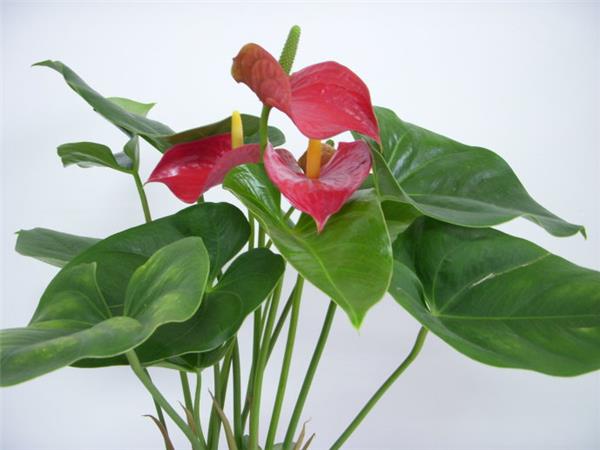
III. Precautions for hydroponic anthurium
When growing anthurium hydroponically, half of the root system should be exposed to the air so that the roots can breathe in the air; otherwise, root rot is very likely to occur. The root system of hydroponic plants grows exposed, and after contact with light, plant cells carry out photosynthesis; the same is true for the roots. It is normal for them to appear green. As long as there is no direct sunlight, healthy root growth can usually be ensured. Not all hydroponic plant roots will eventually become green and healthy. For example, some are brown.
To grow anthurium hydroponically with expanded clay pellets, first wash the roots clean, trim old roots and residual roots, and remove flowers. Then place the plant into the container. Fill it with expanded clay pellets, then dilute rooting powder according to the proportion and spray the pellets wet; note that there should not be too much standing water below - if there is a lot of water, pour it out. After a long wait, you will be pleasantly surprised to find that the thick, white fleshy roots of the anthurium are growing on all sides, all clinging to the edge of the container. At this point, congratulations - a hydroponic anthurium is considered complete, and what remains is to regularly add nutrient solution and care for its growth.
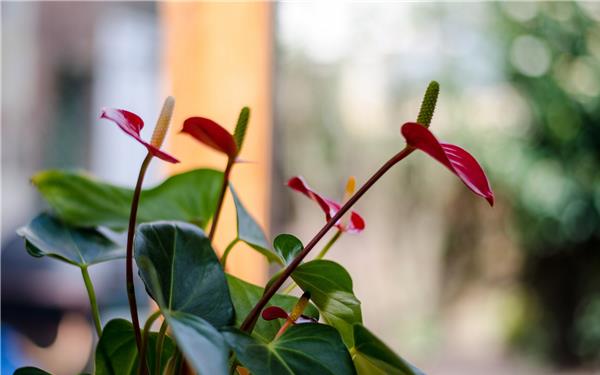
In addition, when growing anthurium indoors, attention should also be paid to the prevention and control of pests and diseases, mainly aphids and the like; as long as you usually pay more attention to indoor ventilation and avoid standing water in the pot, pests and diseases can be avoided.