An Introduction to the Medicinal Value and Common Ways to Eat Olives
The olive is a plant with very high edible value. Both the olive fruit and the olive root have the effect of treating sore, swollen throat, and the olive fruit can also promote fluid production and detoxify, while the olive root can also treat athlete's foot. You could say it has many benefits.
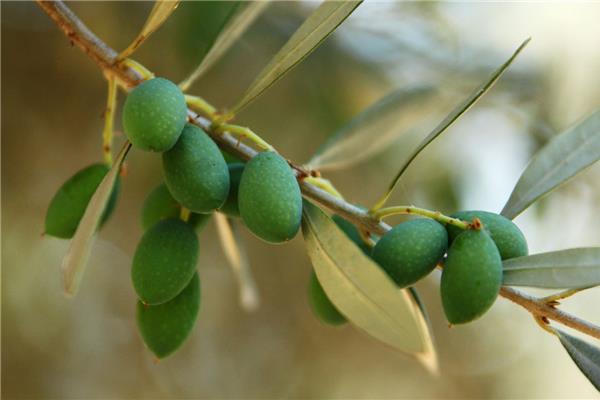
I. The Medicinal Value of the Olive Fruit
[Composition] The fruit contains 1.2% protein, 1.09% fat, 12% carbohydrates, 0.204% calcium, 0.046% phosphorus, 0.0014% iron, and 0.02% ascorbic acid. The seed contains 7-8% volatile oil, as well as amyrin, etc.
[Functions and Indications] Clears the lungs, benefits the throat, promotes fluid production, and detoxifies. Treats sore, swollen throat, excessive thirst, cough with blood-streaked sputum, bacillary dysentery, epilepsy, and neutralizes pufferfish poison and alcohol toxicity.
① Meng Shen: "It counteracts pufferfish poison; take it as juice."
② Ri Hua Zi Ben Cao: "Opens the appetite, directs qi downward, and stops diarrhea."
③ Kai Bao Ben Cao: "It mainly dispels the effects of alcohol."
④ Ben Cao Yan Yi: "Chew the juice and swallow it to treat fish bones stuck in the throat."
⑤ Dian Nan Ben Cao: "Treats all cases of throat fire flaring upward and mumps. It can resolve damp-heat and spring warmth, promote fluid production and quench thirst, clear phlegm, and neutralize fish poison, alcohol, and food stagnation."
⑥ Gang Mu: "Treats sore throat; chew and swallow the juice, and it can neutralize the poison of all fish and soft-shelled turtles."
⑦ Ben Cao Tong Xuan: "Secures essence."
⑧ Ben Jing Feng Yuan: "Causes pox to erupt."
⑨ Ben Cao Zai Xin: "Pacifies the liver and opens the appetite, moistens the lungs and nourishes yin, reduces phlegm and regulates qi, stops coughing, and treats blood-streaked sputum."
⑩ Sui Xi Ju Yin Shi Pu: "Cools the gallbladder and calms fright."
⑾ Xian Dai Shi Yong Zhong Yao: "Treats neurotic epilepsy; use it simmered with alum into a fluid extract." [Usage and Dosage] Internal use: decoct in water, 1.5-3 qian; char it until it retains its nature and grind into powder, mash for juice, or simmer into a paste. External use: char until it retains its nature, grind into powder, and apply mixed with liquid.
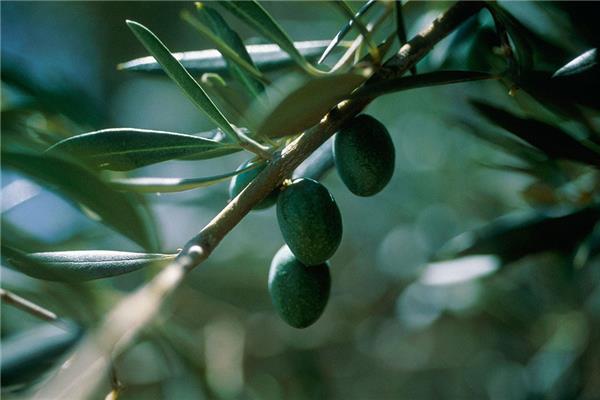
II. The Medicinal Value of the Olive Root
[Alias] White olive root.
[Source] Medicinal material basis: the root of the Burseraceae plant olive, Canarium album (Lour.) Raeusch.
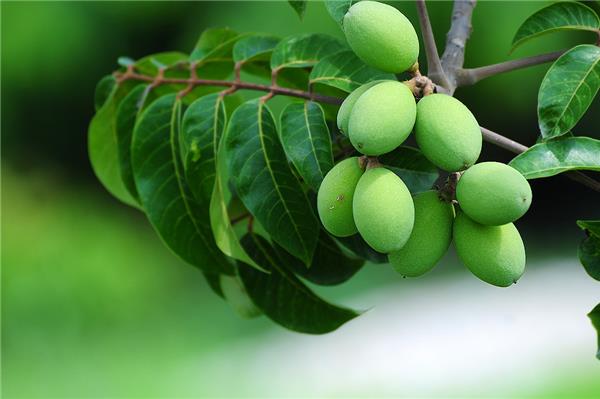
[Original Form] Olive: an evergreen tree, 10-20 m tall. It has gummy, aromatic resin. The bark is light gray and smooth; young branches, petioles, and leaf whorls are all covered with very short downy hairs and have lenticels. Odd-pinnate compound leaves are alternate, 15-30 cm long; leaflets number 11-15, oblong-lanceolate, 6-15 cm long and 2.5-5 cm wide, with acuminate tips, oblique bases, entire margins, and are hairless; reticulate veins are obvious on both surfaces, and there are small pits on the reticulate veins beneath, slightly rough. Panicles are terminal or axillary, equal to or slightly shorter than the leaves; the calyx is cup-shaped, with 3 shallow lobes, rarely 5 lobes; petals number 3-5, white, fragrant, about twice as long as the calyx; stamens number 6, inserted on the outside of the annular disk; pistil 1, ovary superior. The drupe is ovoid, about 3 cm long, initially yellow-green, later turning yellow-white, with sharp points at both ends. Flowering period is May-July, fruiting period is August-October.
[Habitat and Distribution] Ecological environment: grows in mixed forests at low altitude, and is also cultivated.
[Nature and Flavor] Slightly bitter; neutral
[Functions and Indications] Dispels wind-dampness; relaxes sinews and collaterals; benefits the throat. Mainly treats wind-damp impediment pain; numbness of the hands and feet; athlete's foot; sore, swollen throat
[Usage and Dosage] Internal use: decoct in water, 15-30 g. External use: appropriate amount, decoct in water for gargling.
[Excerpt] Chinese Materia Medica
III. Ways to Eat Olives
Olive and Snow Pear Stewed Lean Pork
Main ingredients: olives 109 g, snow pear 351 g, lean pork 158 g. Auxiliary ingredient: 1 candied date
Method:
1. Put the lean pork into a soup pot, add an appropriate amount of clean water. Cover the pot and bring to a boil over high heat.
2. Blanch briefly, scoop it out, and wash the lean pork and soup pot again.
3. Put the lean pork back into the soup pot and add an appropriate amount of clean water all at once.
4. Wash the Chaoshan olives and cut them in half. Put them into the soup pot.
5. Wash the snow pear, peel it, remove the core, and cut it into pieces. Put them into the soup pot.
6. Rinse the candied date and put it into the soup pot. Cover the pot and bring to a boil over high heat.
7. Uncover and turn off the heat.
8. Pour all the ingredients and broth from the pot into a glass pot. Cover the pot and bring to a boil over high heat.
9. Reduce to low heat and simmer for about 2 hours. When the time is up, turn off the heat.
10. Ladle into bowls, and once it is on the table, enjoy it beautifully.
Soy-Sauce Olives
Main ingredient: olives 1000 g. Auxiliary ingredients: 10 dried chilies, 1 large garlic bulb, salt 50 g, soy sauce 500 g, rock sugar 125 g
Method:
1. Select relatively tender olives.
2. Wash them thoroughly with flour water.
3. Drain the washed olives.
4. Let them dry in the sun or air-dry until the moisture is gone (as long as the olives have no moisture; I happened to be busy that day, and the olives were sun-dried too long, so they felt a bit wilted).
5. Chop the sun-dried olives in half with a knife.
6. Put the cut olives into a clean container, add coarse salt, and cure overnight (during curing, shake the container occasionally so the salt blends better with the olives).
7. Prepare the chilies and garlic. Similarly, the washed chilies and garlic must be dried of moisture.
8. Put the rock sugar and soy sauce into a clay pot, bring to a boil over high heat, then set aside to cool.
9. Put the salt-cured olive halves into a sealable container and pour in the cooked soy sauce.
10. Add the chilies and garlic (for better photos, I added the soy sauce in two batches; remember the soy sauce must cover all the ingredients).
11. They are ready to eat after curing for 2-3 days. When eating, take them out with clean, oil-free chopsticks.
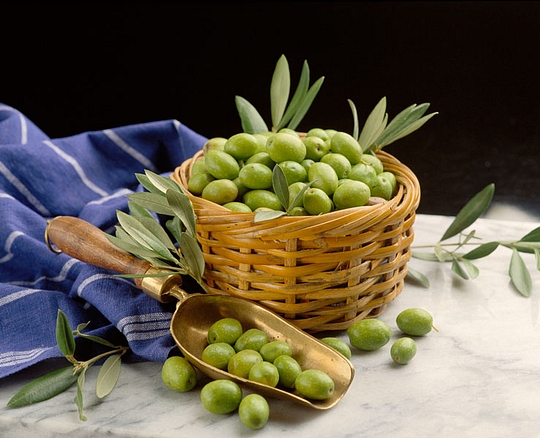
That is all for the introduction to the edible value and medicinal value of olives. Of course, the ways to eat olives are not limited to the two introduced above. People who like to eat olives can study some recipes and cook olives into all kinds of delicious dishes.
People who like to eat olives can study some recipes and cook olives into all kinds of delicious dishes.