Although stone flowers are inconspicuous, their cute, dopey look is utterly charming
Growing stone flowers is actually fairly easy. Generally speaking, succulents are easy to keep alive because their stems and leaves can store large amounts of water; they are practically a bunch of little guys that can survive without any special watering, which makes them very appealing.
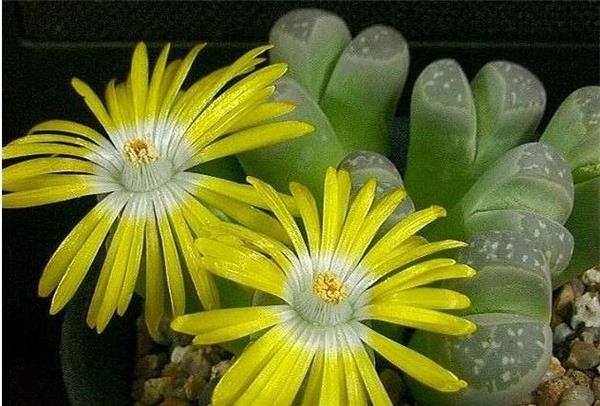
Habits: This genus belongs to the family Aizoaceae, genus Lithops, with 70 to 80 species and many horticultural cultivars. It is a typical succulent, pebble-shaped overall, like an unopened mushroom, and has the trait of changing its body color to match the soil color. The upper part has 2 thick, fleshy leaves; flowers grow from between the two leaves, either singly or in clusters of 2 to 3, yellow or white. Its plant form, leaf color and flowers often vary from species to species. Stone flowers are native to South Africa and southwestern Africa. They need sandy soil in pots with good drainage; they like warmth, dryness and plenty of sunlight; the optimum growing temperature is 20 to 24°C, and the overwintering temperature should stay above 13°C; be careful to keep the potting soil dry. In summer's high temperatures they go dormant, so watering should be reduced and shade provided. The growth pattern of Lithops is that they begin growing between March and April, pause growth in the hot season and enter a summer dormancy, then continue growing and flower after the autumn cool arrives, and after the flowers fade they enter the overwintering period.
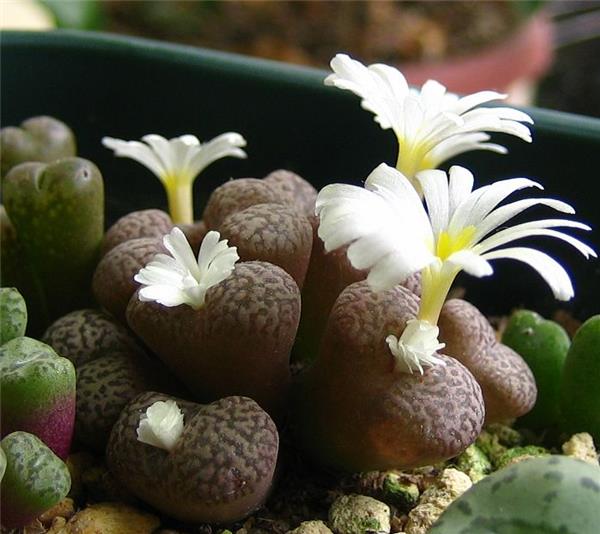
Propagation: by sowing seeds. Because stone flower seeds are tiny, they can be sown in a small pot together with sandy soil, without covering with soil; do not just scatter a few seeds in a large pot. After sowing, place stone flowers in a warm, humid environment. Provide shade in strong light. During growth, stone flowers complete each round of propagation by molting; a single plant needs only three or four years to split into a cluster. Stone flowers come in diverse colors, are adorably dopey, and are called living stones.
Soil: loose, airy, well-draining, low in humus and high in sand and gravel; this simulates the soil of their place of origin. A recommended basic soil mix: 30% plain sandy soil, 20% ordinary peat or general-purpose flower soil, 20% cinder, 30% coarse vermiculite. Mix the growing medium thoroughly before use; it is recommended to steam it over boiling water in a pot for 10 minutes. Or put it in a heat-resistant microwave-safe container and sterilize it in the microwave twice, 3 minutes each time.
Pots: for sowing, clay pots, brick pots or plastic pots can all be used. It is recommended to choose shallower ones, no more than 5-10 cm tall, with many large drainage holes in the bottom. Wash the sowing pot clean before use; clay and ceramic pots are best sterilized together with the growing medium.
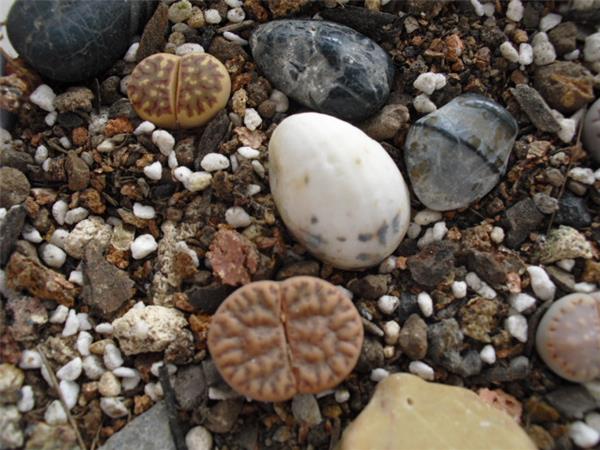
Light: likes strong light, not tolerant of shade (needs ample light).
Water: it grows in arid regions and has fairly high drought tolerance. After potting, do not water for 3-5 days, only mist, otherwise the body easily rots. Never water stone flowers while they are molting, because they are prone to tears and cracks during molting; watering at this time may speed up the shrinking of the old body, which is bad for the new leaves.
Fertilizing: fertilize once every half month; pause fertilizing after flowering in autumn.
Temperature: slightly cold-tolerant, able to withstand low temperatures of -5 to 0°C. After stone flower seedlings emerge, pay attention to preventing mold; provide appropriate ventilation, and when watering, just use drip soaking. Keep the overwintering temperature above 15 degrees.
Humidity: likes dryness, with relative humidity below 50%, often under 40%.
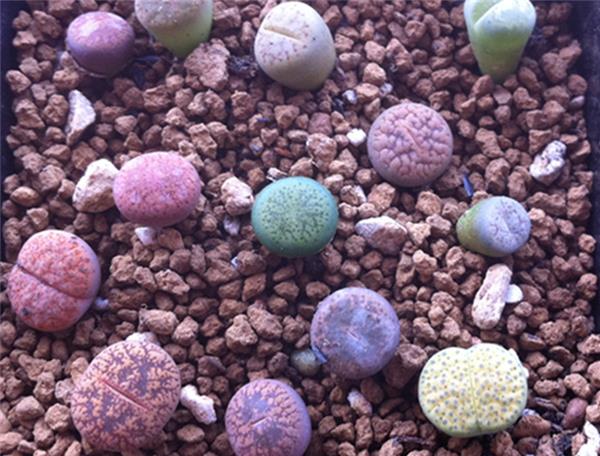
The ornamental value of stone flowers is rather unusual: they have neither bright, green leaves nor do they often produce eye-catching, beautiful flowers, and they look no different from the little stones by the roadside. But perhaps precisely because of this dopey appearance, they always easily inspire a sense of familiarity. If you grow these little stones on your office desk, they can surely help everyone relax as well.