Introduction to Mahonia Varieties and Key Cultivation Techniques
Mahonia gets its name because its merits are truly many; this plant with unique ornamental value can not only clear heat and detoxify, but can also be used to treat burns, scalds, sores and other symptoms, making it a very reliable little helper in home life.
I. Mahonia Varieties
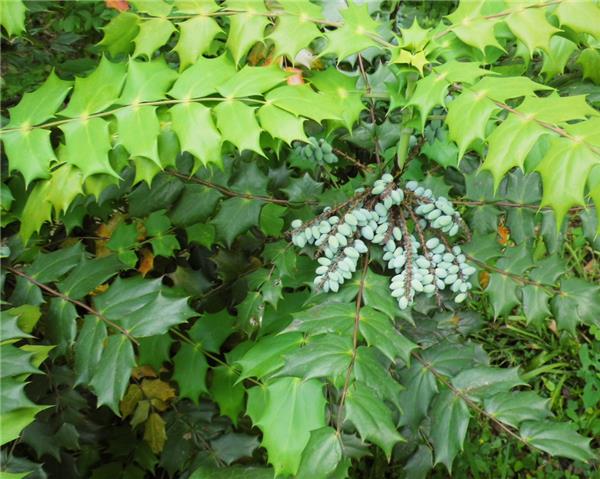
1. Broadleaf Mahonia, also known as: Thorny Corktree, Large-leaf Phellodendron, Phellodendron Tree, Pize Huanglian Bamboo, Mouse Thorn.
Evergreen shrub. Up to 4 m tall. Pinnately compound leaves alternate, 30-45 cm long, leaflets 9-16, broadly ovate or oblong-ovate, 6-12 cm long, apex acuminate, margin each with 2-8 large teeth, base subcordate and unequal; upper surface green, lower surface grayish white. Racemes clustered at the top of the stem; peduncle stout; bract 1; sepals 9; petals 6. Berry ovoid, dark blue, covered with waxy bloom.
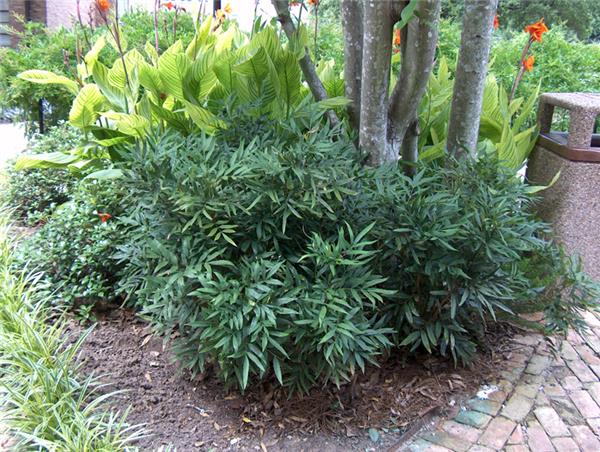
2. Narrow-leaf Mahonia, also known as: Cat's Head, Daogua Mountain Tree, Yellow Heavenly Bamboo, Narrow-leaf Mahonia.
Evergreen shrub. 1-2 m tall. Stem erect, much branched, spineless. Odd-pinnately compound leaves alternate, leaflets 7-13, leathery, narrowly lanceolate, 8-12 cm long, apex long acuminate, base cuneate, margin each with 6-13 spiny serrations, lower surface grayish yellow-green, but without waxy white bloom. Racemes borne from the axils of bud scales at the top of branches, 3-5 cm long; sepals 9; petals 6. Berry ovoid, blue-black, covered with waxy bloom.
3. South China Mahonia
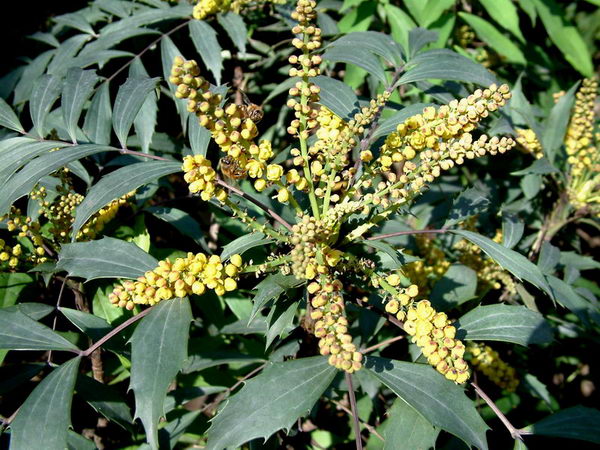
Evergreen shrub, about 2 m tall. Stem erect, few-branched. Pinnately compound leaves, leaflets 9-17, ovate-elliptic to long elliptic-lanceolate, 6-12 cm long, apex spiny-tipped, base oblique, broadly cuneate or truncate, margin each with 2-6 large teeth. Racemes clustered at the top of branches; flowers loose, pendulous, pale yellow; sepals 9, in 3 rows; petals 6. Berry subglobose, blue-black, covered with waxy bloom.
II. Mahonia's Effects and Value
Medicinal: Can be used as medicine, to clear heat and detoxify, reduce swelling, stop diarrhea, treat dysentery, jaundice and hepatitis, burns, scalds and sores.
Ornamental: Mahonia has peculiar leaf shapes, elegant and beautiful; potted plants can be used for indoor display, and because of its good shade tolerance, it can be grown indoors for a long time under scattered light conditions. In courtyards it can also be planted beside rockeries or in stone crevices, though it is best to have large trees for shade. Mahonia has straight branches and stems, peculiar leaf shapes and clusters of yellow flowers. It can be used to accent rockeries or rock crevices and streamside areas. It can also be planted at north-facing entrances, under windows, and in shaded woodland plantings. Potted plants can be used for venue arrangements and indoor decoration.
III. Mahonia Cultivation Techniques
1. Habits: Mahonia is a warm-temperate plant with strong cold resistance and intolerance to summer heat. It likes a warm and humid climate, is vigorous, shade-tolerant, and averse to direct sun exposure; it has a certain degree of cold resistance and is also relatively drought-resistant. In its place of origin it mostly grows in shady damp canyons and under forests, and is a shade plant. It likes well-drained acidic humus soil, is extremely intolerant of alkali, and fears waterlogging. Flowering period July-September, fruiting period September-November. It has strong tillering and lateral bud sprouting ability, with each plant sprouting 2-3 branches per year, and in that year the height can reach about 20 cm. It mostly grows in hillside valley forests, thickets, roadsides or riversides. Altitude 350-2000 m.
2. Climate and soil: It likes cool conditions, and loose fertile sandy loam or alluvial soil is preferable.
3. Planting: Propagated by seed, raised as seedlings and then transplanted. Sow in March. Break up and level the soil, and make beds 1.3 m wide as seedbeds. Then open horizontal furrows on the beds, with a furrow spacing of 25 cm and a depth of about 7 cm. Scatter the seeds in, requiring about 40-50 jin of seed per mu, and apply pig manure water, finally covering with 3 cm of fine soil. Cultivate for 2-3 years, and when the seedlings are about 33 cm tall they can be transplanted; in March-April, on prepared ground, make beds 1.3 m wide, open holes at a row spacing and plant spacing of about 33 cm each, 1 plant per hole, cover with soil and press firm, then cover until level with the bed surface, and water.
4. Field management: During the seedling period, cultivate and weed 3 times each year, in May, July and September. Apply topdressing 2 times, after cultivating and weeding in May and September. After transplanting, cultivate and weed 2-3 times each year, and apply topdressing 1 time, with pig manure water being preferable as the fertilizer.
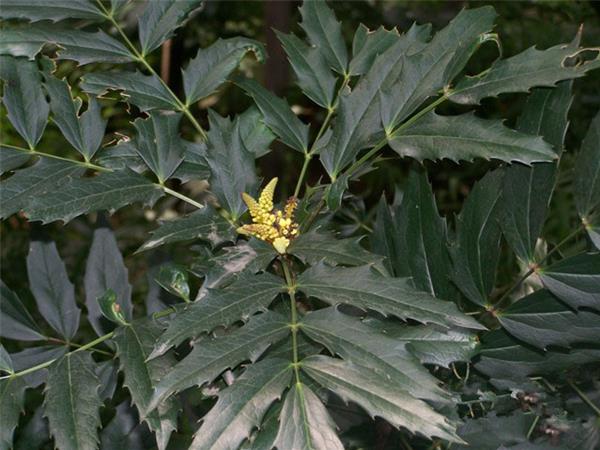
Mahonia is a relatively common shrub, and because it is evergreen year-round it is often used to beautify and decorate courtyards, as a shrub arrangement in garden design, and so on, with very high ornamental value and economic value. Moreover, because it is itself a wild-type plant, it is also relatively simple to cultivate and easy to get started with.