Seven Care Tips for Growing Crown of Thorns
Although Crown of Thorns is fairly easy to grow, like all succulents, once it is not cared for properly, you may very well never get to see it bloom. Moreover, any plant that is not watered or fertilized will wither after a long period of "starving," so you still need to pay extra attention when attention is due.
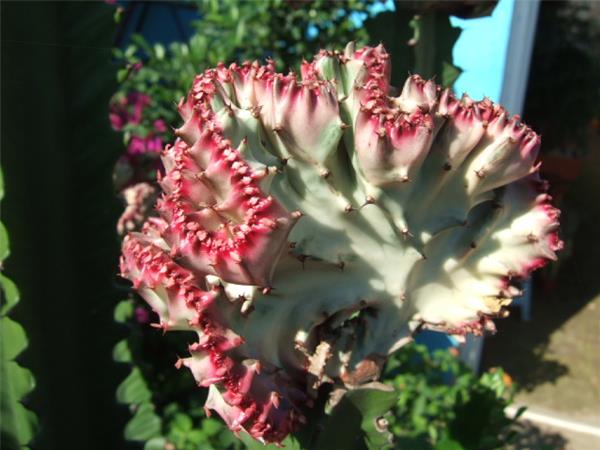
1. Soil: For planting Crown of Thorns, the potting soil is best made from a mixture of pond mud/river mud and coal cinders, with the former accounting for 65% and the latter 35%. This mixed soil has excellent drainage and aeration, which is very beneficial to the growth of Crown of Thorns.
2. Watering: Crown of Thorns likes neutral soil and water. Soil or water that is too acidic or too alkaline will threaten its growth. In addition, too much watering is also harmful rather than beneficial, so make sure there is no standing water in the pot, otherwise Crown of Thorns will slowly rot. Generally speaking, Crown of Thorns planted indoors is best watered once every 6 to 7 days, while those planted outdoors in a sunny spot can be misted once every 2 days, but do not water thoroughly each time. During the rainy season, watering should be appropriately controlled, and drainage should be emphasized when it rains. If it is acid rain, it needs to be rinsed with river water or tap water. Also note that in northern winters, do not water in the morning, because the temperature of the water may differ too much from the surface temperature of the Crown of Thorns plant, easily causing the surface to crack and even leading to plant death. The best watering time in winter should be from 2:00 to 3:00 in the afternoon, that is, when the day's temperature is at its highest.
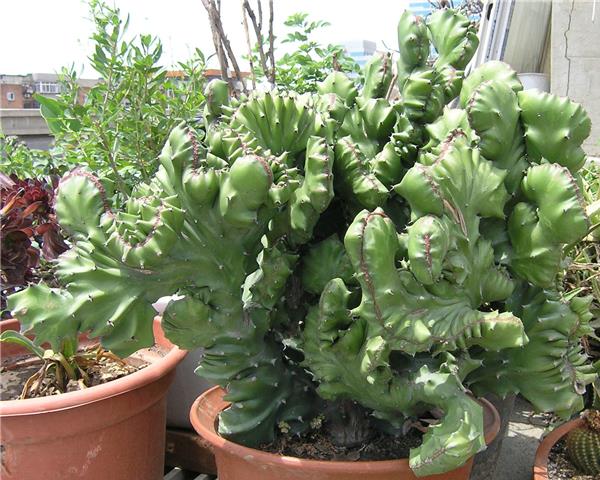
3. Light: Crown of Thorns likes light. After being moved out in early May, first place it under a shade shed for 7 to 10 days, then place it in a sunny spot for care. Insufficient light easily causes the abnormal stems to grow leggy and become columnar stems. Especially during the growing season, sufficient light must be ensured, and it must not be kept indoors for ornamental purposes for too long. Although it is dormant in winter, the plant still needs to carry out photosynthesis to maintain basic life activities, so it should also be placed in a sunny location, otherwise the leaves will turn yellow and fall off. Crown of Thorns originates from the deserts of South America and likes high temperatures, light and full sun. Plenty of sunlight is more conducive to promoting its growth. For this reason, in the south, balconies and roofs become the best cultivation sites for them. In the north, because Crown of Thorns is cold-resistant and drought-resistant and easy to keep alive, there is no problem placing them indoors for growing.
4. Fertilizing: Crown of Thorns is suited to neutral fertilizers, such as potassium nitrate. Or certain organic fertilizers, such as peanut residue cake or soybean residue cake. It can be fertilized once a month, and during the growing period in May and June, a little more can be applied appropriately. During the growing season, apply once a month about 15% fully decomposed alum fertilizer water. When fertilizing, never use raw fertilizer or concentrated fertilizer, otherwise it easily causes root rot and leaf drop. Fertilizing can be stopped during winter dormancy, and then gradually resume the normal fertilizer supply level when growth begins again the following spring.

5. Temperature: Crown of Thorns is not cold-tolerant. The most suitable temperature for growth is 22-28°C. 30°C is unfavorable to its growth, and above 35°C it enters dormancy. Generally, before the first cold wave arrives before Frost's Descent, it should be moved indoors. At first, pay attention to indoor ventilation and let it gradually adapt to the indoor microclimate. In winter, even if the weather is warm, do not move it outdoors to bask in the sun. If the indoor room temperature in winter can be kept above 15°C, the leaves can be kept from falling; if the leaves have already fallen, as long as the temperature is above 7°C, it can overwinter safely. By the following May, it can also grow leaves again.
6. Pests and diseases: Crown of Thorns has relatively few pests and diseases, but if it is kept in a greenhouse for a long time or placed in a poorly ventilated location, it is prone to scale insect damage. In winter and spring, the dust on the leaves can be rinsed off with clean water once every 10 days. In addition, Crown of Thorns is very sensitive to coal gas, and after exposure to it, the leaves easily fall off.
7. Propagation: Crown of Thorns is generally propagated by cuttings, and cuttings can be taken from April to October. For cutting time, it is best to choose a sunny morning. Cut a piece of robust abnormal stem, let it dry in a cool place for 3-4 days, and after the wound has dried and shrunk, insert it about 2-3 cm into clean river sand. Do not water at first; after 2 days, spray water to keep the potting soil moist. In about one month it can take root, and then it can be transplanted into a pot.
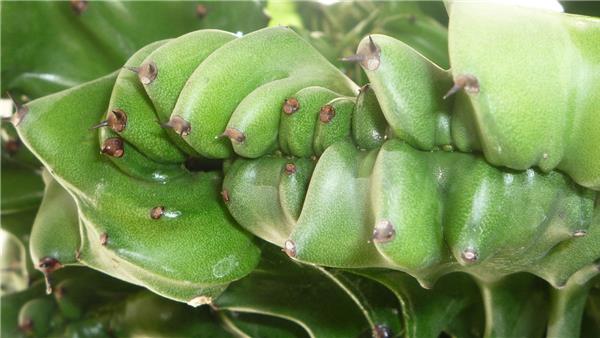
The above is the complete introduction to how to grow Crown of Thorns and what aspects should be noted. Of course, in addition to cutting propagation, Crown of Thorns can also be propagated by division and sowing, but in terms of survival rate, cuttings still have a higher survival rate, so everyone can choose the method they like to grow it.
Everyone can choose the method they like to grow it.