Is Brazilian Dragon Bone poisonous? How to grow Brazilian Dragon Bone
The ornamental angle of Brazilian Dragon Bone is rather unconventional, because its leaves are very small and it does not bloom often, so strictly speaking, it is actually a plant grown subjectively for its "stems," with ornamental value similar to that of the pencil cactus (Euphorbia tirucalli).
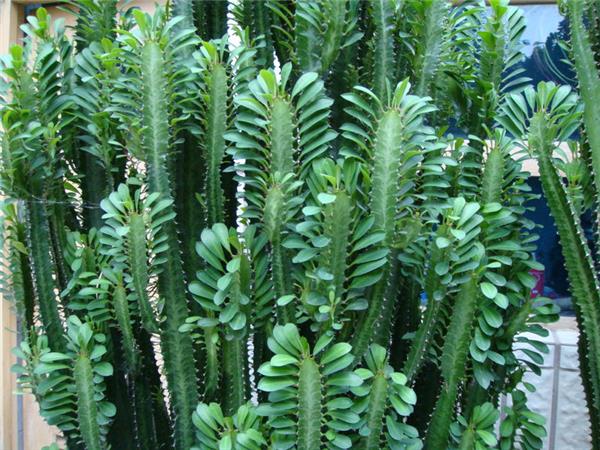
I. Morphological characteristics of Brazilian Dragon Bone
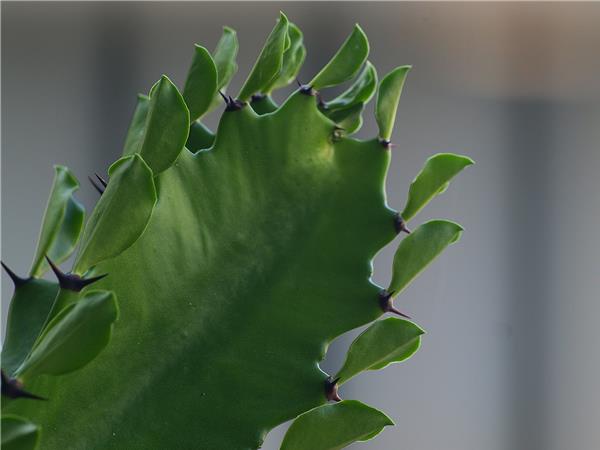
The plant is three-ridged, much branched, blue-green, 4 m to 5 m tall, with very short small spines along the ridges. The Dragon Bone column bears white flowers in summer, 4 to 9 of them, clustered on the upper areoles, opening by day and closing by night (potted plants generally do not bloom easily); the berries are small and round, blue-purple, and edible.
II. Ecological habits of Brazilian Dragon Bone
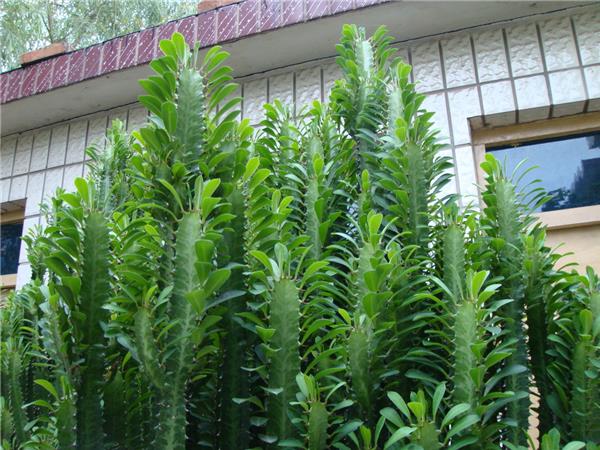
It likes full sunlight, is not cold-tolerant, but is drought-tolerant and prefers dry loamy soil. The Dragon Bone column needs plenty of sunlight; its branches are blue-green and its leaves resemble fish scales, glistening in the sunlight, standing in dense array like a forest of sharp peaks and swords, very spectacular, and it is an excellent potted flower.
In the north, it should be kept indoors in winter; in the south, it can be planted in the open ground and can also be used as a fence, serving as a green barrier and beautifying the courtyard, while in summer you can also enjoy the floral fragrance and fruit.
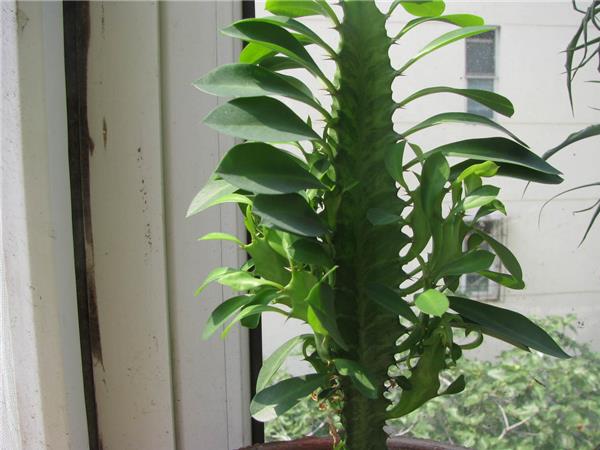
III. Landscape uses of Brazilian Dragon Bone
Suitable for decorating homes and office environments, it plays a good role in beautifying the environment and purifying the air.
The Dragon Bone column is known as the "universal rootstock"; using the Dragon Bone column as a rootstock, it can be grafted with crown of thorns (Euphorbia milii) and crab claw orchid (Schlumbergera), producing rare flowers and unusual plants in rich variety.
IV. Is Brazilian Dragon Bone poisonous?
The succulent stems of Dragon Bone bear sharp spines, and the white milky sap in the stems is poisonous, especially it must not get into the eyes, so when growing it at home, pay special attention to placing it appropriately to avoid children and the elderly being pricked and poisoned. The sap of Dragon Bone is poisonous; as long as you do not break the branches and leaves, the milky white sap will not flow out. If you happen to touch it, be sure to wash your hands immediately and never put it in your mouth, because someone tried it, and shortly after it entered the mouth, the mouth went numb.
Growing Dragon Bone indoors requires extra care, because the succulent stems of Dragon Bone bear sharp spines and the white milky sap in the stems is poisonous, especially it must not get into the eyes, so when growing it at home, pay special attention to the placement location to avoid children and the elderly being pricked and poisoned. Furthermore, Dragon Bone flower is drought-tolerant and sun-tolerant, suitable for places with plenty of sunlight, and not suitable for relatively dark indoor places, so Dragon Bone flower kept indoors for viewing should be placed as close to a sunny window as possible.
V. How to grow Brazilian Dragon Bone
1. Brazilian Dragon Bone is extensively managed and has no strict soil requirements, but sandy soil with low stickiness and strong drainage should be chosen, which helps the roots breathe and absorb nutrients.
2. Usually pay attention to watering; wait until the soil is slightly dry before watering, and do not water too much, otherwise it easily causes root rot.
3. Brazilian Dragon Bone likes sunlight, so place it in a sunny spot as much as possible; at high noon in summer, place it in a shady spot, and at other times keep it in a sunny place as much as possible.
4. Brazilian Dragon Bone has low fertilizer requirements; when first planting, apply base fertilizer first, so that little maintenance is needed afterward. When repotting in spring, also apply an appropriate amount of decomposed organic fertilizer, but it must not be too concentrated, or it will cause root burn.
5. Usually pay attention to pruning; cutting off excess branches and buds helps keep a beautiful appearance, and the cut mature branches and buds, after drying, can also be grafted onto other plants. Also pay attention to spraying pesticide to prevent red spider mites; the pesticide can be 1000-times to 2000-times omethoate.
Overall, Brazilian Dragon Bone is fairly easy to grow; otherwise it would not be used as a rootstock for grafting flowers such as crab claw orchid and crown of thorns, because its stems can store large amounts of the nutrients these flowers need and will not wither because of it, so if you want to grow crown of thorns and crab claw orchid, you can also first grow a Brazilian Dragon Bone.