What are the values and functions of aquatic ornamental plants?
The method of growing aquatic ornamental plants is very simple, so more and more aquatic plants are now being brought indoors for cultivation. They not only require little effort, but are also cleaner to grow than soil-cultured plants, so they are gradually becoming mainstream among indoor plants.
I. Classification of aquatic ornamental plants
According to the habits of aquatic ornamental plants, they can be divided into emergent, floating-leaf, free-floating and submerged types.
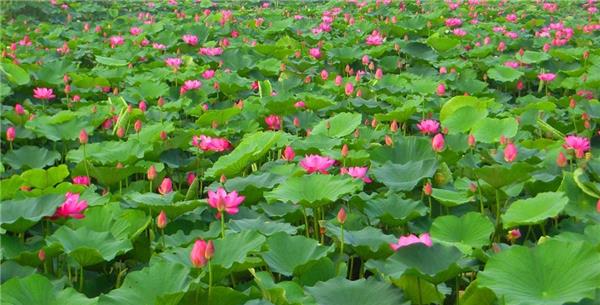
Emergent type: The plants are tall, with brightly coloured flowers, and the vast majority have distinct stems and leaves; they stand upright, with the lower part or base submerged in water, and the roots or rhizomes rooted in the mud for growth and development, such as lotus and purple loosestrife.
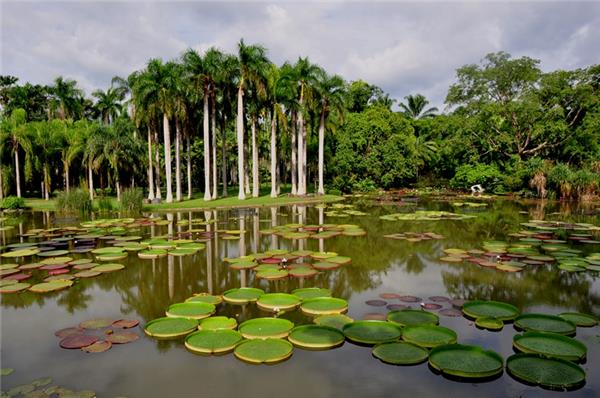
Floating-leaf type: The rhizomes are well developed, with large, colourful and varied flowers and changeable leaf colours, and no obvious above-ground stem or with slender, weak stems that cannot stand upright, such as water lily and fox nut.
Free-floating type: The roots do not grow in the mud, and the plants float on the water surface, such as water hyacinth and water lettuce.
Submerged type: The rhizomes grow in the mud, and the entire plant is submerged in water, with leaves mostly narrow and long or filamentous, such as hornwort.
II. The value of aquatic ornamental plants
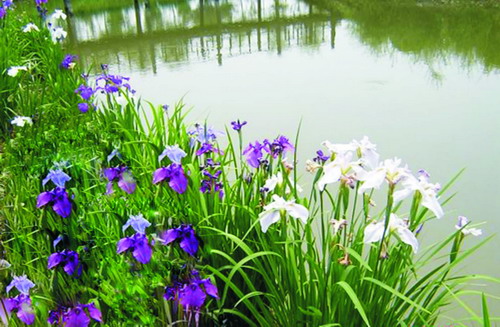
1. Their unique growing environment enriches the garden landscape. Mankind's closeness to and longing for water is innate, which has given rise to various ornamental water areas. In these waters, a variety of aquatic ornamental plants is always indispensable. The reasonable arrangement of various aquatic ornamental plants in the water forms a beautiful and unique aquatic ornamental plant landscape, with flowers reflected in the ripples and leaves moving with the water. This thereby enhances the landscape function of the garden, strengthens the landscape effect of the garden, enriches the connotation of the garden landscape, and increases the charm of the garden landscape.
2. Purifying water quality and maintaining ecological balance. Aquatic ornamental plants grow between water bodies and land. As water depth increases, there is a transition from emergent plants to floating plants to submerged plants in a stepped distribution, forming a transitional zone between water bodies and land. A reasonably arranged patch of aquatic ornamental plants is like a small water treatment plant, and helps maintain ecological balance.
3. Economic value. In addition to ornamental value, aquatic ornamental plants also have high economic value. For example, 5 tonnes of reeds used for papermaking can replace 20 cubic metres of wood, and used for textiles can replace 1250 kg of cotton lint. The tender stems of cattail (cattail shoots), the underground stems of lotus (lotus root), and the fruits of water caltrop are all delicious vegetables. They can not only enrich people's dining tables, but can also be developed and utilised as tourism products, achieving higher economic value.
III. Common aquatic ornamental plants
1. Sweet flag, Araceae, Acorus
Perennial herb, plant height 50-80 cm, leaves basal, sword-shaped and linear, sessile, green. Slightly cold-tolerant, can overwinter outdoors in East China. Can be planted in shallow water, or used as a wetland plant. It is a major foliage plant in waterscape gardens.
2. Water hyacinth, Pontederiaceae, perennial herb
An upright aquatic plant, plant height 50-60 cm. Leaves have long petioles, lance-shaped triangular to ovate, with a heart-shaped base. It flowers from May to October, with a spike inflorescence, and the top of the flower stem bears hundreds of small purple flowers, which is very beautiful. Suitable for beautifying ponds, wetlands and rivers and ponds. Characteristics: purple flowers, a long flowering period, and large, beautiful leaves; it is a rare ornamental aquatic flower in waterscape gardens.
3. Umbrella plant, Cyperaceae, Cyperus
Perennial herb, with thick and strong rhizomes. Stems clustered, unbranched, 80-120 cm tall, leaves gathered at the top of the stems and spreading into an umbrella shape. It likes wet environments and is suitable for planting in stream wetlands. The unique umbrella-shaped leaves bring a special artistic conception to waterscape gardens.
4. Aquatic canna, Cannaceae, Cannaceae
It is a variety introduced from South America and originally grew in natural pond wetlands. The leaves are large, broadly elliptical, and the leaf colour is yellow-green variegated or purple. It is a large aquatic flower, with a flowering period from June to October.
5. Softstem bulrush, Cyperaceae, Schoenoplectus
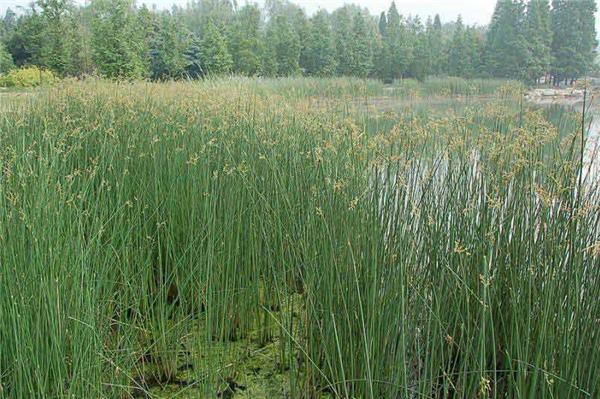
Perennial aquatic herb, with tall, cylindrical culms. Plant height 150 cm. Cold-tolerant and light-loving, planted in shallow water, with the function of purifying water quality.
The above is an introduction to aquatic ornamental plants. In addition to those introduced above, some other plants can also be grown aquatically, such as pothos, spider plant, lucky bamboo and so on, so there is a great range to choose from.