What kind of plant is the pencil cactus, and is it toxic?
The pencil cactus has a rather unusual form and actually looks a lot like coral, with bare, leafless branches on which flowers are rarely seen and not even a single leaf is visible. What is more, the sap inside its stems is toxic, so why do we still grow it?
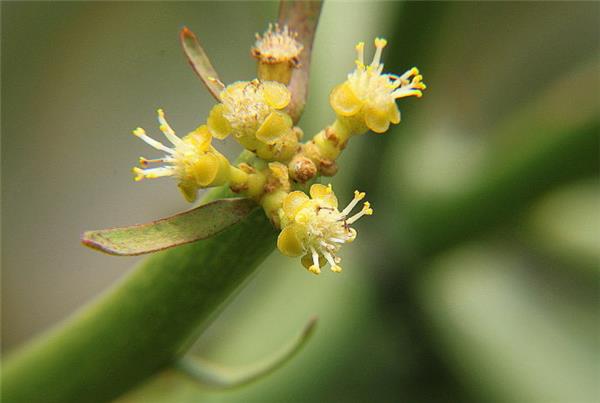
I. Morphological characteristics of the pencil cactus
The pencil cactus (Euphorbia tirucalli) is a succulent plant of the genus Euphorbia in the family Euphorbiaceae. The whole plant appears to have no flowers and no leaves, with only bare branches, like sticks inserted into a tree, which is why people jokingly call it the "pencil cactus". It is upright, and the whole plant has white milky sap; the stems are gray or light gray when old and green when young, spreading or branching at the upper part. The small branches are opposite or nearly whorled, green, and slightly fleshy. The leaves are reduced to scale-like forms, or a few are scattered at the branch tips. The leaves are alternate, oblong-linear, 7-15 mm long and 0.7-1.5 mm wide, with an obtuse apex, a gradually narrowed base, and an entire margin, sessile or nearly sessile; they usually grow on the tender branches of the current year, are sparse and fall off quickly; the capsule is dark brown, hairy, triangular in cross-section, about 8 mm in both length and diameter, smooth, slightly hairy or hairless. The seeds are ovoid, about 4 mm in both length and diameter, smooth; they have a tiny caruncle, and the flowering and fruiting period is July-October, with cyathia emerging from the stem tips. A mature pencil cactus can reach 2 m to 6 m (which takes decades to a hundred years), but when young the plant is small and, when grown in a small pot, can keep its compact form for a long time. Because its stems are bare and smooth, it is a rather unusual indoor stem-ornamental plant.
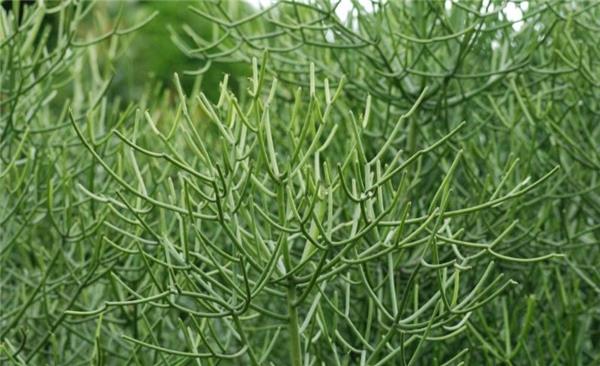
II. How to grow the pencil cactus
Propagation: Because the pencil cactus has a very low rate of flowering and fruiting, it is mostly propagated by cuttings. The pencil cactus roots easily in a warm climate. Take stem sections with 2 nodes as cuttings and insert them in the warm season of May-June; after the pencil cactus has rooted, it can be planted in a 10-15 cm pot.
Potting soil: A well-drained soil is suitable. It is best to use a mix of 2/3 leaf mold and 1/3 garden soil with a small amount of river sand added as the growing medium, and a little hoof and horn meal or other slow-release fertilizer can be placed at the bottom of the pot as a base fertilizer. To help drainage, some crushed stone or tile pieces should also be placed at the bottom of the pot.
Temperature: The optimum growing temperature for the pencil cactus is 25-30°C, so it can be grown outdoors in warm southern regions, while in the Yangtze River basin and areas to its north it must be cultivated in a greenhouse. The pencil cactus is generally kept in a greenhouse in winter and grown in the open in summer.
Repotting: The pencil cactus is generally taken out of the greenhouse in late April, and repotted once every 1-2 years with fresh, loose sandy loam.
Water and fertilizer: The pencil cactus is drought-tolerant, so do not water it too much during care; each watering should be done only after the soil has dried out thoroughly, and fertilize once every half month.
Pests and diseases: The main diseases of the pencil cactus are anthracnose and leaf spot, which can be sprayed with a 1000-fold dilution of 70% thiophanate-methyl wettable powder. When indoor ventilation is poor, the stems and leaves are easily harmed by scale insects, which can be killed by spraying with a 1000-fold dilution of 40% omethoate emulsifiable concentrate. When watered too much, it is prone to root rot, and the leaves will also turn yellow and even develop gray mold spots and rot; attention should be paid to ventilation and drainage, and if necessary carbendazim wettable powder can be sprayed for control. In addition, mealybugs may also harm the leaves, forming white waxy powder; diseased and pest-infested leaves should be removed promptly to prevent spread.
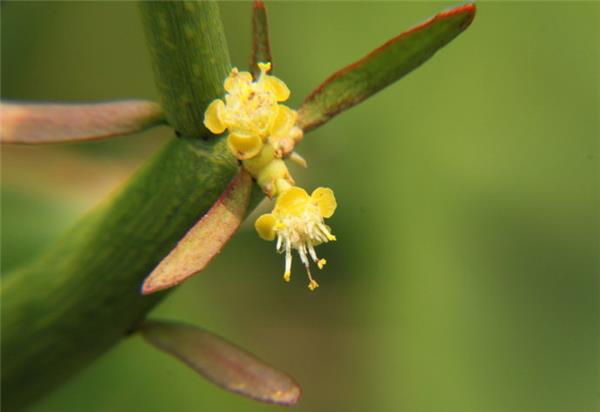
III. Is the pencil cactus toxic?
1. The white milky sap of the pencil cactus is highly toxic, so special care is needed when viewing or cultivating it, and the sap must never be allowed to enter the mouth, ears, eyes, nose, or wounds. This toxic sap of the pencil cactus can, however, resist the invasion of viruses and pests, thereby protecting the plant body.
2. The sap of the pencil cactus has the effect of promoting tumor growth and can cause cancer by promoting chromosomal rearrangements in human lymphocytes; it irritates the skin and can cause redness and swelling, and if it accidentally gets into the eyes it can cause temporary blindness.
3. Toxic pharmacology: The whole plant of the pencil cactus is used medicinally; it is cool in nature and pungent and slightly sour in taste. It is mainly used to treat insufficient milk in postpartum women, ringworm and sores, and joint swelling and pain. The whole plant contains a toxic milky latex. The latex can be used as an emetic and purgative, but it is strongly irritating; skin contact can cause dermatitis, redness, swelling, pain, itching, and pustules, and it has an antibiotic effect against Staphylococcus aureus.
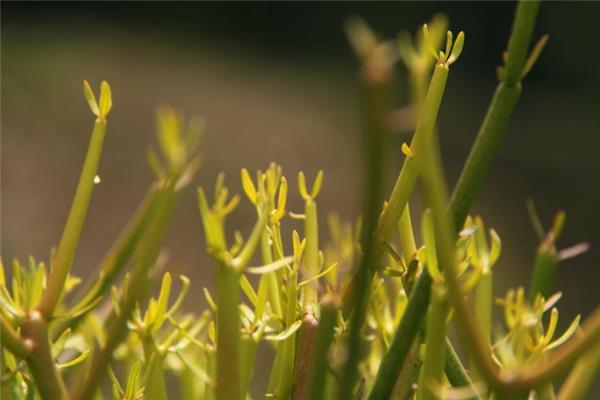
Although the name "pencil cactus" does not sound pleasant, after reading the above introduction it is not hard to see that it is quite suitable for growing at home, because it has a unique ornamental value. However, during cultivation, protective measures must be taken carefully, and friends with elderly people and children at home should be especially careful to avoid dangers such as accidental ingestion.