What are the care notes for Portulacaria afra?
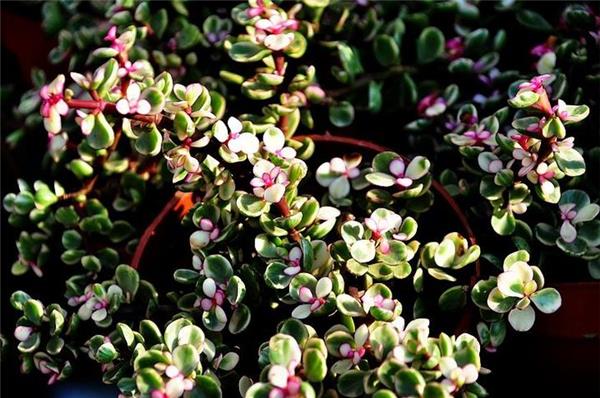
Portulacaria afra is a small potted flowering plant with very high ornamental value. It prefers warm, dry places with plenty of sunlight, so it is very suitable as a small decoration on a desk.
Uses and purposes of Portulacaria afra
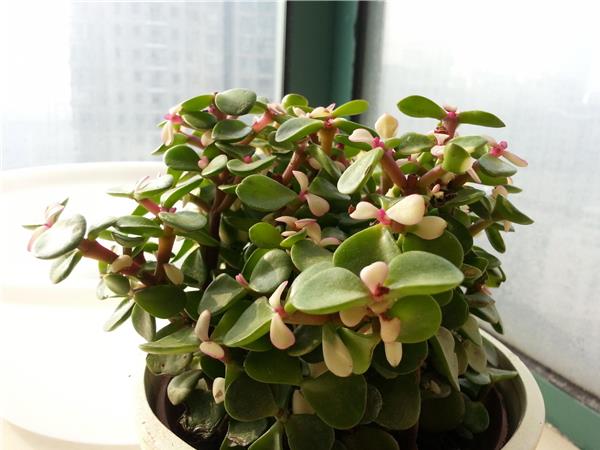
Potted value: Portulacaria afra is mainly grown for its foliage and can be planted in hanging baskets. Through pruning, the height of the potted plant is strictly controlled. The old stems are light brown, and its fleshy leaves closely resemble those of purslane. The stems are tender green, with many fleshy branches, giving a sense of rugged, aged simplicity.
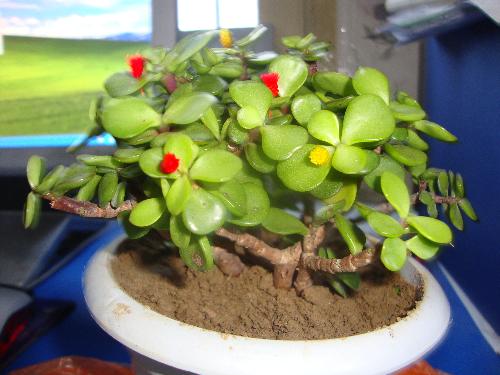
Landscape use: Once Portulacaria afra has grown to a certain height, it can be shaped. The forms can include slanting trunk style, straight trunk style, curved trunk style, cliff style, forest style, rock-clinging style, and so on. The shaping method is mainly pruning, with wiring as a supplement. Jade Leaf has strong sprouting ability and can be heavily pruned according to shaping needs, and its roots can be raised so that the bonsai has exposed hanging roots and claws, giving it high ornamental value.
Bonsai shaping: Shaping is mostly carried out during the growing season, mainly by pruning, with wiring as a supplement. Because the stems are fleshy, do not let metal wire cut into the surface when wiring, otherwise the fleshy stems will tear. The purslane tree has strong sprouting ability and can be heavily pruned according to shaping needs, cutting off all unwanted branches, and its roots can be raised so that the bonsai has exposed hanging roots and claws, appearing rugged and aged, with high ornamental value. For plants that have survived from cuttings, a little wiring and pruning can be done, then they can be planted in a small pot and matched with ornamental stones to become a delicate, cute, and exquisitely unique miniature bonsai.
How to grow and care for Portulacaria afra
Propagation: Portulacaria afra can be propagated by cuttings throughout the year, but spring and autumn are best, as rooting is fast and the survival rate is high. Generally, choose leafy side branches from plants with good growth vigor and many side branches. The cuttings should be 8-12 cm long, placed in a cool, ventilated place to dry for 1-2 days so the cut ends are slightly dry, and then inserted into a propagation sand bed. You can also pick off leaves from the main stem, let the cut ends dry slightly, insert them into a sand bed, and keep them at 20-25°C with suitable humidity; they will root in about half a month.
Soil: Choose loose, fertile, sandy soil with good drainage. It is advisable to use a mix of 2/3 leaf mold and 1/3 vegetable garden topsoil, adding a small amount of river sand as the growing medium. To help drainage, place some crushed stone or tiles at the bottom of the pot.
Temperature: Portulacaria afra likes a warm, dry environment with plenty of sunlight and tolerates partial shade. The most suitable growing temperature for Portulacaria afra is 15-25°C. Portulacaria afra is not cold tolerant and must be protected from freezing in winter. The overwintering temperature should be above 10°C; below 5°C it is prone to cold damage. In summer, provide shade to prevent exposure to the scorching sun.
Light: Although Portulacaria afra likes plenty of sunlight, it needs appropriate shading during high summer temperatures to prevent exposure to the scorching sun, and attention should be paid to ventilation. In winter, move Portulacaria afra to a sunny spot indoors to keep the leaves clear and green. If Portulacaria afra is kept in insufficient light for a long time, the distance between its stem nodes will increase and the leaves will become larger, thinner, and lose their luster.
Watering: From spring to autumn is the growing period for Portulacaria afra, and it can be watered moderately, but water must not accumulate in the pot. In hot summer, water can be sprayed around Portulacaria afra to increase air humidity. In winter, watering should be controlled to keep the potting soil slightly dry. It should be noted that watering Portulacaria afra should follow the rule of "do not water until dry, and water thoroughly when you do."
Fertilizing: During the growing season, apply a dilute, fully decomposed cake liquid fertilizer once every half month, or a dilute fertilizer solution mainly based on nitrogen fertilizer. If growth is too weak, add a liquid fertilizer containing potassium. It should be light and thin, not thick and concentrated. Stop fertilizing in winter.
Repotting: Portulacaria afra can be repotted once every two years in spring. Cut off part of the root system, remove 1/2 to 1/3 of the original soil, and replant it with fresh growing medium.
Pruning: Portulacaria afra has strong sprouting ability and should be pruned and disbudded regularly to maintain a beautiful tree shape. Also, when repotting Portulacaria afra, you can carry out one heavy pruning, cutting off weak branches and other branches that affect the tree shape, and cut off part of the root system, then replant it.
Pests and diseases: When Portulacaria afra is overwatered, it is prone to root rot, and the leaves will also turn yellow and even develop gray mold spots and rot. Attention should be paid to ventilation and drainage, and if necessary, carbendazim wettable powder can be sprayed for control. In addition, mealybugs can also harm the leaves, forming white waxy powder. Diseased and pest-infested leaves should be removed promptly to prevent spread.
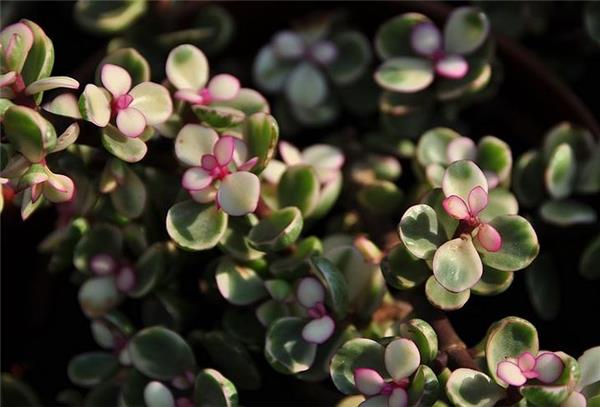
Portulacaria afra not only has a name that lets people feel a full sense of wealth, but its plant shape is also full of a sense of prosperity. Grown in the home, it is believed that it can also help everyone enhance their wealth luck.
Its plant shape is also full of a sense of prosperity. Grown in the home, it is believed that it can also help everyone enhance their wealth luck.