Is Desert Rose Poisonous? A Detailed Guide to Its Care
Desert rose, also known as Adenium obesum, is native to Africa. Its flowers are extremely beautiful when in full bloom, and it is now commonly grown at home as a potted plant. But do you really know the desert rose? Today we will introduce whether the desert rose is poisonous and how to grow it.
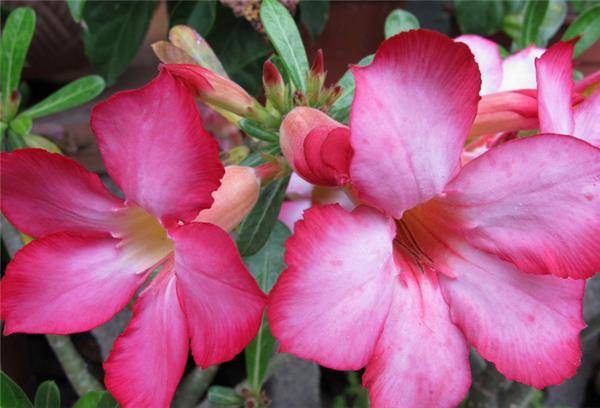
I. Is Desert Rose Poisonous?
Because of its natural tolerance to dryness and drought and its love of sunlight, the desert rose is deeply cherished by flower-growing enthusiasts, and its flowers are very gorgeous. Some people ask, is the beautiful-looking desert rose poisonous? Yes, the sap of the desert rose is toxic, and quite strongly so; if it is accidentally ingested, it can easily cause symptoms such as a rapid heartbeat and irregular heart rhythm.
Because the desert rose belongs to the Apocynaceae family, it is advisable for families with young children not to grow desert roses, since even small animals that eat the sap of the desert rose may go into shock, let alone children.
The desert rose is an easy variety to grow. Because it naturally grows in desert regions, it is very easy to cultivate. Note that it needs strong light but does not need frequent watering, since the desert rose's original growing environment is the desert, so it has a very strong water-storage capacity, and watering it too much will actually have the opposite effect.
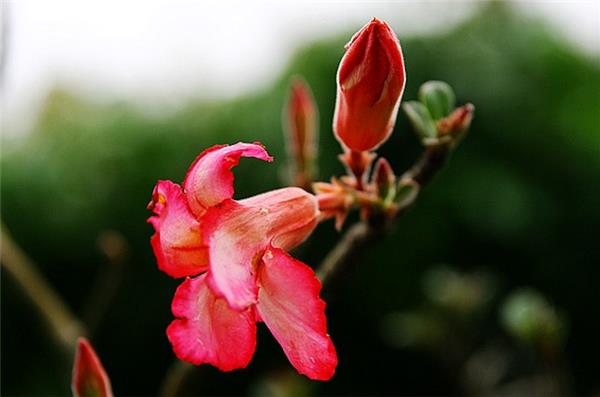
II. Precautions for Growing Desert Rose
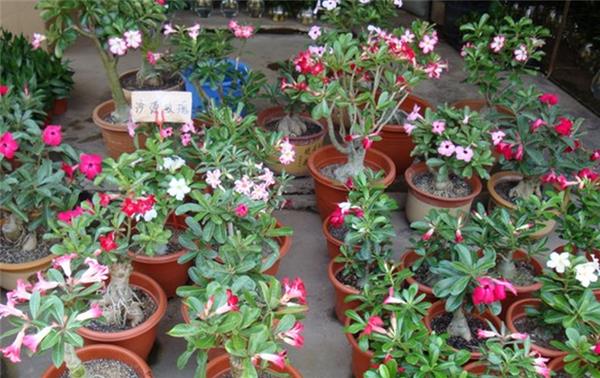
In northern regions it should be grown in pots and kept indoors over winter. The potting soil can be a mix of equal parts leaf mold and coarse sand, plus a small amount of decomposed dry bone meal. Before planting, put some broken tiles at the bottom of the pot to aid drainage. Repot every spring and replace with fresh potting soil. Newly planted and newly repotted plants can be kept indoors or in a shaded place with less watering, and after they recover they can enter normal care. During the growing season, place them outdoors in a spot with plenty of sunlight, or grow them in a greenhouse, as they need ample light. In winter they must be brought indoors and placed in a sunny spot; growing them in a greenhouse is even better. Keep the indoor temperature above 12°C in winter; if the potting soil is dry, they can also overwinter safely at 7-8°C.
Spring and autumn are the periods of vigorous growth, so water thoroughly and keep the potting soil moist, but not overly wet. Water according to the principle of "water when dry, let dry between waterings, and water thoroughly when dry." In early spring and late autumn, when temperatures are lower, watering should be moderated. In winter, reduce watering and keep the potting soil dry, but water it if it becomes too dry. It does not need much fertilizer; during the growing season apply a dilute liquid fertilizer 1-2 times a month, and stop fertilizing in winter.
III. Morphological Characteristics of Desert Rose
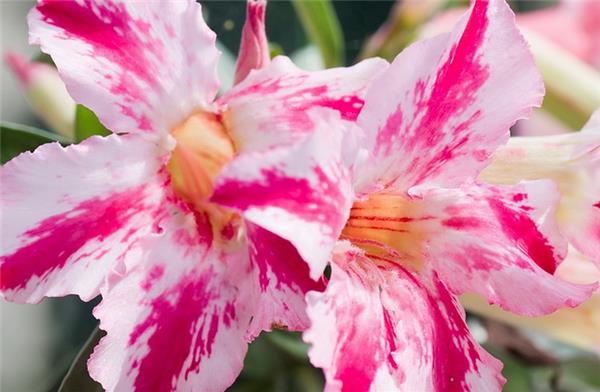
Desert rose, also known as Adenium obesum, is a succulent plant in the genus Adenium of the Apocynaceae family. Many people find it puzzling that the desert rose, unlike other succulents, does not have thick, juicy, fleshy leaves, yet the desert rose is still a type of succulent plant. The flowers of the desert rose resemble small trumpets and are rose-red and very showy. The umbel-like inflorescences grow in clusters of three to five, brilliant as brocade, blooming continuously through the four seasons. It is named desert rose because its place of origin is close to the desert and its flowers are red like roses. The desert rose has alternate single leaves, obovate, with an acute tip, 8 cm-10 cm long and 2 cm-4 cm wide, leathery, glossy, dark green on the upper surface and grayish-green on the underside, with entire margins. The raceme is terminal and bears more than 10 flowers, trumpet-shaped, 6 cm-8 cm long; the corolla has 5 lobes and comes in rose red, pink, white and bicolor, etc. May to December is the flowering period of the desert rose, and the flowers come in red, rose red, pink, white and other colors. It sets seed relatively easily when grown in greenhouses in the south. The seeds have white soft hairs that help them fly and disperse.
That is all for the content on how to grow the desert rose and whether the desert rose is poisonous, and we will introduce it here. By now you must have gained some understanding of the desert rose, and we hope it has been helpful to you.