A Detailed Explanation of the Functions and Pruning Methods of the Chinese Parasol Tree
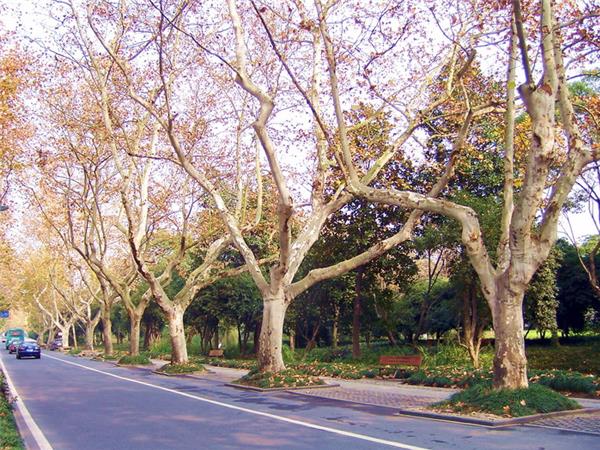
The functions of the Chinese parasol tree are mainly reflected in its ornamental value; its tall, upright form can be seen in ordinary communities, schools, and along both sides of roads.

I. The Value and Uses of the Chinese Parasol Tree
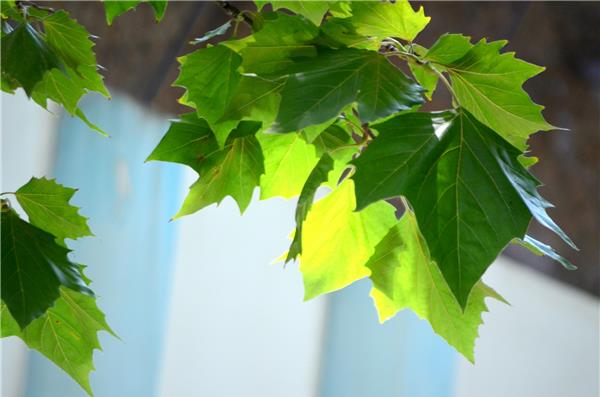
The Chinese parasol tree has a tall and thick trunk, luxuriant branches and leaves, an oval-shaped crown, a straight trunk, smooth greenish bark, and thick, emerald-green side branches. It grows rapidly, is easy to establish, and tolerates pruning, so it is widely planted as a roadside greening tree species and is also a fast-growing timber species; it has strong resistance to toxic gases such as sulfur dioxide and chlorine. Its leaves, flowers, roots, and seeds can all be used as medicine. It is often used for garden ornamentation, in communities, gardens, schools, public institutions, factories, hillsides, courtyards, roadsides, and in front of buildings.
II. Seed Propagation and Planting Methods for the Chinese Parasol Tree
Seed collection: seeds should be collected from mother trees 15-30 years old with straight trunks and robust growth. Because the seedling seeds mature and scatter easily, it is best to collect them early. The collected fruits are winnowed to obtain pure seedling seeds. The seedling seeds should be dried in the shade and must not be exposed to the sun. The seedling seeds can be stored dry.
Sowing: before sowing, dry-stored seedling seeds need to be soaked in 601 warm water to promote germination; otherwise, they may germinate only the following year or lose their germination capacity. The seedling seeds can also be stored in moist sand and sown in spring the next year. The sowing site requires deep, fertile, well-drained sandy loam soil with sufficient base fertilizer. Sow in drills. The row spacing is 30 cm, and after sowing the soil covering thickness is 1-1.5 cm. The sowing rate per 667 sq m is about 15 kg. After sowing, the seedling seeds can germinate and emerge in 4-5 weeks.
Management of sown seedlings: the seedlings grow slowly and also like a certain amount of shade; if thinning is done too early or too severely, it will affect seedling growth. Generally, when the seedlings are about 10 cm tall, they can be thinned, and loosening of the soil and weeding should be carried out. Entering July is the fast-growing period, and water and fertilizer management should be strengthened to promote faster seedling growth. The Chinese parasol tree is an early-growth type, with terminal buds forming early and height growth stopping early as well. Current-year seedlings are 50-60 cm tall. Under normal management, current-year seedlings can reach more than 50 cm in height and are transplanted for cultivation the next year. Three-year-old seedlings can be shipped out of the nursery. The planting site should be chosen in a high, dry area, with base fertilizer applied in the planting hole; after trunk establishment, seal the saw cut with wax. Pay attention to pests such as the Chinese parasol tree psyllid, the frost hawk moth, and slug moths, which can be controlled with petroleum emulsion, dichlorvos, dimethoate, methamidophos, and the like. In the north, young trees should be wrapped with straw rope in winter to protect against cold. Apply fertilizer once each in early winter and early spring.
III. Shaping and Pruning Methods and Techniques for the Chinese Parasol Tree
1. The Chinese parasol tree belongs to monopodial branching and does not tolerate pruning; the shaping method should be determined according to growth vigor and the needs of green space use, and should not be forced. It can be pruned into a central-leader form, but because the main branches are well developed and the side branches are relatively few, the central-leader form often makes the tree appear too tall with a poor shape, so shaping is usually not carried out; instead, only the method of cutting off the central trunk above the shaping zone (2.5-3 m) is adopted, forming a multi-leader form.
2. The branches of the Chinese parasol tree are often arranged in whorls, and between the upper and lower whorls there are often no branches, creating large gaps. If this phenomenon is not noticed, it will lead to the result of "strangulation." Regardless of the shaping method, there is a certain difficulty in selecting and retaining framework branches; generally, thinning is used to remove some excess branches in the same whorl so that the branches left in the upper and lower whorls balance each other and form the framework.
3. The Chinese parasol tree has very few miscellaneous branches; during maintenance pruning, it is generally only necessary to cut off a small number of excess branches and withered fruit clusters. Both shaping and maintenance pruning are best carried out in winter.

The Chinese parasol tree is very simple to grow and cultivate, and it is a tree species that is easy to keep alive; however, unless it is truly necessary, the Chinese parasol tree is actually not easy to prune, which also saves a lot of trouble in cultivating it.