What are the uses of tree crape myrtle, and how should it be cared for in daily life?
The most important things to pay attention to when growing tree crape myrtle are probably pest and disease control and pruning the flower branches that have not grown well or have been affected by pests and diseases, because these two hazards are the factors that most affect its ornamental value.
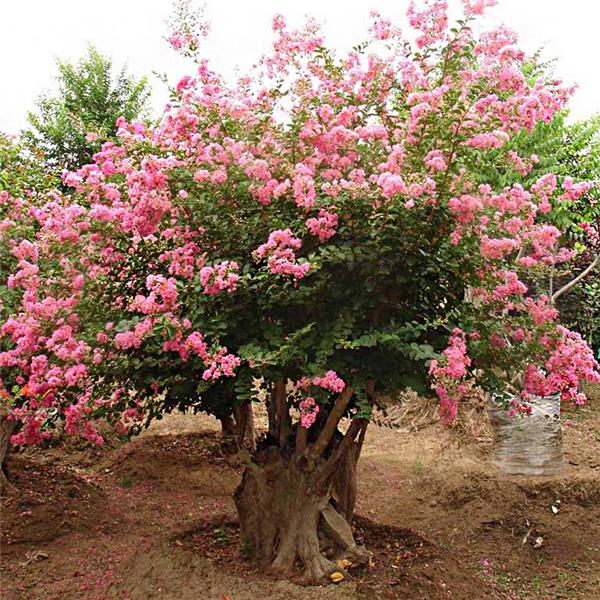
I. The uses of tree crape myrtle
Air purification: tree crape myrtle is drought-tolerant and dislikes waterlogging, prefers warmth and moisture, likes light and fertilizer, has strong resistance to sulfur dioxide, hydrogen fluoride and nitrogen, and can absorb harmful gases. According to measurements, each kilogram of leaves can absorb 10 grams of sulfur while still growing well. Crape myrtle can also absorb and retain dust. In a cement plant, at a distance of 200-250 m from the pollution source, each square meter of leaves can absorb and retain 4042 grams of dust. Therefore, it is the most ideal tree species for urban and industrial-mining greening, and can also be used for bonsai.
Medicinal value: tree crape myrtle also has medicinal effects. Li Shizhen stated in the Compendium of Materia Medica that its bark, wood and flowers have the effects of promoting blood circulation, regulating menstruation, relieving pain, reducing swelling and detoxifying. The seeds can be made into pesticides and have the effect of repelling and killing pests. The leaves treat white dysentery, the flowers treat postpartum incessant uterine bleeding and infantile eroded scalp with fetal toxin, and the roots treat carbuncles, swellings and sores. It can be said to be a treasure from head to toe.
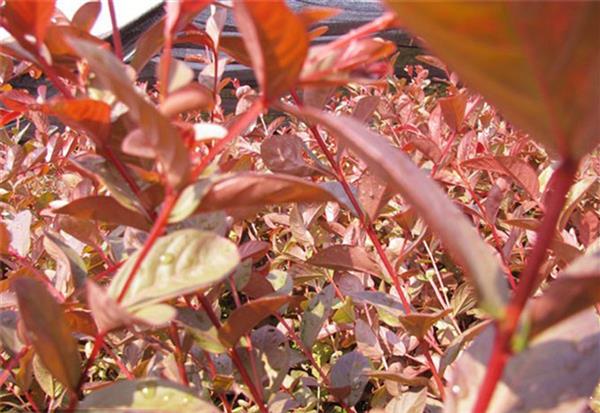
Ornamental value: the most precious tree crape myrtle is the "red-leaf tree crape myrtle" just successfully bred in Japan. Its leaves are brilliant red all year round (turning purplish red at the highest temperatures in late summer and early autumn), its flowering period is longer, it blooms in the same year, and the flowering period lasts more than 160 days, giving it very high ornamental value.
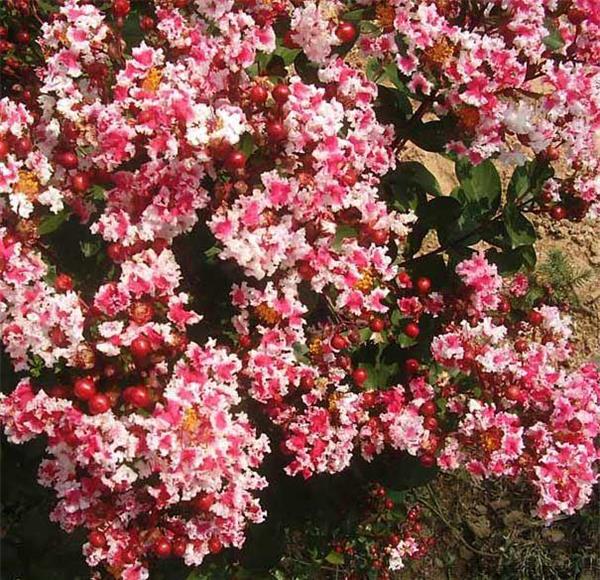
II. Pruning precautions for tree crape myrtle
Tree crape myrtle has strong sprouting ability, so reasonable pruning should be done according to the purpose of cultivation. For clump-grown seedlings, pay attention to leaving enough growing space; it is better to leave fewer, generally leaving 2-3 main trunks, and 5-6 main branches is enough, so that red-leaf crape myrtle can grow well. For single-trunk seedlings, control the lateral branches and pay attention to cultivating the main trunk. After the main trunk has grown, then cultivate the crown.
III. Methods for extending the flowering period of tree crape myrtle
Tree crape myrtle blooms relatively early. With good management, generally even current-year cuttings can bloom. To extend the flowering period, branches that have already flowered should be cut back in good time so that they sprout again and grow a new round of flower branches. During growth, suckers on the trunk and branches should be cut off in good time. If the goal is to make the trunk thick and strong, a large number of flower branches can also be cut off early on to concentrate nutrients on cultivating the trunk. Winter pruning is generally carried out after leaf fall in autumn. Water sprouts, dead branches, drooping branches, pest- and disease-affected branches, slender branches and inward-growing branches should be cut off. During the young tree stage, the lateral branches on the lower part of the main trunk should also be cut off in good time, so that the upper part of the main trunk can receive sufficient nutrients and form a good crown. If pruning is reasonable, fertilizer and water are sufficient, and management is proper, tree crape myrtle can bloom many times in one year, with a total flowering period of 100-120 days, and up to 160 days at most.
IV. Pest and disease control of tree crape myrtle
Control of aphids: spray one of the following on the leaves: 1.2% veratrine-nicotine emulsifiable concentrate at 800-1000 times dilution, or 50% pirimicarb at 3000 times dilution, or 2.5% deltamethrin at 2500-3000 times dilution, or 6% imidacloprid at 3000-4000 times dilution. Pay attention to safety when spraying.
Control of crape myrtle felt scale: within 7 days after the peak hatching period of nymphs, before wax has formed or when the wax layer has just begun to form, spray the branches and leaves with 40% sujiesha emulsifiable concentrate at 1500-2000 times dilution, 6% imidacloprid soluble liquid at 2000 times dilution, or pyrethroid pesticides at 2500 times dilution. Use the above three agents alternately, spraying once every 7-10 days, for 2-3 consecutive sprays, which can achieve good results.
Control of large bagworms: after the trees drop their leaves in winter, the bagworm bags can be seen on the trees and removed manually; use frequency-vibration insect-killing lamps to trap and kill adults; bagworm larvae are relatively sensitive to trichlorfon, and using 90% trichlorfon crystals at 1000-1500 times dilution can achieve good results. You can also use 2.5% deltamethrin emulsifiable concentrate at 3500-4000 times dilution, or 50% phoxim emulsifiable concentrate at 1000-1500 times dilution, 20% fenvalerate emulsifiable concentrate at 1000-1500 times dilution, etc., and strive to spray evenly.
Control of sooty mold: it is mainly caused by the secretions of piercing-sucking pests such as aphids and scale insects. Controlling them is key. It can also be controlled by spraying with 500 times dilution carbendazim solution.
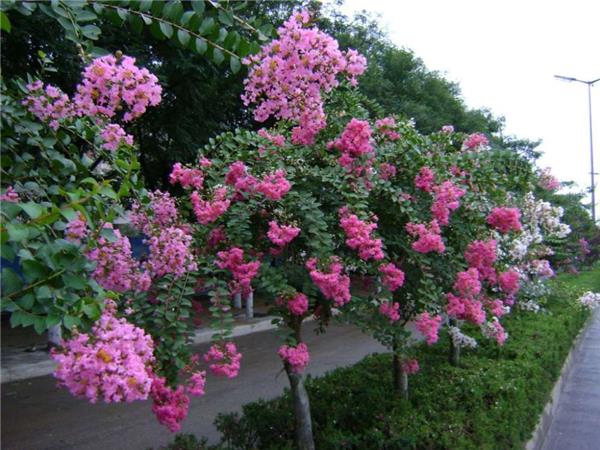
Tree crape myrtle is a plant with very high ornamental value. Ordinary tree crape myrtle is mainly grown for its flowers, but the "red-leaf tree crape myrtle" introduced from Japan also has value for its foliage, so friends who have suitable conditions at home can try growing it.