What Is Aquatic Canna? A Detailed Guide to Growing It
Aquatic canna has fairly tough vitality; it is a healthy beauty that rarely suffers from diseases or pests, making it very suitable for growing, and it does not require too much worry during cultivation. Let us now get to know this beauty and the methods for growing it.
I. What Is Aquatic Canna
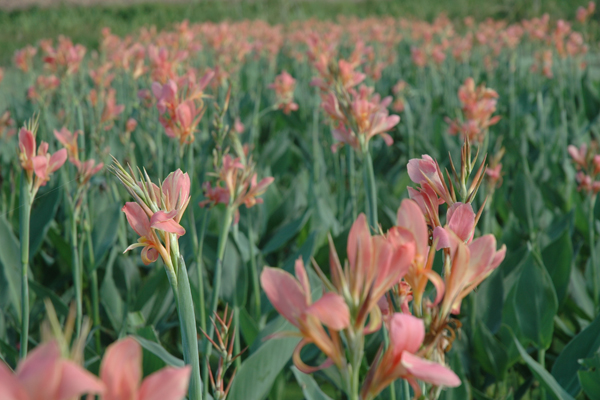
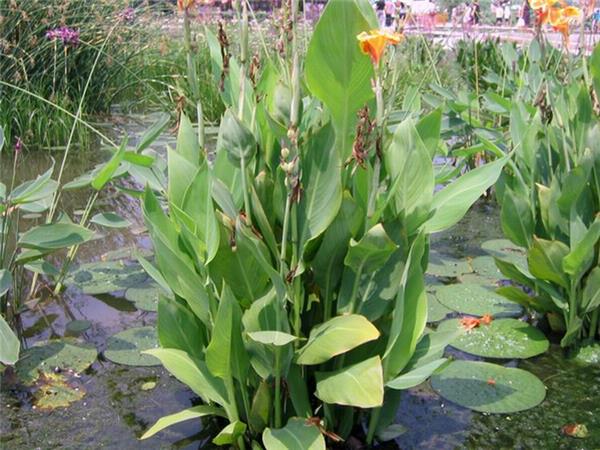
Aquatic canna is native to South America and is widely distributed in the southeastern United States. It can be seen everywhere along the waterways of Georgia, Alabama, Florida and Louisiana. It closely resembles terrestrial canna, except that its narrowly lanceolate leaves have a layer of white powder on the surface and the leaf color is grayish green. Its petals are upright, the corolla tube is extremely short, and the flowers are yellow, red or spotted; the sepals, petals and staminodes are all very similar to those of the common canna, and the plant can reach 6 feet tall. It still grows wild in Mexico and can be introduced to temperate zones. In summer, at the shallow water's edge, the flower colors are very rich.
II. The Role of Aquatic Canna
1. Beautifying the environment: Aquatic canna has large, brightly colored flowers and a long flowering period. Planted in a courtyard, it can increase the vitality and energy of the whole courtyard. It also makes the landscape outline of the entire courtyard clear, beautiful and natural. The blooming bright canna flowers set off against the green leaves appear full of vitality, adding a lot of charm, and the ornamental effect is good.
2. Purifying the environment: Aquatic canna not only beautifies people's lives, but can also absorb harmful substances such as carbon dioxide. Aquatic canna has good resistance, but even so, its leaves are very easily damaged. However, it quickly resumes growth in a very short time. It has the effect of purifying air and protecting the environment.
3. Medicinal use: Aquatic canna can also be used as a herbal medicine; both its roots and flowers can be used as medicine. It is sweet and bland in taste, can clear heat and drain dampness, calm the mind and lower blood pressure, and has effects mainly for treating uterine bleeding, excessive vaginal discharge, and so on. For women it is a very good medicine, and it has no side effects at all.
III. Points to Note When Growing Aquatic Canna
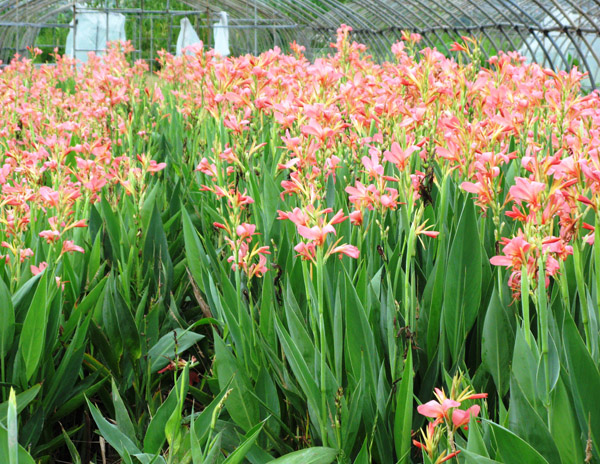
1. Propagation: It can be propagated sexually and asexually. Sowing is done indoors in March to April. Before sowing, the seed coat must be filed open with a steel file, soaked in warm water for 1 day, then the seeds are taken out, drained of water and sown. For asexual propagation in pots, in spring the divided tubers can be planted directly into a pot with fertile soil, with the growing point slightly exposed; after planting, water thoroughly, place in a shady spot to recover for 5 to 7 days, then move to a wind-sheltered, sunny place for growing. For open-field planting, choose wet ground by a pond or a shallow-water spot, dig holes and plant in clumps, bury the tubers in the soil, cover with 7 to 10 cm of soil, and keep moist or in shallow water after planting.
2. Soil: It can grow healthily in any loose, fertile, well-drained sandy soil.
3. Sunlight: Any plant must be ensured sufficient sunlight; the place where it grows must have sufficient light for a long time, so that it can grow healthily. If there is insufficient light, the flowering period will be delayed.
4. Temperature: It is a warm-loving aquatic plant that dislikes severe cold, and the suitable temperature is 16 to 30°C. This temperature is optimal.
5. Watering: Aquatic canna grows in water, but it can also grow in potting soil; however, be sure to water it less. Keep the potting soil moist, following the principle of "dry when it should be dry, wet when it should be wet."
6. Fertilizing: During the peak growing season, apply 3 to 4 times a month a thin cake-based liquid fertilizer.
IV. Pest and Disease Control for Aquatic Canna
Aquatic canna has strong resistance and no major pest or disease damage. However, care must be taken to keep the water body clean, promptly remove duckweed and clear weeds. In southern regions, attention must also be paid to the harm from snails. The control method is to mix trichlorfon with sawdust, put it into a cloth bag, then tie the cloth bag onto the pseudostem so that the bag floats on the water surface and moves with the water; after the liquid medicine diffuses, snail damage can be controlled.
Well, after the above introduction, have you all learned how to grow aquatic canna? If you are interested in growing aquatic canna, you can give it a try when suitable conditions are available; it can add a lot of color to life.