How to propagate Fuchsia? Detailed explanation of the cutting method
Fuchsia, also known as lady's eardrops or fuchsia, is an epiphytic evergreen shrub that usually climbs on other plants to grow, and while growing it also develops aerial roots. Its flowering vines can grow to about 1 m long, the leaves are palmate, and the flowers hang downward in a lantern shape with four petals. It looks very delicate and colorful, with extremely high ornamental value.
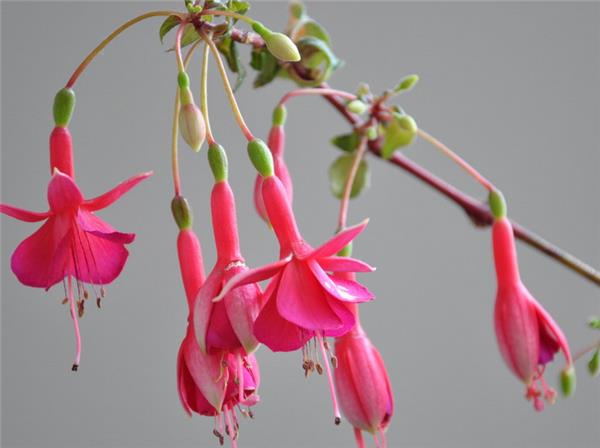
I. Cutting method for Fuchsia
1. Cutting time: Apart from the summer dormancy period, Fuchsia can be propagated by cuttings at other times as long as the temperature is suitable, but the best time is from November each year to early to mid-April of the following year. This is because this period is the plant's peak growing season, so vigorous cuttings can be selected, and the cooler temperature means the cuttings are less likely to rot, giving a higher survival rate.
2. Selection of cuttings: Cuttings should be chosen from current-year branches that have not yet become woody, preferably with tender tips. The length of the cuttings is generally 6 to 10 cm, and the lower leaves should be cut off. Note that when taking cuttings, sterilized scissors must be used so that the cut surface is neat and smooth; never pinch off cuttings directly from the plant with your hands.
3. Preparation of cutting medium and cutting bed: The cutting medium is best made of sifted fine river sand, but it must be scalded and washed with boiling water for disinfection. The cutting bed can be a shallow basin or a wooden box, which should also be sprayed in advance with a 0.1% potassium permanganate solution for disinfection.
4. Cutting method: Before inserting, first soak the cuttings in vitamin B12 for 20 minutes, use a thin bamboo stick to make a small hole in the sand, then insert the cutting into the sand hole, with a depth of 3 to 4 cm being suitable. The spacing between cuttings should be kept at about 8 cm to facilitate potting after rooting. After inserting, water thoroughly once, cover with plastic film, and maintain the humidity of the cutting bed.
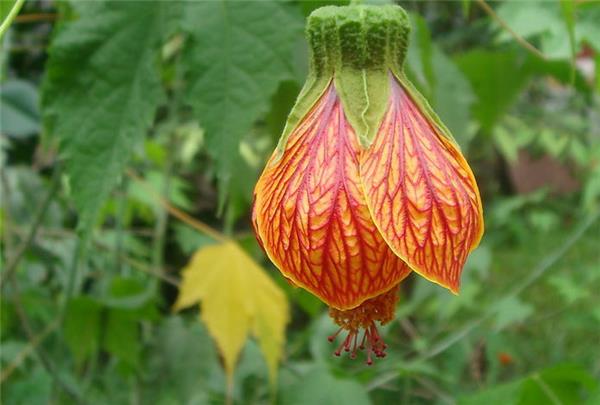
II. Growing Fuchsia
1. Potting soil. For potted soil, it is suitable to use 50% leaf mold (or grass clippings), 40% sandy loam, and 10% decomposed cake fertilizer, combined into one growing medium. Usually repot and change the soil once every spring; new soil with comprehensive nutrients is beneficial for bud formation and flowering.
2. Watering. Fuchsia grows rapidly in spring and autumn, and during the flowering period it should be watered 1 to 2 times a day, preferring moist over dry. But at ordinary times watering should follow the principle of "water when dry, stop when wet." In spring and winter the weather is dry, and in the hot high-temperature summer season, in addition to watering once a day, it is also necessary to spray leaf surface water on the branches and leaves 1 to 2 times a day, but do not water too much and cause water accumulation in the pot soil. During the flowering period, if the pot soil is too dry or too wet, it is easy to cause bud drop, flower drop, and leaf drop. Long-term excessive moisture in the pot soil can also lead to root rot, yellow leaves, and even the death of the entire Fuchsia plant. When the winter room temperature is low, watering should be controlled even more strictly and fertilizing should also be stopped to prevent root rot. In summer, from July to August, Fuchsia should not be watered too much, and be careful to avoid rain; rain exposure can cause root rot, leaf drop, and even death.
3. Fertilizing. For Fuchsia, in normal times, combined with loosening the soil, a dilute organic liquid fertilizer can be applied once every 7 to 10 days. But in the hot summer season, high temperatures generally force Fuchsia into dormancy or semi-dormancy. In summer, from July to August, growth is slow, so fertilizing should be stopped and only a little clear water should be given. From September to December, apply decomposed cake fertilizer water once every 10 to 15 days to promote continuous flowering. After each fertilizing or watering, loosen the soil the next day to improve aeration.
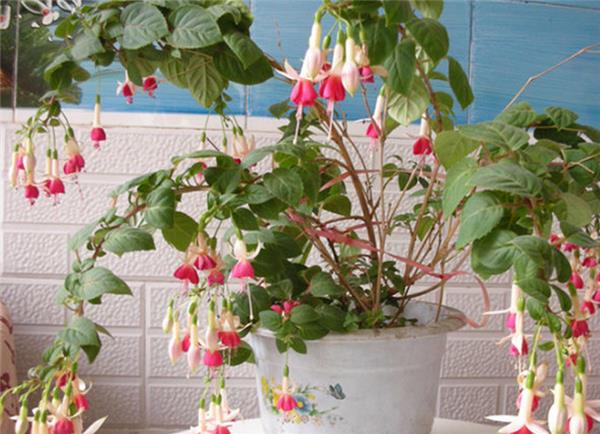
III. Pest and disease control for Fuchsia
Its common diseases are generally gray mold, powdery mildew, and so on.
Gray mold mainly harms flowers, stems, and leaves. Affected parts generally show water-soaked spots. In the early stage of the disease, 500-times dilution of 65% zineb or 50% carbendazim or other new fungicides can be used, sprayed once every 7 to 10 days for 3 to 4 consecutive sprays. At ordinary times, pay attention to ventilation and light so that the plant grows well and its disease resistance is improved. After the disease occurs, promptly prune and dispose of infected branches and leaves to reduce the source of infection.
Powdery mildew mainly harms flowers, stems, and leaves as well. Its symptoms are a layer of white powder on the surface. In the early stage of the disease, pay attention to ventilation and light, and increase the application of phosphorus and potassium fertilizers to improve the plant's disease resistance. After the disease occurs, promptly spray 800-times dilution of 70% thiophanate-methyl solution or 2500-times dilution of triadimefon or other suitable fungicides, once every 10 days for 2 to 3 consecutive sprays.
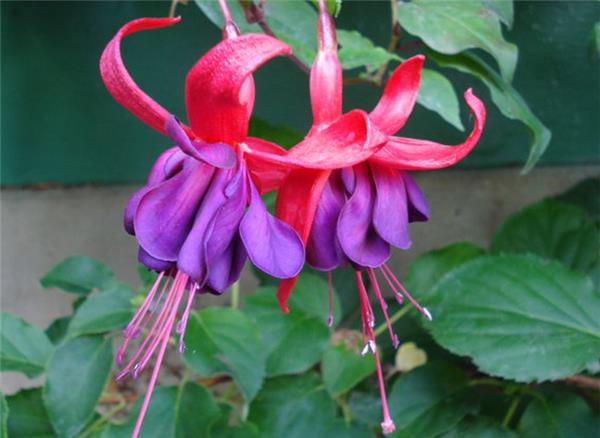
Now that the information about Fuchsia has been introduced, do you recognize this flower with such a distinctive appearance? Fuchsia can be cultivated indoors. After learning how to grow Fuchsia, go buy a pot and start growing it!