How to grow fuchsia? A detailed guide to cultivation methods
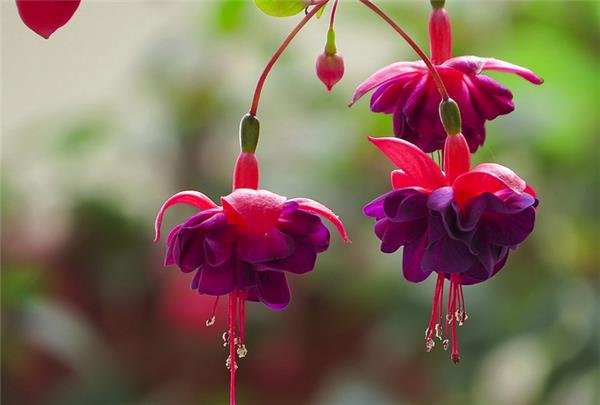
Fuchsia, as the name suggests, looks like a bell hanging upside down, which is why it is also called the lantern flower. Its unique shape makes it quite suitable for planting indoors, as a decoration for flower stands and the like. It can also be used for bottle arrangements, making it suitable for ornamental display. So for such a beautiful plant, what should its cultivation methods be like? Below is an introduction to fuchsia and just what it is really like!
I. Cultivation methods for fuchsia
1. Soil: For potted fuchsia, the growing medium should be fertile, loose, well-draining potting soil. Generally, leaf mold plus sandy loam plus well-rotted organic fertilizer and phosphate fertilizer can be mixed evenly; no base fertilizer needs to be applied, so as to avoid root rot.
2. Watering: When watering fuchsia normally, follow the principle of watering when dry and letting it dry out between waterings. In spring when the weather is dry and in the hot, high-temperature summer season, spray water on the branches and leaves 1-2 times a day; do not water excessively and cause waterlogging in the pot. In winter, when room temperature is low, watering must be controlled even more strictly and fertilizing stopped, to prevent root rot. After each fertilizing and watering, loosen the soil promptly to improve aeration.
3. Sunlight: Fuchsia prefers shade, but this does not mean it does not need sunlight. Apart from needing shade in summer, in the other seasons it should still receive some appropriate warm and gentle sunlight.
II. Precautions for growing fuchsia
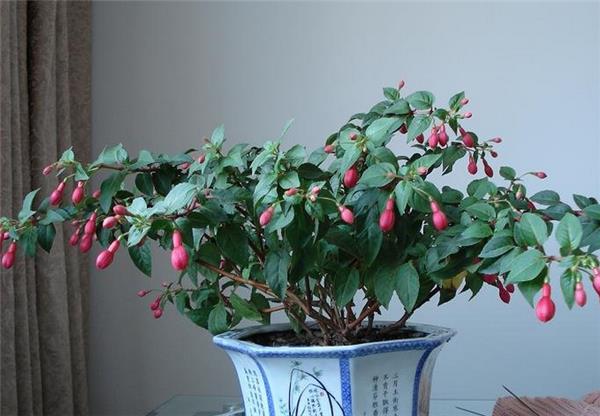
1. Repotting or refreshing the pot: After successful planting, the young seedlings should be moved from a small pot to a medium pot, and then from a medium pot to a large pot. In spring or autumn each year, be sure to refresh the potting once, so that it can grow vigorously.
2. Fertilizing: Because fuchsia grows quickly and blooms quite frequently, fertilize frequently when feeding, with an interval of about 10, to ensure a reasonable intake of nutrients. When fertilizing, also avoid getting fertilizer on the leaves, otherwise it can easily cause the leaves to rot.
3. The temperature should be moderate; keeping it at 15-25 degrees is fine.
4. Do not use too much water; keeping the soil moist is enough. When growing it in summer, it is fine for it to be on the dry side.
5. Place it in a well-ventilated, cool spot.
III. The uses of fuchsia
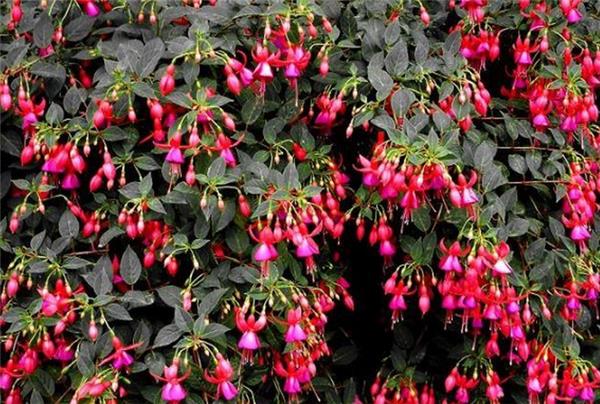
Ornamental use: In landscaping, its flowers are red while both the upper and lower ends are green, hanging like lanterns, rich in ornamental value, and it is an excellent material for potted plants or bonsai.
In gardening, the small plantlets growing on the leaves of mother of thousands are extremely strange and interesting, and are often used for biology teaching. Its fleshy, densely growing leaves and the colors of the leaf margins have ornamental value; some have large inflorescences, beautiful flowers, and long flowering periods, all suitable for potted cultivation.
The shape of the lantern flower is very peculiar, appearing in the form of an upside-down lantern. It looks extremely elegant and can be used to decorate balconies, studies, windowsills and other places, where it can all play a very good decorative role.
Medicinal value: According to records in the Compendium of Materia Medica, lantern grass is pungent and sour in nature and can promote blood circulation and remove blood stasis. It can treat conditions such as skin itching, acne, and kidney disease.
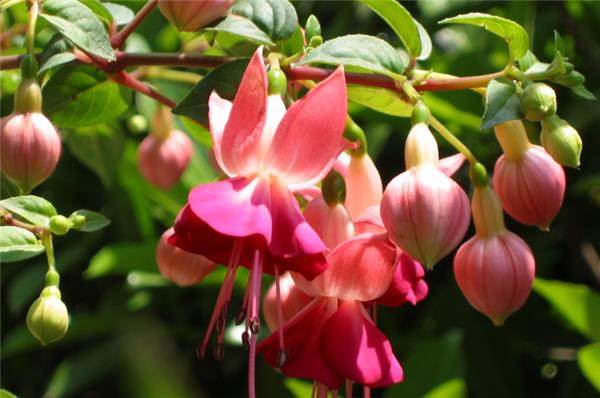
The flower shape of fuchsia is peculiar and it has relatively high ornamental value, making it quite suitable for use in home decoration. The cultivation methods for fuchsia are introduced here. I hope that through the above introduction to cultivation methods, everyone knows how to grow fuchsia and what precautions there are.