A Detailed Guide to the Benefits and Care Methods of Salvia farinacea
The flowers of Salvia farinacea are many small, delicate blooms gathered together to form a small cluster, giving a cute and charming impression. Although this flower is small in size, its benefits are by no means small, so it is very suitable for growing.
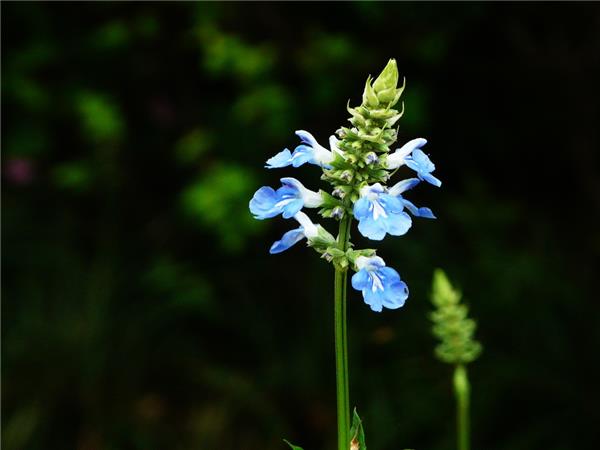
I. What Is Salvia farinacea
Salvia farinacea, a perennial herbaceous plant with persistent roots; the flowers are sky blue, and flowering plants can reach 1.5 m tall, with the flowering period in spring; it likes warm, sunny environments, is not particular about soil, tolerates drought but not waterlogging, and especially prefers soil rich in lime, or sandy, well-drained soil; in extremely cold regions it is grown as an annual. Salvia farinacea was a magical plant in early Europe with many uses; it is both an excellent ornamental plant and an important medicinal plant. It is suitable as a background material for flower borders. The flowers can be used to make tea, and the fresh fragrance they release can cleanse fats in the body, help circulation, and exert a beautifying and skin-care effect.
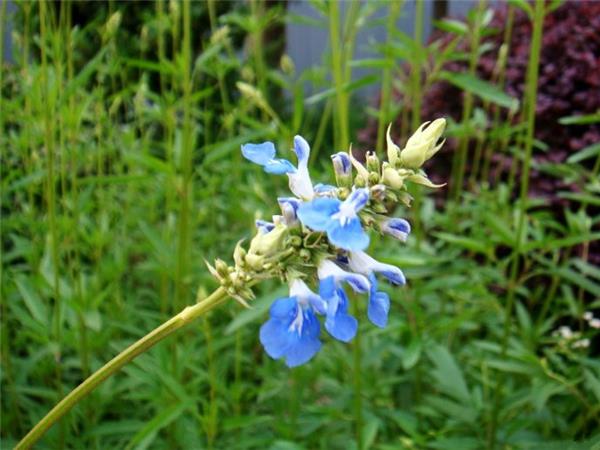
II. The Benefits and Effects of Salvia farinacea
1. Salvia farinacea is one of the very good traditional Chinese medicinal materials, with an unexpected effect on stopping milk production during weaning, and it can also be used as a bitter stomachic, playing a major role in dispelling wind, suppressing sweating, lowering blood sugar, and promoting bile secretion.
2. After brewing Salvia farinacea and drinking it as tea, the herbal flavor carries a slight spicy, bitter taste; a little honey can be added to adjust the flavor, making it a good choice for a health drink, but it should not be drunk over the long term.
3. Soaking fresh Salvia farinacea branches, leaves, or flowers in water allows the water to be used as a disinfectant.
4. The dried flowers can be used as a spice for smoked meat, or as dried-flower artwork.
5. Although Salvia farinacea has many health benefits, it contains a certain component that can produce toxins in the human body after long-term, large-quantity consumption; in addition, nursing mothers are forbidden to drink it, because it affects milk secretion, so those who like it should not be careless.
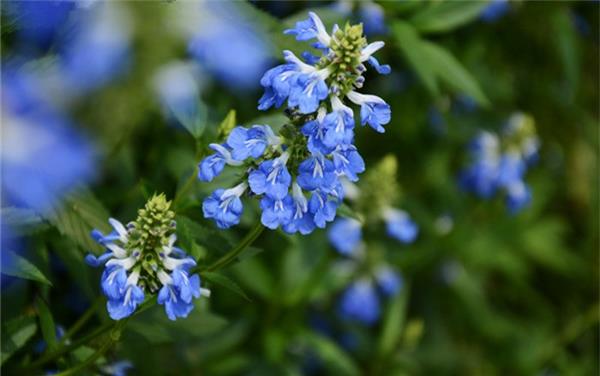
III. The Cultivation Methods and Precautions for Salvia farinacea
1. Selection and handling of cuttings: choose healthy, robust branches free of pests and diseases as cuttings. After selecting the cuttings, handle them carefully. For softwood cuttings, the cuttings should be inserted immediately after collection to prevent wilting from affecting survival. After cutting, they should be placed in a ventilated place to dry for a few days, and inserted after the cut surface has slightly shrunk; or the lower cut surface can be slightly scorched over a low flame to prevent rot. Generally, if the lower cut surface of a plant cutting is dipped in some freshly burned plant ash, this also helps prevent rot.
2. Soil: the growing medium should be loose and breathable, good at retaining water, with moderate acidity and alkalinity, low nutrient content, and free of disease; generally use fine-grained peat, grass peat, or leaf mold.
3. Temperature: for general plant cuttings, maintaining 20-25°C gives the fastest rooting. If the temperature is too low, rooting is slow; if too high, it easily causes the cut surface of the cutting to rot. Therefore, if temperature can be controlled artificially, cuttings can be taken in all four seasons. Under natural conditions, the temperatures of spring and autumn are suitable.
4. Humidity: after inserting the cuttings, truly pay attention to keeping the cutting medium moist, but do not let it become too wet, otherwise it will cause rot. At the same time, attention should also be paid to air humidity; plastic film can be used as a cover to maintain humidity, but ventilation must be provided within a certain period.
5. Flowering period: the flowering period of Salvia farinacea can be regulated through the sowing period and the timing of cuttings. Generally, Salvia farinacea takes about 60 days from sowing to flowering, and the sowing period can be adjusted as needed. The specific cutting time can also be determined as needed; cuttings taken in January-February are for spring flower beds, and cuttings taken in May-June are for summer and autumn flower beds.
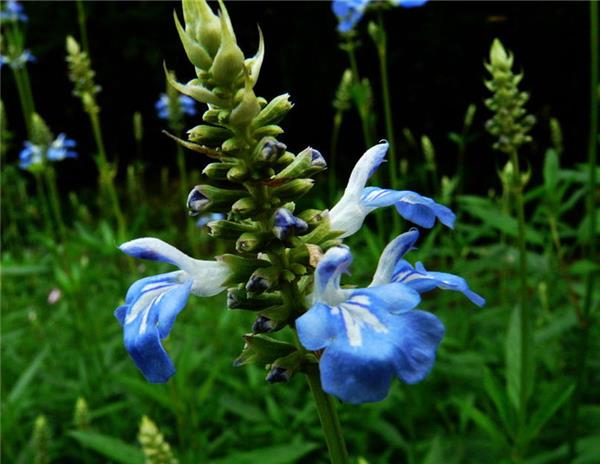
Finally, everyone should once again be reminded that when growing Salvia farinacea, try to keep children from touching it, because it may cause dangers such as poisoning from accidental excessive consumption; therefore, when growing Salvia farinacea, be sure to take protective measures, and when consuming it, also pay attention to handling it carefully and eating it in appropriate amounts.