How can common flowering shrubs be made to survive at a higher rate?
Overall, flowering shrubs are fairly easy to keep alive, but if they are not grown properly, they will end up with a messy, unattractive plant shape, which then makes pruning more difficult, so a little care is still needed when growing them.
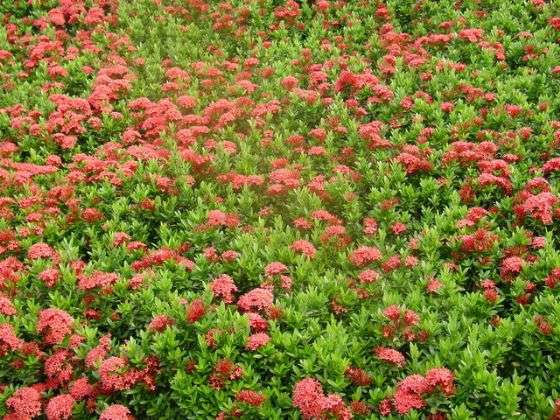
How to improve the survival rate of flowering shrubs
1. Spring planting should be done early rather than late. "Top-soil planting" is now encouraged, and digging pits for planting can begin in early March.
2. Choose seedlings with strong adaptability whenever possible, and on the premise of matching the tree to the site, select tree species suited to the soil and growing conditions of each place.
3. The quality of the seedlings directly affects the survival rate of the planting. Some people look only at price when choosing seedlings, resulting in a low survival rate later and, in fact, higher costs. Therefore, it is best to choose large, strong-growing seedlings that are fully lignified, free of pests and diseases, uniform in specification, with a large root ball, an intact root system, many fibrous roots and relatively thick growth.
4. When planting, use the "three burials, two treads and one lift of the seedling" planting technique, emphasizing the "three bigs and one firm", namely a big pit, a big seedling, plenty of water and firm tamping. Place the seedling in the center of the pit, hold it upright, and spread out its roots. When filling with soil, it is best to put topsoil mixed with organic fertilizer and a small amount of quick-acting bacterial fertilizer at the bottom of the pit. When the soil is about half filled, lift the seedling slightly upward, then tread it firm, continue filling with soil until the pit is full, tread again, and finally water thoroughly, then cover the surface of the pit with a layer of loose soil to prevent soil moisture from evaporating.
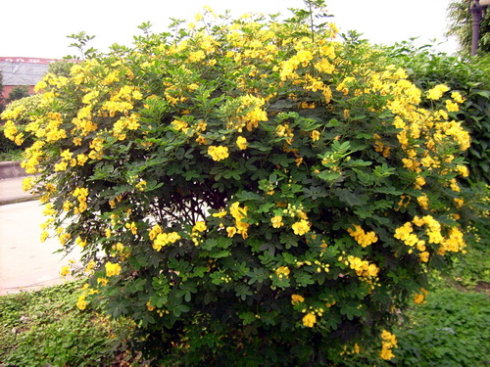
5. When planting seedlings, planting is three parts and care is seven parts; care is extremely important for the survival rate of planting.
6. Pruning: young trees grow vigorously, so shaping should be the main aim and light pruning is appropriate. Strictly control upright branches; the upper buds of slanting branches should be removed during winter pruning to prevent upright branches from growing. All pest-damaged branches, dead and dried branches, artificially damaged branches and water sprouts should be removed by thinning cuts. For the upright branches of clump-forming flowering shrubs, choose the vigorous ones and pinch out their growing tips to encourage earlier flowering. Mature trees should make full use of three-dimensional space to encourage more flowering. During dormant-season pruning, cut back to an appropriate point below the autumn shoots, and at the same time retain some root suckers year by year and thin out some old branches, so as to ensure continuous renewal of the branches and maintain a full plant shape. Old and weak trees should mainly be renewed and rejuvenated, using heavy cutting back so that nutrients are concentrated in a few axillary buds, which then sprout strong branches; thin out weak slender branches, pest-damaged branches and dead branches in good time. Deciduous flowering shrubs can be divided by pruning time into winter pruning (dormant-season pruning) and summer pruning (post-flowering pruning). Winter pruning is generally carried out during the dormant period. Summer pruning is carried out after flowering, with the aim of suppressing vegetative growth, increasing light throughout the plant, promoting flower bud differentiation and ensuring flowering the following year. Summer pruning should be done early rather than late, as this helps control the growth of water sprouts. If pruning is done a little late and the upright water sprouts have already formed, then if space conditions allow, pinching out the growing tips can be used to produce secondary branches and increase the number of flowering branches.
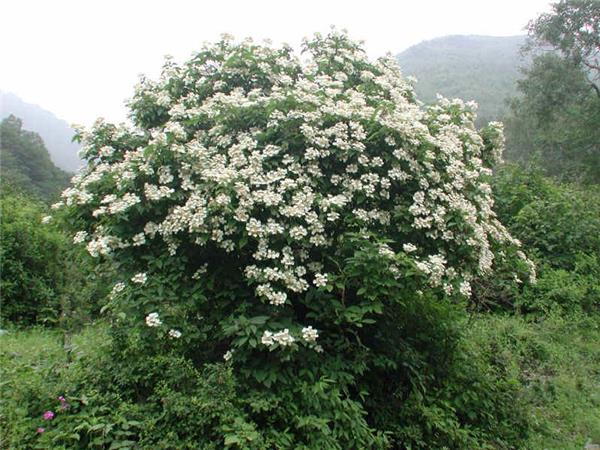
Common flowering shrubs
Red-leaf barberry (Berberis thunbergii): strong adaptability. It likes full sun and tolerates partial shade and drought, and is suited to fertile, well-drained soil. It is cold-hardy, but does not fear hot, high temperatures. It suckers strongly and tolerates pruning.
Golden-leaf privet (Ligustrum vicaryi): likes warmth and tolerates slight shade, but is not cold-hardy. It sprouts vigorously and adapts to a wide range of conditions. It has the function of trapping dust and resisting smoke, and can absorb sulfur dioxide; it is suited to factory, mining and urban greening, and is one of the rare evergreen broadleaf tree species of the north.
Purple-leaf plum (Prunus cerasifera): likes sunlight and a warm, humid climate, and has a certain drought resistance. It adapts strongly to soil, is not drought-tolerant, is relatively tolerant of wet conditions, and is not tolerant of alkali. Gravelly soil is best, though it can also grow in clayey soil; its root system is relatively shallow and its suckering ability is relatively [weak].
Elm-leaved spirea (Prunus triloba): likes light, is cold-hardy and drought-tolerant, and can also adapt to mildly alkaline soil, but is not tolerant of waterlogging.
Purple-leaf sand cherry (Prunus x cistena): it has strong adaptability and grows well in well-drained, fertile sandy soil, sandy loam and mildly clayey soil. It likes light, is relatively cold-hardy, has strong disease resistance and tolerates pruning, and can still keep its purple-red color under partial shade.
Red-leaf ornamental peach (Prunus persica): likes light and is drought-tolerant, and requires fertile, well-drained soil. During the growing period it requires strengthened management, including fertilizing, watering, weeding and pest and disease control.
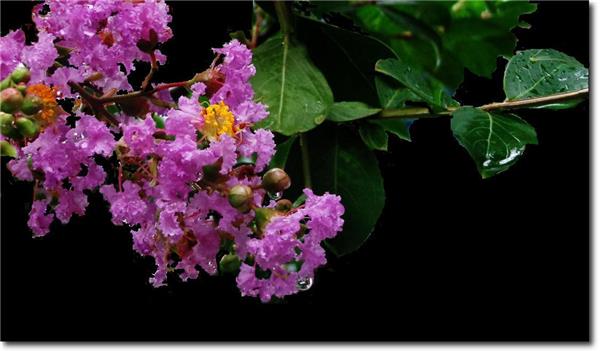
Crape myrtle (Lagerstroemia indica): likes light and tolerates slight shade; likes a warm climate and is strongly cold-hardy; likes fertile, moist, well-drained calcareous soil, is drought-tolerant and afraid of waterlogging. It suckers strongly, grows relatively slowly and has a long lifespan.
There are very many kinds of flowering shrubs to choose from, and of course they are not limited to those introduced above. Nowadays some households with courtyards also plant some flowering shrubs at home, which can both help cultivate the character and mind and add a lot of color to the courtyard.
Nowadays some households with courtyards also plant some flowering shrubs at home, which can both help cultivate the character and mind and add a lot of color to the courtyard.